Be Mindful of the Labyrinth

The thought started with the film from 1986, and of the spell cast by her own words at the beginning, and the final realisation that she alone could break the spell. And although she had to physically speak the words to break it, it was the mental adjustment to understanding that she was pivotal to it, and the root of it, that led to being able to break it.

But what was it she was really breaking, a spell? A hypnotic state, or just a carefully constructed illusion that the mind created and adjusted to. Making it ‘reality’. And the word labyrinth meaning “an intricate combination of paths or passages in which it is difficult to find one’s way or to reach the exit“. That could easily be description of thoughts, and ideas and mental pathways rather than physical ones.

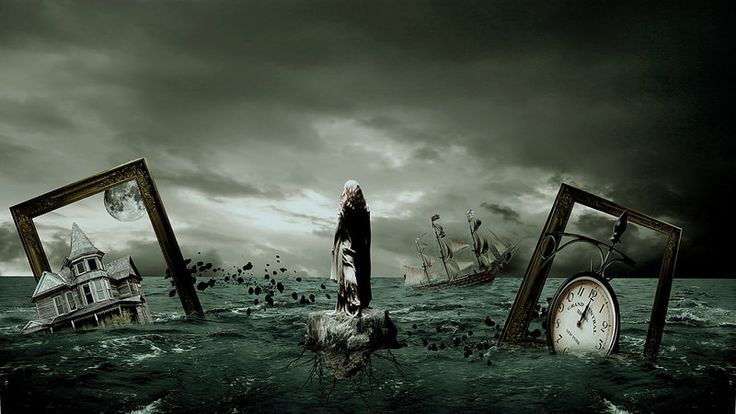
And the clock that features so heavily, with the pendulum of time ticking away, like a watcher of your mortal self, prompting you to try and solve the mystery or get to the conclusion before your time is up. Just as we do in life, giving thought perhaps to the how’s and whys of it all, knowing we have an expiry time and date, just not being privy to what that is. The other noticeable thing about it, was the number of hours, being thirteen, and not the usual twelve we are used to. Because there has been talk of when we used to have thirteen months in the calendar year, and of changes to the timeline, or rearrangement of things past to how we know them today. My article April New Year, Don’t Be Fooled looks at the calendar subject a little more. But the idea that you are trapped in a labyrinth of information is an easy one to imagine, with blocked and hidden doors and opening, just as in the movie. With traps and tricks to deceive and distract you, and a charming, persistent ‘character’ to seemingly encourage you as well as trying to bewitch you to fail.

But what of the other representations we have of them, multiple examples on cathedral floors, topiary of them, they have been drawn, written into stories, and even built in ancient times they say with the mythical Minotaur Maze. It is also said there is a huge lost maze underneath the ground in front of the pyramids in Giza, Egypt, so they are not a new structure or idea by any means. I can’t help but notice that there is a similarity of the round ones to the cerebral structure of the brain, as we are told, with the square ones looking geometric and harsh in comparison. And we do have an abundance of mazes too in the same formats, even using them for various experiments with animals, In A Maze goes into that a bit more. It is starting to seem as though we are trapped in one, whether it be a physical maze, and a mental labyrinth holding us back so we never work it out who can say for sure. Or as if we are playing out this mental existence within the parameters we have been set, as they insinuate in The Matrix, making us believe that the majority were actually comfortable and happy with their constructed and automated ‘lives’ plugged in to the mainframe.

What is it precisely we think we are going to get out of or escape from I wonder? Again, we have many representations of escapes, of freeing humanity or bringing a great evil to an end and stopping ourselves being used for someone else’s ‘greater good’. Why do we have those ideas? Have they placed there like so much else, to make us fight something that isn’t as it seems, creating a thought process of fighting to save what you have, even if that is what holds you down? Wouldn’t that be the ultimate trickery though, to make the people fight to save that which enslaves them, and any who do might start to realise end up getting stuck in the labyrinth, until maybe one day we all come to realise as she did and understand what the words mean “You have no power over me…”

(c) K Wicks

Homemade Gummy Sweets

Thought about something new to try and make, and homemade gummy bears caught my eye. First time using gelatin, so the very first attempt failed, but tried again the next day and it worked out pretty well. So orange gummies it was, closely followed by strawberry ones the next day after that. Can’t wait to try other flavours when I run out…

(c) K Wicks

Star Forts

These are some rather spectacular sites, where fortified structures appear ingrained as part of the landscape, rather than merely sat upon it. Displaying a geometric beauty we do not often find in today’s projects.

They are found all over the world, apparently there 1,734 known sites, over 105 countries. That’s quite a widespread technique, and really does then beg the question, what was their true purpose? Are they just for aesthetics, even though they cannot be observed in their full splendour except from above?

Many have been destroyed, lost to time or simply remodelled or built over, so who know how many there really were. But the interesting tale of why is the usual type of thing, apparently, they were all built for extra strategic defensive purposes. It is said “Star forts, or bastion forts, are a type of fortification that first emerged more than 500 years ago in response to the growing power of cannons on the battlefield, with sloped walls and angled bastions that allowed defenders better coverage above any attackers“.

Now, make of that what you will, and if you read about specific countries, they will tell you that they all starting doing it around the same time, and nearly even bankrupted their countries to do it. So, what was this invading force all over Europe and the world around the 1500’s that required everyone to adopt the same building style – for random forts dotted here and there? Not sure myself, but if you have an idea of what that might have been, please do comment with that. I have already taken a brief look at 1522, because of a social media comment from Jane Goodall saying we need to reduce population to that of 500 years ago to restabilise society. But I found that in that year alone, there really was quite a bit going on, which would not lead me to believe it was stable at all, despite the claimed population number at the time. For example, we had – The Knights’ Revolt in Germany, A terrible plague in Rome, The first major slave revolt in North America occurred, The Battle of Bicocca, a major earthquake in Almeria, Spain, The Treaty of Windsor was signed to name but a few. In one year, so they say. So, to think that it was all smiles, roses and opportunity just because there were less people, is a strange fallacy to hold onto. And as I have mentioned in my article A Working Strategy, it was in 1388 they put laws and acts in place to heavily control and utilise the population in the UK. So, I am again surprised that we had enough people, skills, materials and money to undertake such elaborate projects on a vast scale, keeping in mind cathedrals and churches were also being built around this time as the monasteries fell. Seems there is still much to mull over…

(c) K Wicks

The Machine of Time

Although I have written two pieces already called – Time, and The Machine, this one is in reference to a couple of films and of the general concept of time. How we are bound by it and beholden to it, marching forward and we are powerless to stop it.

Chronesthesia – the name for mental Time travel, which if you have seen the Butterfly Effect film, think of it like that. But personally, I had already thought of it in relation to thoughts, when considering nostalgia and future worries as thought processes we have. Which intrinsically require us to mentality ‘time travel’ to do either.

Back To The Future – (1984) – another classic, and shows the folly of going backwards. But also the paradox that gets created by meddling with time as they call it.

The Time Machine (1960) – a great film, and story from H.G. Wells. But unlike the above film, showed how you couldn’t actually go back any further than your current time. As he was away in the future for a week, and when he returned, a week had passed.

Harry Potter 3 – A timepiece for travel was used, but allowing for an overlay of going backwards before it ‘wore off’. But as you are already there, two now exist. Almost more as interdimensional time beings who evaporate when the time is up. Slightly different way of portraying it, I guess.

Dr Who episode (Weeping Angels) – staring at a statue transports a woman back in time on a one-way ticket. Removing the physical self from that time entirely with no way to come back, so disrupting the future and the past simultaneously.

If we didn’t have the sun up and sun down each day, and we didn’t show visible signs of aging, how would we keep tabs on it? And if we didn’t have calendars, clocks and records, how would we know when we are? This is why perhaps it is so easy to see how things can be written and rearranged within history to paint a picture of a placement in time. To think of before, or of how people were and society was, giving reason for how things are now. Or so it would appear. But it is always now, and technically you are always travelling through time, not alongside it, or over it, but through it. Which is why it seems we cannot sidestep it, or avoid it, or change its speed or trajectory, only hold on for dear life as they say, and see if we can make it to what they might say was ‘your time’…

(c) K Wicks