Cash

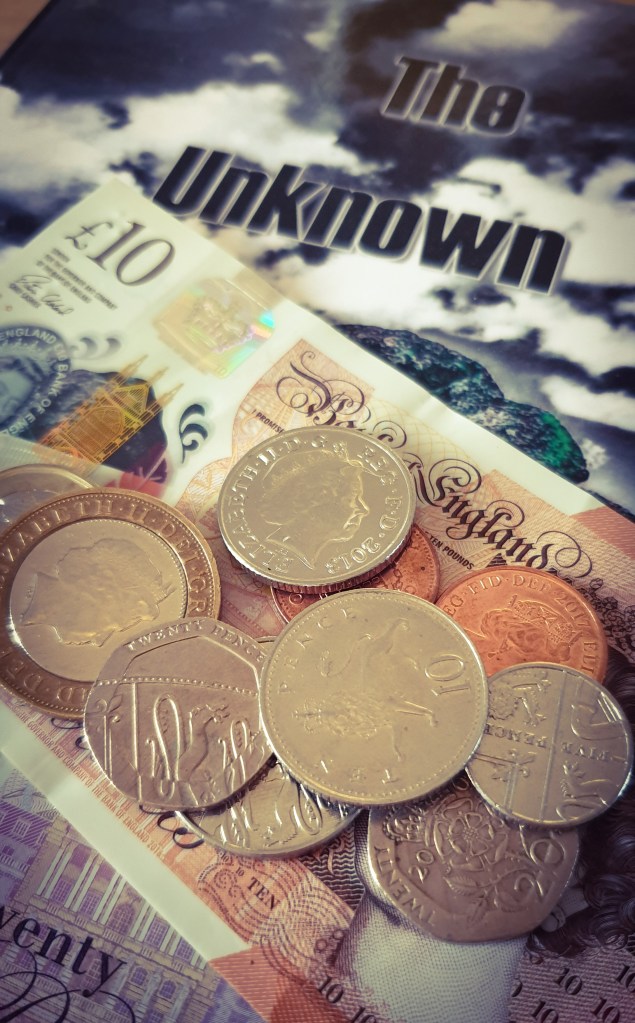
I see lots of talk about cashless, the people for and the people against. I’ll put my two pence worth in.

I find it a strange concept, but work well with it, money. Cash has been the norm for a very long time, and in principle, theory and practice it works. You earn it, you spend it, you live. It seems simple. And it is. But somewhere along the line, someone decided to shoehorn themselves between the simple transaction of one person giving it and one person receiving it. The banks are the middle man between you and your money. They hold it for you and in turn get paid for that privilege. In fact banks only get to make huge amounts of money, because we have money. They also then get to see what you do with your money, there is then a financial record for you. It’s a win win for them.

Then someone else decided that there needed to be another middle man between the seller, the bank and the purchaser. They introduced the merchant fees via card payments, so now there are two middle men making money from the seller/buyer transaction. So now you have two outside parties essentially making money from the fact that you have it, and that you decide to spend it. Seems ridiculous to me, but what do I know.

Now, with the looming threat of cashless, I felt there is a need to review cash again and how it actually affords a number of freedoms many seem to overlook. That is my assumption, and it could be that people may just not care, but either way the outcome doesn’t change because you may feel differently about it. It is not the idea in principle of having a cashless society that bothers me, on the face of it, it sounds practical and efficient. All your monetary transactions recorded and monitored, reviewed and analysed. Doesn’t sound weird at all. Much. Have to say, despite the fact that I lead a very boring ‘record’, I don’t really want there being a central point showing what I watch, eat, read, wear, like, don’t like, who I talk to, what I say. Why should that be recorded anywhere – back in the day you would have had to pull together an awful lot of receipts for that, and follow someone for a really long time. Now most people share all that on public forums, which is fine if they don’t mind. I personally still believe that I wouldn’t want anyone finding my personal diary if i had one. And that is what it would contain. Your hopes, dreams and fears. Who you like and hate that week. But now it is all online, shared on a daily basis, freely. Another thing that I don’t understand, and think maybe I am just wrong about people and they really don’t mind what I see as an intrusion.

Back to the issue of cash – the problem I instantly think off with that idea, is all the areas of life it will affect. Firstly though, I’ll put the plus sides forward and you see if you think you personally will benefit from any of these. They will be able to make sure you pay all your taxes on earnings because they will know about all your income. They can stop drug dealers and money laundering (but fail to mention the amount of it that happens online). And as far as I know criminals have bank accounts and crypto currency is being used in all sorts of enterprises, so it might not minimise that after all. That’s the advertised benefits for the system creators.

So, what are the upsides to us the user of this digital credit system, the ones whose money is being taken from us or will simply bypass us, to be given back at somebody else’s whim, because from where I’m sitting, all the benefits are with the controller of your money. As we are pushed into a society where social credit scores are becoming the norm, reward based games and point scoring being inducted into people’s psyche, I can’t help but worry that access to your finances will be dictated in the future as they try to have more control generally over people’s decisions in life. Like a parent who decides if you are ‘allowed’ to spend that much, or are ‘allowed’ to take part in an activity. We know these systems already exist in other countries, so it is not unreasonable to think it’s a blueprint to be tried on others.

Maybe I am wrong to think people should be outraged and horrified at the idea of someone telling you where to go, what to buy and who not to talk to. As a grown up the idea of being treated like a child again is awful and one I won’t be going along with. But to my surprise I have witnessed multiple examples of people handing over responsibility for themselves and their lives to the state. I can only imagine they think it is there to help you, or look after you, or to wrap an arm around you and tell you it will be alright. Once I looked into it further, I could see this was not by accident. I enjoy reading social history to try and work out how we got to where we are. And I suspect the concept was born after WWII when the ‘cradle to grave’ ran alongside the NHS being created. Giving the people the impression the government was here to look after you from birth to death.

Weirdly though, I read a lot about the Victorian era growing up and had no idea there would be government handouts and benefits when you got older. I believed that if you didn’t work, you didn’t eat, therefore you would die or end up in the workhouse/poor house. So thought I had better be resourceful and employable. From around 10 years old I thought this was how would be. I always thought at a minimum I could be a chamber maid or cleaner and was frustrated I wasn’t able to work until I was 16. It was quite a surprise to learn about benefits for unemployed people as well as disability benefit which made sense, and child benefit (which I couldn’t get my head around why we had that at all). I also thought it seemed like a way to control people, restrict how much they have and tarnish them. It used to have a bit of a stigma attached to say you were on benefits, not so much now. But on the face of it they were a ‘helping hand’ whereas I saw it as an apron string being tied around you, and it felt as such for the short time I had to claim unemployment in my late teens.

I kind of see the same thing with only cashless. The only way they can monitor, dictate, control and decide things for you is through your ability to live – money. It can all tie back to that. If you have to ‘scan’ in anywhere to buy food, what if you are rejected? What if the system crashes? What if they freeze your account? What if you don’t have enough to buy what you need? You can’t borrow any money because you aren’t ‘allowed’. It used to sound like crazy talk, and now it’s a potential reality. Sugar tax, another one that raises alarm bells (trust me, it’s all tied in), they decide you are too fat for whatever scale someone somewhere decided, so you are put on a diet by the state (because you know, got to save the NHS). You try to but a treat. Denied. You want to have a drink, water only. And if anyone else buys you something, they will know because of all the cameras and because you had to ‘log in’. That person will either be denied too, or deducted social credit points.

The odd thing about that is, some people do genuinely seem to like the idea, they have admitted they cannot control their own lives or finances, and they would feel safer and happier if someone else took responsibility. Or, they openly admit they want to see people ‘punished’ for lack of will power or habits. I can’t see any other reason for it, why else would people be okay with that idea becoming part of their lives or inflicting it on others, of having an overseer or surrogate parent setting all the rules and enforcing them.

Words and their real meaning seem to have been terribly lost of late, and the concepts that accompany those words are being overlooked or not given the time they deserve. I like to use words to describe exactly what I mean, but now know that not everyone has the same meaning for things. Not everyone can imagine with pictures in mind, but however you do, please try and imagine where this all goes. And if you do not see a problem with where we are or how we got here, then good for you. I however, am keeping a keen eye on what is currently unfolding at an alarming pace. These are strange times upon us.

A further piece on Monitoring if you need some help with vision of how far they might take it for the next step.
(c) K Wicks

The Before Time

I guess I have given this subject thought many times over the years, being born at the beginning of the 1980’s meant I grew up before the internet, before mobile phones, before the ‘world wide web’ donned it’s net over us all. Bringing us together, they said, in fact, I don’t think we’ve ever felt so far apart. It was something I could see would change the face of society and have speculated about it much. This piece is about the impact of it all and how I theorise it may have possibly affected others.

I’m from the time of there being no computer, and one phone in the house, the landline. I hated it. It was an awful sound that cut through what was previously quiet in comparison. I always saw it as an intrusion. So moving to mobile phones was a whole new level of intrusion, and one I undertook for work purposes, but have had to have rules around that, maybe that will be another post. This one is meant to cover general changes.

Back then as kids, we also had to physically go and knock on a friends door to see if they were available to go out, possibly having to then talk to their parent first! Or you could use the dreaded landline, but then it was a definite you would talk to an adult, that was even worse. And you had to ask permission. As an adult, friends were rarely at home, so you just had vague designated meeting places. On Saturday’s you bumped into people at the market, or in the pub, the cafe or in the park. Because otherwise there was no way to know where they were. And that was ok, we didn’t need to.

As it all changed though, I paid attention, possibly having a unique position to view it from. My mother was a technophobe, she did not like the changing technology moving in and struggled with anything up from a typewriter. She bought a word processor with built in printer, and then proceeded to get me to always type her letters on it. On the other hand, my grandpa (on my fathers side), was very tech savvy. He wrote basic computer programs, taught me how to access the games through MS Dos, and he had a video phone to my great grandparents in Bournemouth. This was in 1989. The house I grew up in was very different to the house I visited once a month or so.

I have taken to technology well, incorporated it into my life like everyone else. I very quickly saw the advantage to moving onto online systems and made the speed and efficiency of my work improve. I was able to do a home learning course, set up and run my business from home and barely interact with people at all on a physical level within a few years.

And that’s where I saw a potential problem. But on the whole it was minimal, people chose to work from home. And most of those still had a social life, external activities and things to engage with. All of that keeps the brain social, functioning and gives you an outside perspective to your own thoughts. Because if we all just stayed in ‘our own little bubble’ then we wouldn’t have much to go on would we? If I had never asked many of the questions I had, I wouldn’t know, I would only be able to assume. And you know what they say about people who assume!

I sometimes give thought to if children of today had grown up in my time, they would understand where we were coming from. That’s why I can relate to people of my age group well, despite not growing up around many or having closely aged friends. But I also give thought to what I think it would be like to grow up in the ‘after time’, without the things above that had such a large impact on my development, how I gained confidence in things, learnt about social boundaries. All face to face, having to be there, feeling the fear and doing it anyway. Character building stuff they say, and afterwards I agree. But at the time it felt like a trial, and I realised that’s because it was and is meant to be. But no-one knew what I thought all the time, it was easy to hide things and yourself without really trying and I realise now what the purpose of that was. It was self-preservation. It bought me time to try and work out who I was going to be without allowing others to try and mold me into what they wanted me to be. I had a parent trying to influence me, grandparents, school, friends, society, media. It was too much to be fair. I had to work out how you filter all that crap while still taking part in society, and manage to find out who you really are. It wasn’t easy. But factor into that social media (and this is where I theorise). If I had been able to ‘create’ an online identity of my alter ego, the persona you present to others would possibly confuse or override your true identity, thus creating two personalities (at a minimum), and splitting the sense of self. Helping to create an internal discord which wouldn’t be easily reconciled and would make it harder to function in the ‘normal’ physical world. This is why I thought maybe people get ‘addicted’ to the internet and various things under that banner. Internal conflict occurs when the online self has to function in the real world which inevitably at some point, has to, but doesn’t want to. Feeler safer and more like ‘themselves’ when engaging online.

I have had my privacy invaded a few times in the before time as a young person, so I was careful as soon as online began. Knowing already that things you say and think, and certainly things you write down can be used against you, knowing people can turn on you in a second and loyalty means very little to many. They were valuable lessons and ones which I understood well before the internet came round. I was also not reminded of them constantly (other than family reminding you and people you might chose to tell), and was able to leave them behind as is normal. To move on, let go. That isn’t as easy these days. Social media appears to be geared up to keep reminding you of yesterday, last week, last year. Living in the past means you are not living in the present, and now more than ever people can dwell on things meant to be left behind.

Although I don’t do it much outside of my household now, I believe that interacting with other people is incredibly important. For many reasons, but firstly reading people and their intentions or motives. Facial expressions, tone of voice and body language had always been big ones for me, it’s taken me years to understand the subtleties and glaringly obvious of what information is being presented to me by the other person. But only through personally interacting with that person or situation. Online is a different thing altogether and am quite good at that too now, but only because I had so much experience of people in real life and learning to ‘read between the lines’ as they say. Inside that, there have been difficulties, because I didn’t know how to socialize properly for years. I was neglected as a child, kept off school at a crucial stage of development, had a dysfunctional and unpredictable home environment and was moved around a lot, without the chance to have a consistent friendship base. All of that can make for a rather strange outcome, and took years to sort out and make up for.

This is why I particularly feel for children at the moment in this continuing situation. Not being able to have friends, socialise, have anything to look forward to, and to have the rug pulled out from under you constantly, as well as have fear pumped into your life at every turn, must be quite shocking. And I know they won’t be able to assimilate it properly for quite some time. But it also forces them to engage online for an extended period during their development. Also meaning it can all be monitored, and reviewed, and recorded. Information is power as the saying goes.

Also happening at a time when they are meant to be finding themselves and discovering what it is to have your own identity, not one you superficially developed or quickly threw together and changed repeatedly because of all the messages you were given. Those types of identities don’t usually hold up to the test of time. Leading then to general identity disorders, personality disorders and anxiety and depression. But no-one really talks about that anymore because it would mean addressing the incredibly strange and strict parameters of society we now find ourselves in. Living in a parallel world of real life and online, the line of which they are always trying to blur.

(c) K Wicks

Working From Home and Coping Mechanisms

This is now a concept that more people are familiar with, but not by choice. As everyone knows, the last year has changed working conditions for many in the UK, and one of those changes for lots of people was to work from home. I have given thought to how this may have affected people having worked from home for nearly 15 years now myself. Over the years I have questioned folk on their working habits, asking them why they didn’t want to work from home or for themselves. I find it interesting why people chose different careers and environments and couldn’t help asking them. Keeping in mind most people work to live, they have to find a way to make ends meet, so not everyone is in a job they enjoy, but yet still try to make the best of it.

The main reasons why people didn’t want to work from home, even given the choice were as follows

  • Loneliness – they felt they would feel lonely, they enjoyed the social aspect
  • Demotivation – they didn’t feel like they would be able to make themselves do the work
  • Not enough space or resources – not everyone has a home office or room to allocate for use as one

Now, as soon as the directive was rolled for people to work from home if they could, these thoughts crossed my mind. I know some people would have got over these things and adapted, or found a way round them, with zoom meetings and finding ways to communicate with others through the various forms of media we have at our disposal. But for that to happen you have to have a certain level of motivation to begin with, to be enthusiastic about the changes and make the best of them.

That’s best case scenario. The other side of that is some people don’t benefit from only seeing faces on a screen, from not hearing and seeing the human context for things, only the 2D filtered version to go by is limiting. It must be very odd for children as well having to try and engage and learn via this method. But for a personal example of other factors that can affect this – lets throw anxiety into the mix as it’s relevant to this scenario. I used to have anxiety and depression, well, being honest I still have anxiety but manage it and have developed various coping mechanisms over the years to deal with it. But one of the things I really struggled with, was meetings and answering the telephone, I had to do them, I worked in an office, but it filled me with dread. Every day. And those days turned into months, went into years, into other jobs and never really diminished, I just hid them better and ploughed on through regardless.

It dawned on me one day, after years of trying to fit in and ‘get over it’, to realise maybe this is just how I am. Maybe I don’t need to change myself and be different, maybe I just need to change my environment and accept what it is that unsettles or unbalances me. And after delving a bit further, I worked it out (or at least think I did), I can’t handle being around people for long periods of time because they are so draining to me. The amount of energy and attention it takes to deal with people face to face got too much in the end. I couldn’t just whittle away time talking about nonsense, I didn’t want to hear what they had for dinner last night, and I sure as shit didn’t want to hear about their constant life drama they were imposing on themselves, and by extension everyone else when they wouldn’t stop talking about it. You know the ones, they don’t actually want any advice, just someone to moan at. After putting up with it from my mother for an age, I didn’t feel I had it in me to put up with it for the rest of my life at work, and certainly not from people I barely knew. So the idea of working of home was set in my mind early on.

Secondly, I get so focused on my work and what I am engaged in, I don’t like constant disruptions or interruptions. But I didn’t know any of this really at the time, I just got agitated a lot and annoyed with people. So I took steps. By 27 I went self-employed. My work ethic seemed to fit it and I finally found an outlet for my motivation and ideas. I did employ people too in the first 5 years and had to do client visits, meetings (networking meetings as well which were the worst) and didn’t quite get to work as much from home as I wanted. It doesn’t just happen straight away, I had to find my industry, get qualified along the way studying at home as well, get clients and build their confidence. I had a busy household going on too, band practices happening a few nights a weeks, staff coming and going, two dogs…

And it had happened without me even noticing it. I had my own hectic distracting environment at home that had crept up on me. It had happened so gradually that I hadn’t really noticed until I went from thinking I was ok, to all of a sudden realising I was not. I was dreading every day again, but I loved my job, loved my house, loved my dogs. I just didn’t love the people coming and going all the time, bringing different energies and sad to say again, drama. Which in turn, made me bring it. Big time. I got so stressed by having family, friends and employees demanding my attention, I couldn’t do it anymore. I identified the problems and one by one, got rid of them.

I scaled back the employees first. Managing people is a full time job and one I didn’t want in my home. I disowned the family member who was a massive contributing cause to my anxiety at the time. I had a public outburst on FB at the band people who kept taking the piss in my house, and eventually stopped them happening. I stopped socialising and told people they had to text first and not just turn up. I then got divorced. The only consistent to remain was my business. Then I married again just over a year later, sold my house and moved abroad for a couple of years and then back to the UK. I don’t do bits of drama, I do it all at once. (that is very much the speed version of that story) But became a much calmer person after that. It was quite shocking to me to realise how affected I really am by people and their expectations or demands of you – sometimes without really knowing it. I didn’t and don’t blame anyone else other than myself for me getting like that, I ignored the warning signs and thought I could change myself to fit the requirement that others seem so comfortable with.

I know I have digressed slightly, but the point of that meander does come back round. I am much happier and more stable as a person when I am not around lots of people, so working from home with just my husband suits me perfectly. But this is not what I have observed of others. People mostly seem to thrive and flourish in the direct company of others, they like having family and friends and can get inspired to face the world through people. I came to the conclusion that my dysfunctional upbringing and life is what has made me this way and a bit weird. I have all these coping mechanisms because I needed them to cope with life, and the fact that I have now set up my life to be very strictly within the parameters of those mechanisms isn’t necessarily a good thing. It excludes everything else and I wouldn’t wish or want to impose that on anyone. I also worry that by forcing those conditions on some will create a disconnection between people that does not benefit anyone in the long-run. Not everyone has the space, resources, motivation or desire to be separated and alone. Maybe I’m wrong?

(c) MKW Publishing

Hyperphantasia now

It’s been a strange road learning about Hyperphantasia. How imagination, memory and thought processes can all work together – or against each other. What always used to just be called an overactive or hyper imagination, really isn’t. It is sometimes a struggle to focus on external stimuli and take it all in, as there is so much going on internally. But this does not equate to ‘not being in reality’ as seen from an Aphantasic point of view. It took me a while to explain to my Aphantasic husband that everyone has their own version of reality anyway. He finds that a weird concept. He said you are either in reality or not. I disagreed and continue to try and explain this very strange thing. From a combination of interpretation, personal ideals, identity and environment we have to build our own realities around us within the parameters of what I guess is defined as a shared reality. And when this comes into disagreement or conflict with other peoples realities, it can be a confusing thing and doesn’t always work out.

He really doesn’t understand what it is like to have a constant murmur and a factory processing everything all the time in my head. Any more than I understand what it is like to see and hear nothing in mind, and when there is nothing happening, there really is nothing happening. I learn to manage the barrage of images and memories. Understand all the triggers and tendencies that I have to ‘keep’ things in mind. I guess almost like a hoarder of thoughts, but not by choice. Within that I realised though, that to a point I do have a choice, because I can choose (mostly) what goes in. Every article, book, film, conversation, theory, experience, idea and thought is jumbling around in mind, waiting to pounce anytime, anywhere for whatever reason. A lifetime of input increasing all the time and since the internet happened, ever growing. It has definitely changed my view on what I watch, read or give my time to.

But it is still a learning process, wondering how and why you are the way you are. Is it natural, was it environment? The old nature vs nurture argument which has been of interest to me for some time…

(c) K Wicks

Here is my book about discovering we had Hyperphantasia and Aphantasia and how I feel it affects certain aspects of life.

A funny but weird moment

A funny but slightly weird moment from my past (there are many). My grandpas 80th birthday just over a decade ago and I was 28 at the time. A party of about 20-30 or so people were invited, mostly people I didn’t know apart from a few relatives. The seating was all prepared, Grandma had decided to put me next to an old friend who worked in recruitment, because I had too. I guess she thought it would give us something to talk about. That friend of theirs however, went straight in with a different line of questioning I was not expecting. He asked about my parent, thinking it was my uncle but obviously realised it possibly wasn’t to ask about it, when I confirmed he wasn’t, he was shocked and slightly confused. I had to say that my father was the youngest son. None of these friends knew about the second son it turns out. The conversation didn’t get noticed round the table, but I suspect it was probably talked about after when he went home! It was an odd feeling to have to explain myself and where I fit in the family, but it was also strange to know their friends didn’t know they had a second son. If you just don’t tell people, they don’t know, and by this right, they had removed the rogue element in their story.

Ah, if only it were that easy…

(c) K Wicks

I give some thought… (poetry)

I give some thought

To where this goes

There are theories

But nobody knows

For sure what’s really

Going to unfold

Just sit tight

And do as your told

Is what they say

But it makes no sense

Treating us all

Like we must be dense

Lies and deceit

Right from the start

Each person picked

To play their part

In taking that

Which we hold dear

And replacing normality

With a landscape of fear

Rhyme and Reason

(c) K Wicks

It’s taken a turn… (poetry)

It’s taken a turn

And not for good

Who could foresee

This year we would

See our futures

And lives destroyed

With not a thought

Thrown into the void

Not one in which

There is an end

Or one from which

You can defend

What once we knew

Has really changed

Before our eyes

They rearranged

Our thoughts and lives

Nobody can know

What next will come

In this live shitshow

Rhyme and Reason

(c) K Wicks

Fiction is pointless

Fiction is pointless. What do you think when you hear those words? Do you agree? Have you ever given thought to why fiction is a thing? I am a writer and horror fiction is my chosen genre (or rather I think it chose me). So I was disturbed to hear these words, from someone close to me at the time. Not when we first met, he just said he wasn’t into reading fiction and we left it at that. But a couple of years later, I was curious and wanted to know, why didn’t he like reading fiction?

The answer threw me completely. Fiction is pointless. I have to confess, I believe I took the defensive route immediately. As someone who has enjoyed many hours of escapism growing up immersing myself in books and movies and writing my own stories. I thought it was essential and it had never dawned on me that other people may not share that. I think I unpicked that jumper thread because I knew my husband would never read my books or be interested in any of my fiction, I wanted further explanation. I didn’t quite realise the can of worms it was going to open.

I tried so hard to explain it, what joy fiction could bring letting your imagination run riot as they say. He shook his head at me. Then I worked out something vaguely in the back of my mind. When talking about stuff previously I had asked him about playing as a child and imagining things and he said the phrase which was starting to make more sense ‘I could never go full cartoon’ like everyone else. I didn’t quite understand it, but couldn’t think of a way to get him to describe it better at the time, but now it came back to me. I had it, and said ‘when I read books, I actually see what I am reading in my head, there are pictures of what’s going on. Like a movie’.

And that was it. What seemed like such a small thing as one person liking fiction and the other not, uncovered something very profoundly different and something that would affect nearly every aspect of our lives thereafter. We discovered he has Aphantasia, a lack of visual imagery in mind. He didn’t see pictures in his head, and to be honest, was pretty horrified that I did. And it turned out apparently 98% of people do in some way or another as well. The adjustment to this has been long and sometimes not easy. It’s made me analyse my own thought process all over again too, because as it turns out, I have Hyperphantasia, which is considered an over active and vivid imagination. Now I know other people aren’t like me either, they don’t have constant dialogue, pictures, songs, films, memories and ideas all jostling for position at once in mind. It’s been a strange old road, and this year has just made it all the stranger…

(c) MKW Publishing