Some of my books, if you are looking for something to read. And one of my short stories below if you would like something to read to you…
(c) K Wicks

Some of my books, if you are looking for something to read. And one of my short stories below if you would like something to read to you…
(c) K Wicks
I’ve already pointed out how the conveyor of consumerism is now putting us as the product in my article Mark of the Beast. But I started reading an interesting book from the 50’s that was recommended to me and would like to delve further into the concept around it and the marketing of it.
The Hidden Persuaders, by Vance Packard. He’s the author who wrote that special book I refer to a lot, The People Shapers. So thought it was about time I read this one too. It’s about marketing, more specifically the techniques and strategies used since the 50’s to convince us to buy things. Which then took on a new role for many other areas as well, helping to shape how we are today as a society. Although this book is about the US, it can be applied to here as well. I’m only two chapters in, and it’s gold. Covering the use of mass psychoanalysis to guide heavily funded research and campaigns. Within the commercial landscape initially and then increasingly in the political one. I’ll share some key phrases with you.
“What the probers are looking for, of course, are the whys of our behaviour, so that they can more effectively manipulate our habits and choices in their favour”
Very quickly after that line, he mentions it moving from the “genial world of James Turber into the chilling world of George Orwell and his Big Brother”. Indeed, he is correct about that, as we see around us today and especially with that particular book being mentioned a lot. But this next sentence stands out to me
“Another aspect of people’s behaviour that troubled marketers is that they are too easily satisfied with what they already have”.
They were concerned that although business was booming across the board it couldn’t be sustained unless you put more pressure on everyday Americans to consume more. In a 1955 Christianity and Crisis publication they stated
“The dynamics of an ever-expanding system require that we be ‘persuaded to consume to meet the needs of the productive process’.”
So, with over-production threatening, they turned their attention, not to that they might be making to much, no, it was that the people were buying too little. Funny and tragic all at once really. With billions being poured into marketing, the phrase ‘We don’t sell lipstick, we buy customers’ came about. People became a bigger commodity then I realise. But their biggest hurdle it seems at first was that after a time, most people really did have what they need. And if the products were any good, shouldn’t need replacing every year. So, what to do. They went for the idea of creating ‘psychological obsolescence’ to make people feel dissatisfied with what they have and want new. I wonder whether this is how that saying ‘keeping up with the Jones’s’ came from. To encourage you to covet what someone else has, to think they have more, or better and that you too should have it. That’s really raged out of control now, hasn’t it?
We know they use whatever trick they can to get us to buy things, but it isn’t just about the bottom line, or money. It seems to be about controlling the way you think as with an awful lot these days. Bit more sinister than just ‘buy my stuff’ isn’t it?

(c) K Wicks
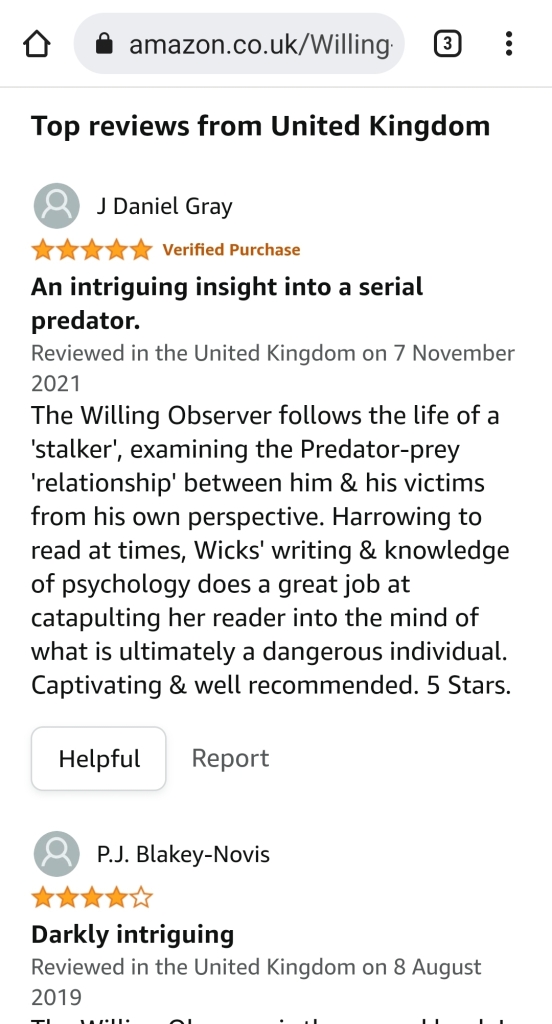
Have to say, quite chuffed to have just received a 5 star review for The Willing Observer 📚 ⭐⭐⭐⭐⭐
(c) MKW Publishing
We are the proverbial frogs in hot water. We didn’t notice when they dropped us in cold water, we didn’t even feel it when it started to heat up and now we are stuck in a personal dilemma. Do we ‘wake up’ and jump out, meaning we have to think for ourselves, trust our instincts and our friends and fight for our future? Or do we wait, hoping they will turn it down again, fearing to jump, fearing to wake. Still denying what it is?
Only time can answer that one, I don’t usually afford hope to much in my life, but I do hope for society to free themselves or at least to feel when the time has come to wake up and act.
(Taken from my first published book The Willing Observer – TW – contains some unsettling content)
This is another chapter from my book – Meeting in the Middle of Nowhere, this one regarding a subject that has consumed much of my thought over the years. Once the difference between Hyperphantasia and Aphantasia was established, it led me to requestion this particular theme and review it from a completely different angle. (If you are not familiar with my book or these terms – I have Hyperphantasia = over visualising in mind and my husband has Aphantasia = lack of visual imagery) And in these strange times where many people are being openly manipulated through fear, it would be wise to understand what it is and how it can affect you.
Fear ~
When we found out about the difference in ability for visual imagery, one of the subjects I raised was fear. I wanted to know if he was affected by horror movies. Although he doesn’t really care for them, I know he had a phase of watching them when younger, and I thought, if he doesn’t get anything from them, why would he watch them? That is one of the areas that I always felt uses your own visual imagery against you, horror films. Creating tension with unseen horrors or just nothing sometimes, only a piece of music – letting your brain make up something more terrible than they could.
And I was correct. It was a flat no. He didn’t get scared watching them or any time after, because his brain literally imagined nothing during the scenes where you did not see the monster or alien. Long scenes of nothing but tension will often lose his attention, and rightly so I realise. Therefore, he never thought there might be monsters under the bed, has never been afraid of the dark or something he can’t see.
“Why would I be afraid of an idea?”
A very logical question, I felt, because without visual imagery, there was nothing to be scared of. He doesn’t visualise what might happen, he doesn’t put himself in the place of others, and therefore no emotion at all is attached. They are just pictures on a screen and when they are finished, they are gone. No recall or replay happens after the event. We can discuss concepts and ideas, but I no longer make any reference to anything visual or implied visual, there is no point and it holds up a conversation.
I watch less horror myself these days. Once I realised my brain was imprinting most of what I saw and could recall it at any given moment, I decided I need to be a better filter. My moods and emotions are greatly affected by what I read, write, watch and see, so I choose what takes my attention wisely now. I have spent a big portion of my life being affected by my fears and phobias, something he simply cannot relate to. I have a number of them and have learnt to manage them over the years. Some may be familiar.
Example: When I was about 8 or 9, I watched Jaws. As you can possibly imagine, it didn’t do me any good. It affected me so much I didn’t go swimming or have a bath for a year. Only showers. Because my brain decided to visualise and imagine jaws coming up through the plughole. Or in the swimming pool, the filter became my point of fixation. I had nightmares about the sea, about swimming, about sharks. It haunted me greatly.
After a year or so, I started to go back in the water. But with a very changed mind-set. Every water experience was a chore, an anxiety-ridden feeling I tried desperately to hide. I was a tomboy and wanted to be cool. So swallowed my fear and did it, along the way reading as many factual books about sharks as I could. Trying to dispel my unnatural fear of something that did not inhabit the same terrain as me.
Around the age of 12 there were a couple of experiences that reminded me I was not over it, just working through it. In the Army Cadets we were on annual camp and part of our training was being made to jump in a lake, swim out to a small boat and back to shore. Sounds simple enough. Let me set the scene as it really was – it was a grey February day, a freezing cold lake in the woods, and the water was black as night, zero visibility. I was the only girl taking part because the other three had managed to come up with excuses. My fear was so paralysing I couldn’t think about anything other than what they were about to make me do. All I knew was that I couldn’t bottle it in front of everyone.
As the only girl they tried to make me go first, but that is where I put my foot down, no, I would go second. I may have also watched the film Alligator by then too, which only added to my already massive issues. Watching someone else jump in first and struggle to the boat did make me feel a bit better. I was a competent swimmer so my concern wasn’t skill based. I jumped in, and as my head went under just for a second my panic hit a new level. The only reason I think I managed it was the adrenaline from the fear. That same mechanism got me bronze medal at the cadet championships too, for swimming. Visualising a shark actually helped me there!
I am still not over it, I just don’t go near the water anymore. I love swimming as a sport and exercise but it’s not relaxing or enjoyable for me. Or even being on water; over a decade ago I visited The Gambia on holiday and had to go in a dugout canoe, the rim was only a centimetre above the water line. I was so tense I gripped the edge of the canoe the whole time, with fingertips only ever so slightly hanging over the edge, crocodiles and piranhas being my fear there. Again, I was just trying to save face but hated the experience and that I put myself through the anxiety of it.
So I now avoid water still because of a scary film I watched. It sounds pathetic, but the struggle is real. To my husband, it sounds mad and he can’t believe these things have affected me so much, but he kind of gets it a bit more now. He just doesn’t get why I continued to keep watching films that would give me nightmares and real fears. Zombie films also have their place in my Hall of Horror Phobias, but I now feel I am trying to put it to good use by writing books. I am torn though; when you work out what scared you so much, do you really want others to go through what you did? It’s the author’s dilemma for me; just because I can, does it mean I should?
I have also observed that fear and anxiety can be and are used in conjunction with each other for manipulative purposes.
Example: After my breakdown my mother was my sole company for most of the day. At first she seemed to be trying to help me get better, then after a year or two, the rhetoric changed. Instead of preparing me to reintegrate into society and become a real person again, I began to hear things like,
“You’ll never cope without me.”
I think it was from that point on all I could focus on was getting old enough to leave home. I didn’t care that I might not cope and the world was scary, I desperately wanted to have the chance. She, however, seemed to be filled with regret and constantly talked of plans involving me and her in the future. I was afraid I would never get away which added massively to my anxiety. Obviously the events that followed did ultimately see me get my wish to leave, but at the cost of everything. It took me quite a number of years to work through all of that and put it all where it needed to be. I can’t say I had it harder than anybody else, but it was definitely weird.

Photo and words taken from the film V for Vendetta.
I’m very concerned that many people do not appear to have realised that they are being used and manipulated for the purpose of control. It’s not for safety and it is certainly not about health. Whether they will understand that fully remains to be seen.
I shall tell you a story of when I was a much younger and see if you can see any similarities or parallels as I do.
Just before I became teenager, my mother was quite paranoid. On the face of it she seemed very relaxed, everyone else thought she was really chilled and laid back. And so did I, because most of the time that is the image she conveyed. But when I think back and review the things that I had issues with at the time, it dawned on me into adulthood what had actually occurred psychologically.
She seemed rather fixated on me being murdered and being found ‘dead in a ditch’ as she put it. Got funny when I started having friends and wanting to go out, and was definitely uncomfortable with the idea of boyfriends looming. I used to spend a lot of time out playing, weekends were the best because you could get up to all sorts. Not worrying about stuff other than what time your dinner would be ready, and even then, that wasn’t a priority until you got hungry.
So, when I was 12, one Saturday, my little group of friends and I decided to go up to the ‘fourth woods’ and make a day of it. (named as such because we lived on a military camp and all the surrounding woodland was MOD property, not sure if that was the official name, but that’s what we called it). We stole some food from our kitchens, and went off to build a fire and try and make a shelter and ‘survive’ in the woods for the day. We were army brats keeping ourselves busy for the day. I had a great time. When I got home however, there was fallout.
Because I had been out all day, despite being with about 5 or 6 other people, she said I had gone off on my own. Still, I didn’t see the problem. She had been worried for hours because she didn’t know where I was and if I was safe. (that’s where the dead in a ditch comment started and continued). Fair enough I thought, that seems fair. But it didn’t end at that, no no. I got lectured for quite some time about how it made her feel and how out of order it was for me to make her feel like that. After the lecture, I got grounded. For six weeks. And not just any six weeks. She took my entire summer holidays away from me. I was allowed to go the shops, and I think cadets a couple of times, but no going out in the day with my friends.
Extreme is what I decided it was, even at the age of 12 I knew it was over the top. I was being punished because someone else was afraid. But as I was the object of the fear, I would also be a pawn to it. I was told I would lose 6 weeks of my freedom.
This is where I drew parallels when our current scenario began.
Because it didn’t end there. What happened in that 6 weeks was that she continued to drum into me how many dangers there were for me, a child soon to be young woman, the dangers were many. And she kept repeating them. It took a while for it to really do its job, but gradually over a couple of years, I did become more fearful, more suspicious and concerned. Not for me, but of her. I started to question why a parent would want their child to be so scared of people and the world. I understand about wanting someone to be safe and fearing the worst. We live in an unpredictable world where many things can kill you and ultimately something will. But to take your own worry and concern and impose it on others is damaging, and in my view, wrong.
And I didn’t just get my freedom back after 6 weeks as promised. Indeed not. The goalposts changed at the last minute. I would be allowed out again, but only for one-hour slots. Not just one at a time. Oh no, something far more elaborate and designed to stop any fun. I was given check in times, I had to check in every hour on the hour, thereby ensuring I had a maximum radius and had to be constantly aware of the time and consequences. And had to tell her where I would be and who with. Being monitored and reviewed to make sure I was complying. Taking most of the freedom and fun out of things after that and limiting enjoyment.
It is no surprise to me that now as an adult, I developed having a maximum radius I like to be away from home before I start to feel anxiety, and it is no surprise that I have a job where I constantly run to deadlines, but serious ones which cost people time, money and stress if you don’t stick to them. I was conditioned by various influences including my mother, I am not ashamed of it, but I do not like it. And have tried as best I can to undo some of these weird things that were imposed on me by adults when I was a child, but which have then gone on to form part of me through to my own adult life. I reflect on these things to understand them and people’s motivations, I know in some buckled way, what she did was meant to be from a place a love, and some people may say she was just trying to keep me safe…
(c) K Wicks
Some people really are thinking differently to you.
Never have we been more aware of this.
But did you ever stop to ask yourself why?
It turns out it’s not just you’re not on the same page, you aren’t event in the same book…
(c) K Wicks

Excerpt taken from my published fictional novel, The Willing Observer.
For any society to work there must be a reasonable attitude within it and a fairly standard idea of what reasonable is. When societies grow together the boundaries are learnt and compromise can be achieved. But that is not how man has evolved. Instead there are personal agenda’s instead of a prime directive, which loses sight of what is important or right for all. Because all don’t know what is right? Who decides who is right, who can be the arbitrator for everyone?
Personal accountability is everything and self-denial will do everything it can to avoid this but you must understand, we are all accountable. Don’t hide from it, judge yourself. I do this on a routinely basis if not daily. I question my motives and objectives and re-evaluate them to make sure, I only retain control by being aware of it and maintaining it. Life is a work in progress and mine is no different, constantly throwing new challenges and situations to understand and learn from. I wouldn’t want it any other way.
The Willing Observer.
Another excerpt from my now published Meeting in the Middle of Nowhere…
Before we knew of Aphanstasia we decided to move to Spain. It was a leap of faith, we hadn’t been married long and tried to think of the best way to use our resources to have a good life. We discussed everything and we moved. It was hard and there was a lot to organise and sort out, but because he functioned great in the moment, it seemed a breeze really.
Only a small hiccup of a drunk taxi driver at the last hurdle trying to get to the airport to leave. But another one saved the day and we got there. The drama that unfolded when we were there though couldn’t have been anticipated and was caused mainly by a long list of shoddy agents and bad neighbours. We didn’t really have a chance to settle down and find our feet to plan anything. Instead going from one idea to another and having to change it every other week because of what we had found out, or how we had been treated. It was extremely frustrating. And it was in these frustrating times that we stumbled across this major difference in our thought process. He wasn’t planning ahead at all, he had no concept of our future in Spain and never had. That kind of explained why he always seemed to have objections to things, he speaks his mind at the time, there’s no saving it for later. It can make him seem quite outspoken, but it really isn’t on purpose I now know.
I have to be honest though, when I realised I was on my own with planning our future, it sealed the deal for me. I was already struggling and had thought I wanted to come home, I just didn’t want to ruin it for him. But deep down I must have known we weren’t going to be staying in Spain. I was grossly under prepared going there anyway (I can’t even speak the language), and knew this was the right thing to do.
I couldn’t do it for us both not on home soil. I had spent over thirty years working out how to function in this society, it sounds awful to say, but I actually felt too old to go through it all again. I needed the support of familiarity – not people, or friends as they are thin on the ground, but where I recognised. I realised that was my reference point, my safety zone. I felt like a duck out of water and wanted to correct it as soon as possible. I don’t often live with my mistakes once I have acknowledged them.
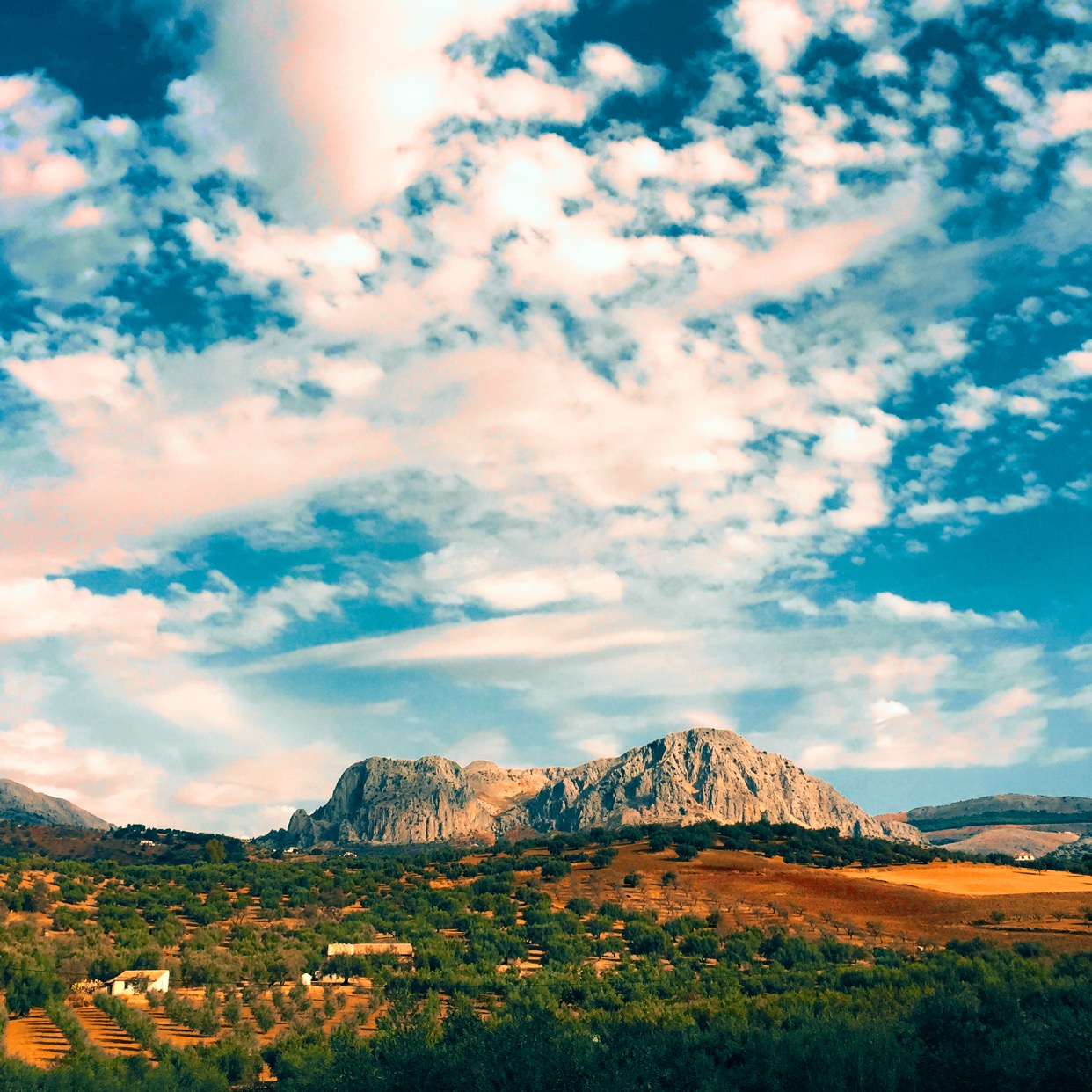
(c) K Wicks (Photography taken in Spain)
This was written nearly two years ago, and most of this has found its way into my book covering this in further detail – Meeting in the Middle of Nowhere.
“It’s been nearly a year now since I learned of this and have been trying to understand Aphantasia, i now know it is in varying degrees across the board for the people who have it, partial for some, full for others. I try as best i can to understand what it is to not have visualisation, to not imagine at all and to not picture anything in ones head, its a concept i had not considered but now makes perfect sense.
For full Aphantasiacs, the difference from partial seems to be startling too ( i can only comment on full as that’s been my experience). There is no escape from the stark reality before you, what you see is all there is – without dreams and mental pictures to carry you away, what you see really is all there is. I have the ability to replay movies in my head, run through what i saw mentally, recall faces, remember looking at lists, posters, people, i can see it all in my mind. But trying to explain that to someone who doesn’t, well, i have been told it sounds like the most alien thing in the world.
“You can play movies in your head?!” Yes. I can retrieve almost anything i have seen in my life, whether i remember it correctly is another matter, but i have something there. I can picture all of my family, past and present, i can imagine i’m looking in the fridge when i am trying to remember what i need to buy (when i forget my shopping list). I use it for so much, and also i realise, for escapism. Even just standing in line or waiting is assisted by my mind wandering, occupying itself with either something i want to do later, of something i might have watched the night before.
So, looking backwards and forwards is natural for me, spending possibly very little time in the present. Reviewing what was, and speculating on what might be. But not for one who doesn’t imagine – there is nothing to ‘look’ back on, and the future doesn’t exist. So living in the now takes on a whole new meaning, and seems that it can lead to immense impatience and frustration with the world and people. Mostly the people who seem to be ‘in a different world’. It’s because they actually are – which was quite a terrifying revelation to one who doesn’t ‘drift away’ in mind – while driving, cooking, walking, and everything else we do, most of us probably are mentally somewhere else. “So no-one is really in reality or sees the world as it is?” And that was the terrifying bit, the reality of that question.
I’m still learning on this and will keep at it”.
(c) K L Wicks
Meeting in the Middle of Nowhere
 MKW Publishing