
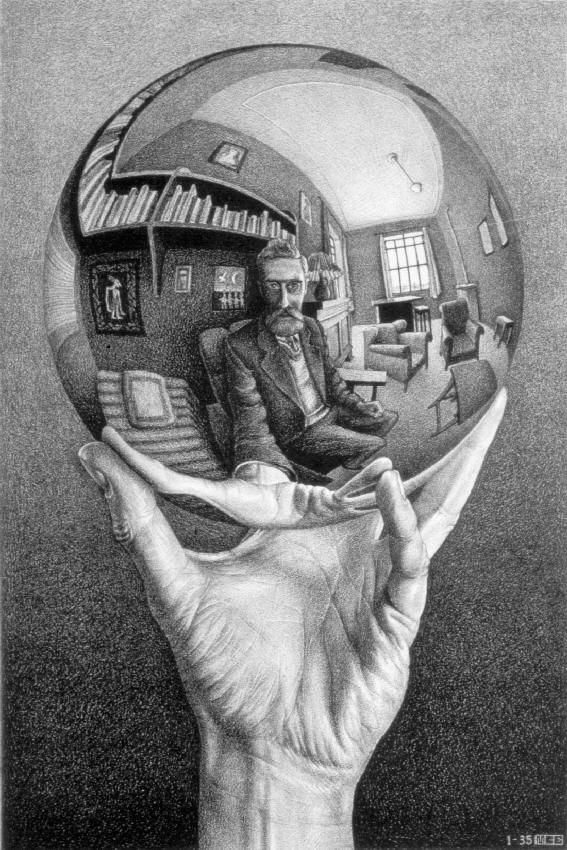
It’s now a thing more than ever before, being able to see yourself. Utilising the move forward in technology to give us a view of ourselves, not usually factored into our development previously, or at least not as much. But in that ‘view’, it seems it’s more than just a digital 2-D representation of ourselves, imprinted in time and in our minds once created, an image our ourselves also gets created.
But further to just seeing a created image of you as a still image, we then took it further with moving images, cinematography and the whole industry that was then spawned. The ‘silver screen’ and glitz and glamour that was then portrayed through it, and from it. Creating a completely different mindset in many people, of either how they view things and people, or how they thought they wanted to be viewed. Almost like a strange looped awareness and existence, where people possibly never really get to be themselves, because they spend so much time wondering about how they appear from a second- or third-person perspective, and that goes into forming who they end up being. But is that who they are, really?
And for it to take hold and become ingrained in people’s thoughts, it needed people to want to be looked at. To want to be known, looked at, admired and ultimately perhaps to hope to become all that you pretend to be. But it’s all based on perception, at least for people in the public eye. For people you meet and know personally, it’s slightly different. But only because it has a different platform and used to be a smaller audience, so it came out in different ways. Now however, people can find their own audience to a point, can be their own content and gather their own audience like never before. Creating some rather strange oddities for people to observe, or at least that’s how it is presented. Again, these are created personalities and scenarios, to hook you in and keep you entertained.
That TV show Big Brother was an interesting move to get people more involved with the weird set up of watching people being watched. To get people used to the idea of being watched and monitored, and how you are perceived by your immediate peers, or a wider audience, which then affects the outcome of how you are treated in the ‘real world’ thereafter. Gogglebox was another odd one I found, the concept of watching a TV, to watch people watching a TV and commenting on it seemed an extra separation from doing something real.
Perception – this being how we see things, ourselves and form opinions and beliefs, covered from certain angles in Perceptions of Self, and Perceptions of What We Think We See. And as we now live in a very deceiving time, what we perceive to be true images or facts has become a bit less clear but than it used to be. In fact, we relish fiction and lies as a species, as long as we know and they are framed as such. Once we are not aware if they are truth or not, it must throw off our perception skills somewhat I would think. That’s maybe why naive people struggle, they are programmed to believe and trust what they see and hear. And then there are the more jaded amongst us, who may initially take things on face value, and then take the extra time to discern whether it is indeed a truth to work with or something factual to analyse and understand.
A person – “The word ‘person’ originates from the Latin word ‘persona’, which initially referred to the mask worn by actors in ancient theatre. This mask signified the role or character the actor was playing. The concept evolved to encompass the individual playing the role, and eventually, the general concept of a human being” – strange that we talk so much these days about people ‘masking’ or putting on a face for society, and not really being themselves. All these ‘persons’ of society not really being themselves at all, because we are defined as a masked version of ourselves.
Mirror – I believe this also would have changed the mentality of people a fair amount, and I do have wonderings about the real reasons for mirrors being made a thing, and for every household to have them briefly discussed in A Portal. But before that, vanity of course must have existed, mist was it so prevalent? Did people feel the need to check their face all the time, and wonder what others thought of it? Did people even care in the time after they became mainstream? Or was that why extra pressure through propaganda and ‘beauty standards’ needed to be encouraged, so that people started judging each other more, competing with each other more and fighting amongst themselves in a perpetual Keeping Up With The Joneses type of squabble. Too busy showing off to and trying to outdo each other to notice the real villains in the tale.
Avatar – A word that has become mainstream in recent years, even before the film came out. It’s original meaning in Hinduism is – “a manifestation of a deity or released soul in bodily form on earth; an incarnate divine teacher.” We apply it to someone’s identity icon on their online profile, feeding into a ‘persona’ that gets created for them to become part of and feed into. Possibly confusing an unformed identity, but on the flipside, could help to solidify one already one the way to knowing thyself. Hard to say for sure.
Matrix – they touched upon it in the film when they referred to Neo’s ‘residual self’, when it came to explaining why he appeared different when back in the Matrix. Showing that often we have a different mental image or view of ourselves compared to the real version. How we look as well as how we think we look becoming part of what gives us this picture of ourselves, and in the film, that is then projected within the ‘construct’ to create a 3d physical reality and self. But because he never ever viewed himself as the real version after we woke up, with the plugs and human modifications, it seems he never did quite get his head round being a visitor to it as he never appeared as his real self. Only the projection.
Individual – Identity divided into dual aspects is how I breakdown that word now, because once it was pointed out to me that the word on the end is dual, which is amusing in a word meaning single. Ideally it should be a word to describe each human as a separate entity from The Hive, but in essence seems to represent maybe the splitting of the identity, or soul perhaps as mentioned in Soul Harvester. Taking you away from being part of the universe and instead getting caught into a kind of dualverse, where it doesn’t seem as easy as it once did to know or work out who people are, because many of them it seems, don’t even know who they are themselves…
(c) MKW Publishing

 MKW Publishing