On The Face Of It

Clocks – we call the front of a clock a face, because it tells the Time, as does our faces they say. Showing the passage of time in our skin, well for some anyway, maybe not for all if it is true that there are others who walk among us. But behind the face of time, is the truth that we are slaves to it, and are bound by it.

Infiltrating faces – AI and its present set up, seems to be partly about messing with people’s faces and perceptions of themselves and other people. Filters are how it started, seeming innocuous at first, just a bit of fun and a way to see yourself how you might want to be. Now being creepier with technology to remould your face from a bunch of other faces, with the computer deciding your ‘perfect’ face for you. And an extra layer of creepy with people now starting to be aware that the systems are generating entirely fabricated faces, sometimes being used as a representation of a ‘real person’. They call them AI generated or enhanced when the computer makes them up, then call them fake or edited when people do it.

Silence of the lambs – seems like an odd one to throw in maybe, but I thought of it for two reasons. Firstly, the fact that although quite happy with his identity, Hannibal Lector wore someone else’s face to escape. And for Buffalo Bill, who wasn’t happy with his identity or face, wanting to project the face he wished to have, by way of a frightening home-made skin suit, if you aren’t familiar with the film.

Wolf in sheep’s clothing – a camouflage, to blend in. Imitate to infiltrate has been used for many a purpose, and if there is a nefarious agenda, usually any tactic is a possibility. Hiding your true nature, behind a facade of something else. So more a metaphor rather than the previous reference, where they literally wore a different face. Probably more in line with Face of a clown – a masked reality.

I have mentioned it before, and we all know that as humans we learn much by looking, and faces are something that give us a wide range of cues, information and sometimes warnings. All those different ways we communicate before we even need to use verbal language, aren’t just based on the face obviously, but that ties much of it together. Which is why many people were and are against the wearing of face masks in everyday life for no substantiated reason. Because it hampers development, communication and perceptions, which have very real consequences. Communication and the ability to understand people, comprehend situations, meanings and concepts is important. Individually and for the purpose of a cohesive society. Once that starts to become stunted and a problem, other problems soon follow. Even when you are speaking the same language, there are often different meanings and intentions behind things that seem on the ‘same wavelength’ but time or circumstance reveals they aren’t quite as you thought. And sometimes you might even be on the same page temporarily, but in a different book completely in the bigger scheme of things.

With all of the above taking place though, it’s now more important than ever to know who you and who you are interacting with and learning from, in real life and online. Because just as manipulative people in real life know what to do to work on your weaknesses and exploit your vulnerabilities, so do the online crew. Whether it be people or AI, it’s all running to a motive and method, just remember that…
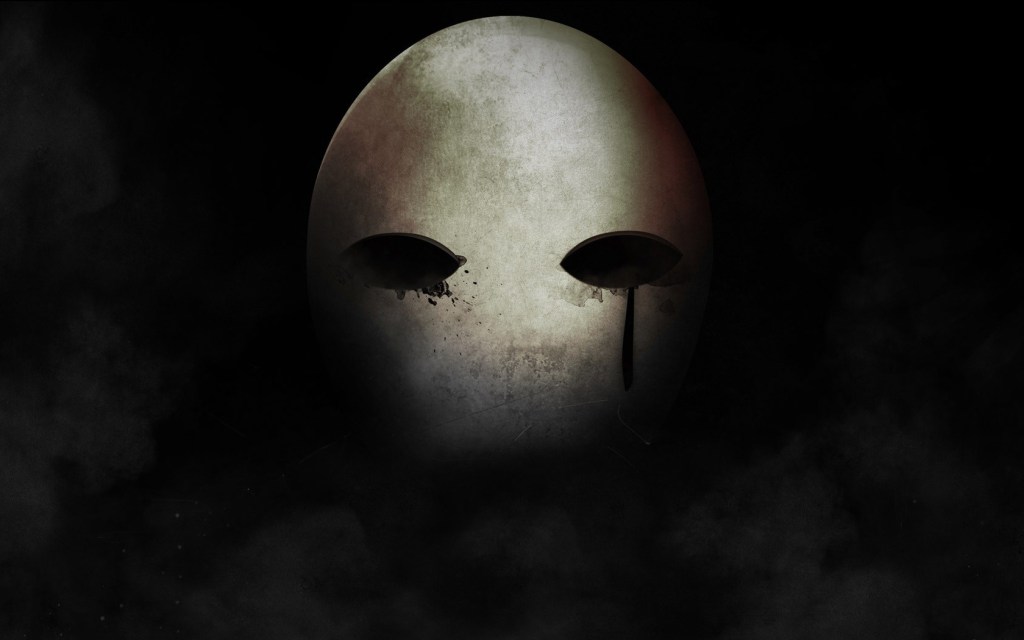
(c) K Wicks

The Face Of A Clown – A Masked Reality

This is a follow up piece to The face of a clown, in story town. Within an hour of posting it I was recommended to checkout a YouTube channel with a series of vids on clowns being of the Nephilim origin. Even more interesting as I was working on a piece called Myths, monsters and legends where I mention the Nephilim, no coincidences go unnoticed. It’s a rather intriguing subject it seems and is heavily tied in with masonic symbolism. Clowns, jesters and tricksters. Lots of things are relevant and without knowing it I have been piecing this together too over time.

The Nephilim were apparently Giants, with very pale skin and red hair. It seems lots of ancient cultures have a depiction of sorts to giants, and modern culture has scaled them down, but kept the red hair and pale face. I mention a number of them in my previous article, but hadn’t really considered their extra purpose and imagery. Even making more sense maybe why the panto dames are exaggerated versions of women, because they are ‘tricking’ the viewer. It’s not meant to be a passable version, its purposely overdone. They say nature warns you of danger with bright colours, maybe we do the same through the medium of warning with costumes and a certain look and reading the body language like we used to. Who can say for sure. A theme of black and white stripes appears to follow it too, and zig zag patterns, noted for being a theme in David Lynch productions. But they are also the lines in hypnotising imagery, so there may be something to it, I need to give that a bit more investigation.

But trying to entice children with bright colours, buffoonery and magic isn’t a new thing. We have funfairs, carnivals, theme parks and pantomimes, all with a frontage of fun, smile and excitement, but with an undertone of sinister, mystery and macabre. Or maybe that’s just me. Maybe other people just see the fun smiley bit. But throughout childhood we are given clues, and hints at what we should really be afraid of or looking out for.

Scooby Doo – it might seem a silly one to include, because I, like many others thoroughly enjoyed watching it for its inanity and fun element. But we all knew what was going on, usually something very nefarious with the appearance of it being something supernatural. Taught some of us to always look further than what is being shown. Other detective shows along the way after that probably helped, if you were inclined to watch them as I was.

Fairy Tales and stories – these are obvious and hopefully everyone who grew up reading them understood the undertone or message being given. And although in them something dastardly was always happening to the children and it focused on them, I couldn’t help but wonder of the adults in those tales. How it was that they came to be so weak, manipulated or corrupted to be so evil or ambivalent to those children. Usually, the heroic efforts of the children gave me hope at the end, that there could be some good and justice, even when surrounded by evil.

Just because it is bright and shiny and children appear to be playing along, they are sometimes sharper than we give them credit for. How did we all spot the weird stuff as kids? Many didn’t, but an awful lot did. And still do, when something isn’t quite right, there is a spidey sense that goes off and means you have to pay attention, and ask questions and find out why an internal sensor went off. And seeing people’s faces is very important usually to gauge someone’s intent or general mood, which you cannot do when they are performing. Putting on an act is called so for a reason, because it is acting to a point, but at what point does it stop being an act and the persona or alter ego crosses over, and becomes the dominant force or personality? Expression of self is important, but there should be a self-governing line, because while you should be allowed to express yourself, others should definitely be allowed to either not approve, or not pay any attention. Because I ask myself, how much of the recent weird crazes and societal issues or abnormal ideas we have, would have been minimised if they didn’t have a constant audience for it? The internet is the new mask of reality, we can hide behind it, reach out with it, get feedback, advice, distractions, and much more, in seconds, all day and night. And those who would be like the clowns of old, don’t always wear make-up, they don’t need to. So, while you should keep a sharp eye on those who would seek to deceive you with appearances, remember there are those who mingle as average folk, looking just like everyone else…

(c) K Wicks