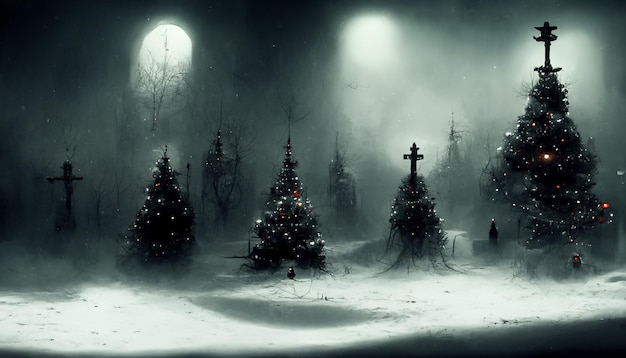
“This is one of those strange ones, of what should perhaps be festive thoughts and ideas, but which took a rather dark turn. Thinking of times past, and how once people used to decorate a tree at Christmas to ward off evil spirits, only since the 1600’s they say, it can’t really be traced to before then. Leading me to thoughts of fireplaces…” – A Christmas Fireplace
This is one of those strange ones, of what should perhaps be festive thoughts and ideas, but which took a rather dark turn. Thinking of times past, and how once people used to decorate a tree at Christmas to ward off evil spirits, only since the 1600’s they say, it can’t really be traced to before then. Leading me to thoughts of fireplaces, and recently have seen talk of the more elaborate ones found in grand settings, possibly being portals. So I wondered, about the open fireplace being a portal into the home, protected maybe only by the intention of those within, with charms and spells featuring throughout folklore and mythological history.
So, the thought moved on from Christmas, to the idea of vampires – and how they needed to be invited over the threshold they say, not able to gain access until you give them permission. You might see where this is going, but I will go there anyway. What if in the past, with people understanding more about evil and entities, could guard themselves against these things, and not be affected or infiltrated as much. But then time drifts on and people forget if they do not see, and a new time moves in. Of commercialism and consumerism, surely an opportunity to resurrect something that once was? Where you can take the blood red and turn it into clothing, and surround it with a story of something that will come into your house while you sleep, but only if you put out the decorations, and milk and cookies. Inviting it through the portal. And even one step further, with the ritual of presents and writing a letter to santa, signifying an exchange, and a contract for that exchange. Selling your soul for presents. A rather cynical look at it of course, as it could just as easily be said it is a ‘good’ contract, for worthy behaviour to be rewarded. But when it appears to be for grooming purposes in reality, to encourage greed and consumerism under the guise of kindness and family, I can’t help but think that it has been hijacked for a darker purpose than it appears.
And generally children are told not to talk to strangers, or accept presents from them, but when it comes to santa and Christmas, that goes out the window. I have never been comfortable with the whole thing, and clearly it has become a commercial enterprise over the last 100 years, but as with much, it seems to be a cover for a set ritual, and one the western world has been captured by. And as others have also pointed out over the years, santa just happens to be an anagram of a well know demon, an entity “that seduces humans into sin or falsehood“. Sometimes they say if there are a number of coincidences, then it is not a coincidence at all. But then again, it could just be seeing what we want to see they say. Although personally until recently, I very much enjoyed celebrating Christmas for the food, presents, decorations and as they call it ‘feeling festive’. But it has waned of late somewhat, and I do not feel that my energy should be directed towards it anymore, maybe that’s just a normal thing, growing out of the set routine that you can see is set for businesses making money and controlling peoples time, not about creating a genuine feeling. If there ever was such a thing for that time of year, we shall never know, but for what it has become I think I am happy to leave it behind…
It’s part of big capitalism, Christmas, and as it fast approaches, you can’t help but notice signs of it, adverts, products, Christmas lights and trees, which I must admit, love seeing. But with that comes certain pressures that have now become a tradition, as well as the merriment that used to accompany it. Over the years though, we have seen Consumerism really hit us hard around this time of year, to encourage maximum spending, often leading to debt for some. That’s when I realised years ago it was a bit of a con, seeing adverts for Christmas savings schemes, I thought it was ridiculous that people couldn’t save their own themselves and needed to save all year round for a one off ‘event’. I loved presents as much as the next kid, coveting many things throughout the year, hoping when the time came, your list of requests would magically appear on Christmas morning under the tree. Having no concept really of cost, durability, or whether it was even practical.
Then it all changed slightly, and I feel a certain catalogue contributed to this. At least in the UK anyway, the Argos catalogue. Each year, around Christmas it would be great to just flick through it, looking at all the games and toys, looking at all the things you thought you needed to have. The difference though, is that all the prices were there, giving a vague sense of value, by listing the cost for all to see, including the children. I know some completely overlook it, and if you are trying to negotiate for a particular toy or present, should imagine it’s quite important. Because someone has to pay for it, either by using hard earned money, or borrowing, and paying it back. On the glad and sorry it used to be called. Glad you had it, sorry you have to pay for it. And as I got older, that’s how I saw it, and made it so that if I couldn’t afford it, I couldn’t have it. Debt isn’t a happy situation, as I am sure many know, so I decided that it definitely wasn’t a scenario I would create for myself, just for Christmas.
So, Santa Claus or Sinterklaas, story taken from a saint eighteen hundred years ago or so, and given a marketing makeover in the 1840’s. Apparently by way of a poem, and then Santa as we know him today in his red suit and with a big white beard was added in by an artist.
“This image has been maintained and reinforced through song, radio, television, children’s books, family Christmas traditions, films, and advertising.”
It seems that there is also a companion to Santa, one they couldn’t get rid of in folklore so it’s been incorporated. Or was that the true story, and they twisted it so it wouldn’t appear as it was. Quite dark and creepy. I’m talking of Krampus, recently having a slight revival with movies and television, but that was who dealt with the naughty children, with his horns, cloven hooves and a rather devilish appearance, but often with a black or brown colour. Sounds like two sides of the same coin, split to make them seem like good cop, bad cop. One looks like the devil, the other dresses in red. Make of that what you will. And being honest, Santa himself (as many have pointed out along the way is an anagram of Satan), is a bit of a creepy concept, with the idea being that while you and your family sleep, a stranger sneaks silently into your house and leaves gifts for children (or kidnaps and tortures the naughty ones, see Krampus tales for that, who also sounds very much like the child snatcher from Chitty Chitty Bang Bang). Sounds awfully like stranger danger and a bit of grooming there! And it is grooming of sorts, just by companies and corporations, to perpetuate the myth and tale using the parents as a conduit, to back-up the continued consumer industry that demands your allegiance, for life it seems. Start them young as they say.
They also appear to have thought of an angle towards resistance to this mega marketing machine, with a jokey surface and serious implications to anyone who doesn’t get on board with the routine, or are lacking in what they dubbed ‘Christmas spirit’. I’ll use the two examples that spring to mind.
The Grinch – thoroughly marketed and revived, through cartoon, film and books, most people know the story. But no worries, because he comes good at the end, realising how great Christmas was after all. You might notice that as a theme here.
Ebeneezer Scrooge – the serious tale of a grumpy old miser who after some shocking experiences induced by three ghosts, suddenly sees the error of his ways, and indulges in Christmas from that point on. I feel these two characters also make it easy for people to ridicule people who don’t want to engage in the superficial side of it, or who just simply aren’t interested. You get called scrooge, or that you are being grinchy. Not by accident I feel.
Nightmare before Christmas – a favourite of mine, and is slightly different but relevant I feel. The king of Halloween is bored with his yearly routine, and while out wandering, falls into Christmas Land. Where the feeling of glee and joy brought him a great and overwhelming feeling himself. So, long story short, he steals Christmas by kidnapping Santa, and goes about delivering Halloween style presents for Christmas. I do recommend it, as it’s quite an interesting film all round. But in trying to replace Christmas, it becomes dark and ruined, and apparently only Santa is the one who can restore this. And, the snow. Quite pivotal it turns out. But joy prevails when Christmas can be had, as is reinforced time and time again.
And in the last couple of years though, this seasonal holiday has been wielded as a point of ransom a few times, over lockdowns, now over strikes and financial catastrophe. Because lots of people use the time to visit friends and family, have Christmas parties (as we may remember the politicians getting on with), or people just like to treat themselves or enjoy having some time off. All made harder and, in some cases, no-existent this year, and possibly thereafter. So, although I don’t agree with the spending furore that surrounds this time of year, I do agree with the sentiment of family, friends, making gifts and getting through the dark and cold winter days. Aint nothing wrong with that.




 MKW Publishing