Fear

This is another chapter from my book – Meeting in the Middle of Nowhere, this one regarding a subject that has consumed much of my thought over the years. Once the difference between Hyperphantasia and Aphantasia was established, it led me to requestion this particular theme and review it from a completely different angle. (If you are not familiar with my book or these terms – I have Hyperphantasia = over visualising in mind and my husband has Aphantasia = lack of visual imagery) And in these strange times where many people are being openly manipulated through fear, it would be wise to understand what it is and how it can affect you.

Fear ~

When we found out about the difference in ability for visual imagery, one of the subjects I raised was fear. I wanted to know if he was affected by horror movies. Although he doesn’t really care for them, I know he had a phase of watching them when younger, and I thought, if he doesn’t get anything from them, why would he watch them? That is one of the areas that I always felt uses your own visual imagery against you, horror films. Creating tension with unseen horrors or just nothing sometimes, only a piece of music – letting your brain make up something more terrible than they could.

And I was correct. It was a flat no. He didn’t get scared watching them or any time after, because his brain literally imagined nothing during the scenes where you did not see the monster or alien. Long scenes of nothing but tension will often lose his attention, and rightly so I realise. Therefore, he never thought there might be monsters under the bed, has never been afraid of the dark or something he can’t see.

“Why would I be afraid of an idea?”

A very logical question, I felt, because without visual imagery, there was nothing to be scared of. He doesn’t visualise what might happen, he doesn’t put himself in the place of others, and therefore no emotion at all is attached. They are just pictures on a screen and when they are finished, they are gone. No recall or replay happens after the event. We can discuss concepts and ideas, but I no longer make any reference to anything visual or implied visual, there is no point and it holds up a conversation.

I watch less horror myself these days. Once I realised my brain was imprinting most of what I saw and could recall it at any given moment, I decided I need to be a better filter. My moods and emotions are greatly affected by what I read, write, watch and see, so I choose what takes my attention wisely now. I have spent a big portion of my life being affected by my fears and phobias, something he simply cannot relate to. I have a number of them and have learnt to manage them over the years. Some may be familiar.

Example: When I was about 8 or 9, I watched Jaws. As you can possibly imagine, it didn’t do me any good. It affected me so much I didn’t go swimming or have a bath for a year. Only showers. Because my brain decided to visualise and imagine jaws coming up through the plughole. Or in the swimming pool, the filter became my point of fixation. I had nightmares about the sea, about swimming, about sharks. It haunted me greatly.

After a year or so, I started to go back in the water. But with a very changed mind-set. Every water experience was a chore, an anxiety-ridden feeling I tried desperately to hide. I was a tomboy and wanted to be cool. So swallowed my fear and did it, along the way reading as many factual books about sharks as I could. Trying to dispel my unnatural fear of something that did not inhabit the same terrain as me.

Around the age of 12 there were a couple of experiences that reminded me I was not over it, just working through it. In the Army Cadets we were on annual camp and part of our training was being made to jump in a lake, swim out to a small boat and back to shore. Sounds simple enough. Let me set the scene as it really was – it was a grey February day, a freezing cold lake in the woods, and the water was black as night, zero visibility. I was the only girl taking part because the other three had managed to come up with excuses. My fear was so paralysing I couldn’t think about anything other than what they were about to make me do. All I knew was that I couldn’t bottle it in front of everyone.

As the only girl they tried to make me go first, but that is where I put my foot down, no, I would go second. I may have also watched the film Alligator by then too, which only added to my already massive issues. Watching someone else jump in first and struggle to the boat did make me feel a bit better. I was a competent swimmer so my concern wasn’t skill based. I jumped in, and as my head went under just for a second my panic hit a new level. The only reason I think I managed it was the adrenaline from the fear. That same mechanism got me bronze medal at the cadet championships too, for swimming. Visualising a shark actually helped me there!

I am still not over it, I just don’t go near the water anymore. I love swimming as a sport and exercise but it’s not relaxing or enjoyable for me. Or even being on water; over a decade ago I visited The Gambia on holiday and had to go in a dugout canoe, the rim was only a centimetre above the water line. I was so tense I gripped the edge of the canoe the whole time, with fingertips only ever so slightly hanging over the edge, crocodiles and piranhas being my fear there. Again, I was just trying to save face but hated the experience and that I put myself through the anxiety of it.

So I now avoid water still because of a scary film I watched. It sounds pathetic, but the struggle is real. To my husband, it sounds mad and he can’t believe these things have affected me so much, but he kind of gets it a bit more now. He just doesn’t get why I continued to keep watching films that would give me nightmares and real fears. Zombie films also have their place in my Hall of Horror Phobias, but I now feel I am trying to put it to good use by writing books. I am torn though; when you work out what scared you so much, do you really want others to go through what you did? It’s the author’s dilemma for me; just because I can, does it mean I should?

I have also observed that fear and anxiety can be and are used in conjunction with each other for manipulative purposes.

Example: After my breakdown my mother was my sole company for most of the day. At first she seemed to be trying to help me get better, then after a year or two, the rhetoric changed. Instead of preparing me to reintegrate into society and become a real person again, I began to hear things like,

“You’ll never cope without me.”

I think it was from that point on all I could focus on was getting old enough to leave home. I didn’t care that I might not cope and the world was scary, I desperately wanted to have the chance. She, however, seemed to be filled with regret and constantly talked of plans involving me and her in the future. I was afraid I would never get away which added massively to my anxiety. Obviously the events that followed did ultimately see me get my wish to leave, but at the cost of everything. It took me quite a number of years to work through all of that and put it all where it needed to be. I can’t say I had it harder than anybody else, but it was definitely weird.

(c) K Wicks – Meeting in the Middle of Nowhere.

Photo and words taken from the film V for Vendetta.

Meeting in the Middle of Nowhere

You know when you hear the phrase ‘not on the same page’? Implying that you are both not quite thinking along the same lines. When we realised there was a massive difference in thought going on, I realised we weren’t even in the same book.

We discovered that my husband is Aphantasic, meaning he doesn’t see any mental imagery in mind. I on the other hand, it turns out, am Hyperphantasic, someone who visualises most of the time. It may seem like a small difference to some people, and maybe it is to others, but for us it was huge. And went some way to explain why he just couldn’t understand my viewpoint on many things – despite various method of breaking it down or through logical explanations. Once we knew, I don’t expect him to understand certain things now. Because I can imagine what it is like to not have the ability – or affliction, to see images in mind, have internal narration (inner monologue) and recurring memories. In fact, once I did imagine what it was like to not have them, I understood him better and things made more sense. But the flipside of that, is that he can’t do the same. He does not imagine. So his understanding of me is limited, the best way I felt I could explain it was to write it down. Put in into sections of what areas of life I felt this made a difference.

From that came my book, Meeting in the Middle of Nowhere, describing what it is like to have Hyperphantasia and how I feel this has affected many areas of my life and experiences. And describing as best I can, the viewpoint on those subjects from someone with Aphantasia.

Meeting in the Middle of Nowhere.

(c) K Wicks

Labels

Another excerpt from my book – Meeting in the Middle of Nowhere. It’s about having Hyperphantasia (myself) and Aphantasia (my husband), about living with both and the differences we have noticed between the two.

Chapter – Labels

There are many labels given to things and people. They don’t need to cause people to be excluded, singled out or make them seem different in a bad way. Unfortunately though they are often in the minority, so they are left out or excluded. Maybe it’s easier for society to treat people like that rather than accept and help to understand. Although it makes me wonder how we ever made it this far with that kind of attitude.

Example: At school I had a friend who was severely dyslexic, his writing was like a scribble, and the teachers treated him as though he was thick. What I saw was a clever boy with an aptitude for computers when they were just coming into schools. Not very good at writing and who got bored in class quickly leading to what they called ‘acting up’. It bothered me they didn’t care or have the time and resources to deal with differences, whatever they were. I noticed lots of bright people, but they didn’t fit the curriculum so they were singled out and treated differently, not in a positive way usually. They couldn’t be what the system wanted.

This seemed to lead to developing behaviours and characteristics I felt may not have been there otherwise. As goes the saying, if you tell a child they are stupid long enough, they might just start believing it. People are very easily to influence and manipulate given the right tools and environment, school being a perfect place for this.

This belief of mine was compounded further by reading a certain book. I did not stumble across this book by accident. It was handed to me by my Grandmother from her personal bookshelf. She could see what I was interested in and was a clinical psychologist by trade herself. I took the book and kept it on my bookshelf for years, many years. It was only unfortunately after my grandmother passed away at the age of 90 a few years ago, that I actually opened the book. And for me it was a game changer.

All of my theories about how society controls, manipulates and conspires against us were confirmed. We were all pretty much an experiment of some sort. For decades now processes and systems had been put in place and executed for a systematic overhaul of who we are and how we are meant to be. This book – The People Shapers by Vance Packard was a revelation to me that someone else had so concisely worded and researched exactly what I had thought. But he knew the people doing it and reading the details of what I had thought, made me feel sick. Because it was so much worse. As if the eugenicists had infiltrated every level of society and decided everyone was defective in some way. Not that we were just different. I could see this was both harmful and damaging to society, not helpful at all. What I didn’t understand initially though is that this all creates industry and profit. However much I would like to think the powers that be want to help people, they only want to for profit.

This book was first published in 1977 which made me aware that I was living in the repercussions of those times. Pretty much all of these projects he had written about either had already been rolled out or were in the following decades.

I had recognised some of these issues at quite a young age before I got to this book. Had already began to engage in learning about the Theory of Mind before I knew what it was. Through various circumstances I saw more than maybe most by twenty and was taught how to fit in, that you had to comply and be what society wants. Keep your head down, do what they say and try and get on. It took me years of trying and working hard to get it, but I knew what I was looking for. I had a plan.

Around me I saw most people did not understand what was being done to them, did not have a plan and instead seemed quite lost. Either in themselves or within society which demands and dictates at a pace that most people really aren’t quipped for, let alone comfortable with.

I complied more than most, but I was steered by my grandparents who managed to override or interrupt my parents having more influence over me. They taught me to fit in and how to comply, what I needed to do to have some kind of easy life, because if you didn’t, it wouldn’t be made easy for you. I am extremely grateful now for this overview they had, obviously being of a time when all of these societal changes were being implemented and at the helm of some of them.

Another interest I developed along the way, which I felt was necessary to my understanding, was social history. Possibly not interesting to others, my research included the history of taxes, benefits, mental health, criminal laws and medicine. Trying to understand how we go to this point, what rules and laws we had along the way that led to now and the world we have created around us. Knowing how and why we got to this point meant everything to me, without those I felt blind.

I have suffered the usual labels along the way too, and again having some of these ‘given’ to me, led me to want to understand them even more. To understand the impact these mental processes can have on a person, and how just the word or label can destroy someone. Alongside these ‘labels and categories’ though comes industry, pharmaceuticals and money. Lots of money. So I can see why it might be easier to keep looking at the cure rather than the cause.

Through various issues at home and in life – I have had the following labels – clinical depression, a mental breakdown, PTSD, stress headaches, potential anorexia, normal depression, anxiety, agoraphobia, dissociation disorder, separation anxiety and a behavioural disorder.

All this around the ages of fourteen to sixteen. I was having a tough life I don’t deny it, and I seek no sympathy for it, it was what it was. I cannot help looking back though and really questioning their motive for overloading an already troubled mind with all of that. I felt bitter towards the authorities at the time that they would do that to someone, a child no less. I had some counselling and they tried to put me on antidepressants. That didn’t work out and I didn’t take them, I did however find the need for them years later with a number of repeat episodes periodically throughout my twenties. Like I said, life can be hard. I now realise this doesn’t automatically mean you are mentally ill. This could mean you are having a normal reaction to something that isn’t right and needs addressing, not supressing.

It was because these things had labels and were well established that I was able to look into them. To try and work them out using the only test subject I could ever really get the truth from. Myself. Given that we humans are predisposed to self-denial, even then the truth can be skewed but the best you can get sometimes.

Over the years my bitterness turned to anger, because I knew they were doing it to others. I was not going to accept these conditions or disorders as who I was, I decided I wanted to work out how they came about. I did not have to look far. It was quite obvious where the problems were, at home. Text book stuff really. There were eating disorders, mental illness, drug addiction and parental absences during my childhood, of which I didn’t pay much attention, or so I thought.

But all of these factors, people and environments in my life have played their part to shape me, to determine how I ended up like this.

A few years into my 30’s a curve ball appeared when I met my husband. We met, we fell in love and we married within 8 months. Simple. It wasn’t for about a year or so after that I noticed there were differences I couldn’t quite put my finger on. I had always prided myself on being able to work out how someone thinks, if I spend enough time with them and watch their methods, it can be done. But I wasn’t able to work out my own husband. It started to frustrate me. He would make what appeared to be flippant comments, sarcasm with no thought for my feelings, he couldn’t understand why I talked about my past so much.

I just put these things down to a difference of personality and lifestyle previously. It was never done with any malice or intended offence, and because he is extremely loving as a person towards me, caring and bright as well as mostly logical. It confused me why he was like that. There seemed no basis for it and he seemed confused when I wanted to know why. He just simply said he didn’t understand why I felt the need to talk about my past all the time. He found it weird I could remember the year I did something, or thought something. That I seemed to have an attachment to things and activities. (Movies, books, hobbies, interests), things from past that in his opinion I should have let go of.

That where I found it odd. I had been surrounded by people my whole life who weren’t like him, who appreciated their past and memories, even if sometimes they weren’t the best. Still I couldn’t put my finger on it, why did he think my way of thinking was so strange? I found it maddening, I kept trying to work out what it was. Why did he see things so very differently from me, and more to the point, why did he feel the need to tell me all the time? I couldn’t get him to understand why it was actually quite hurtful to tell someone their past is irrelevant and has no meaning. Which made me think there really was something else going on. It wasn’t personal, he genuinely felt like that about everyone.

It took nearly another year to find the culprit and only happened because I was not willing to let it all go. I also write horror fiction and it was this that bought it all to a head. He didn’t see the point of fiction, didn’t understand why people needed constant escapism and didn’t think it really had a relevant place in society. Red flag raised and cue internal rage. Reading books and watching films have saved me from myself many a time and made my childhood more bearable. To think someone didn’t believe there was a place for this saddened me very much and I felt it needed correcting. How could he have married a fiction writer if he thought it was pointless? It was crazy to me.

Instead of jumping straight in and having an argument about it, I though it through. Thought about things he had told me about his past and childhood – only because I asked him specific questions. Some of which were a surprise or couldn’t be answered as he hadn’t stored the information. One comment had stuck with me when talking about playing as children and he had said

“I couldn’t do what they did, they seemed to ‘Go Cartoon’, and I couldn’t”.

I realised this probably meant he didn’t do make believe and just wasn’t interested. As an adult I get it, but to say you were that way as a child made me realise there must be more to it.

It took hours of questions and talking to try and get my head round what it was that was so fundamentally different, no-one I had ever met had this view – and I have come across some very different opinions and view on things in my time and travels. It only took one sentence in the end to break all this open, when I finally worked out what I needed to say.

“You do realise that when people like me read a book, we see pictures in our head don’t you?”

“No”.

And there it was. The bombshell, the game changer – in fact, the life changer. But it was now something I could work with and instantly took to the oracle (google), to find out what this was. I found it pretty quickly and was excited to know this was a thing, he wasn’t weird, I wasn’t weird, we were just different. The excitement was short lived for me and was non-existent for him. This was a label he didn’t want and one that would both take us quite some time to get our head around.

(c) K Wicks

The Unknown – my book

I have always been interested in viruses and before all this happened I had speculated on what might occur if we were to discover a strange new organism… Just didn’t realise within a couple of years we would find ourselves involved in something similar!

“A discovery in the Siberian tundra turns the entire world upside down, rewriting history and setting seemingly unstoppable forces in motion. In a race against time in a quickly changing world, they must learn to adapt to survive. Will people accept their fate or fight to save an existence that was always meant to end? Can humanity survive?”

Under the Apple Tree – reviews

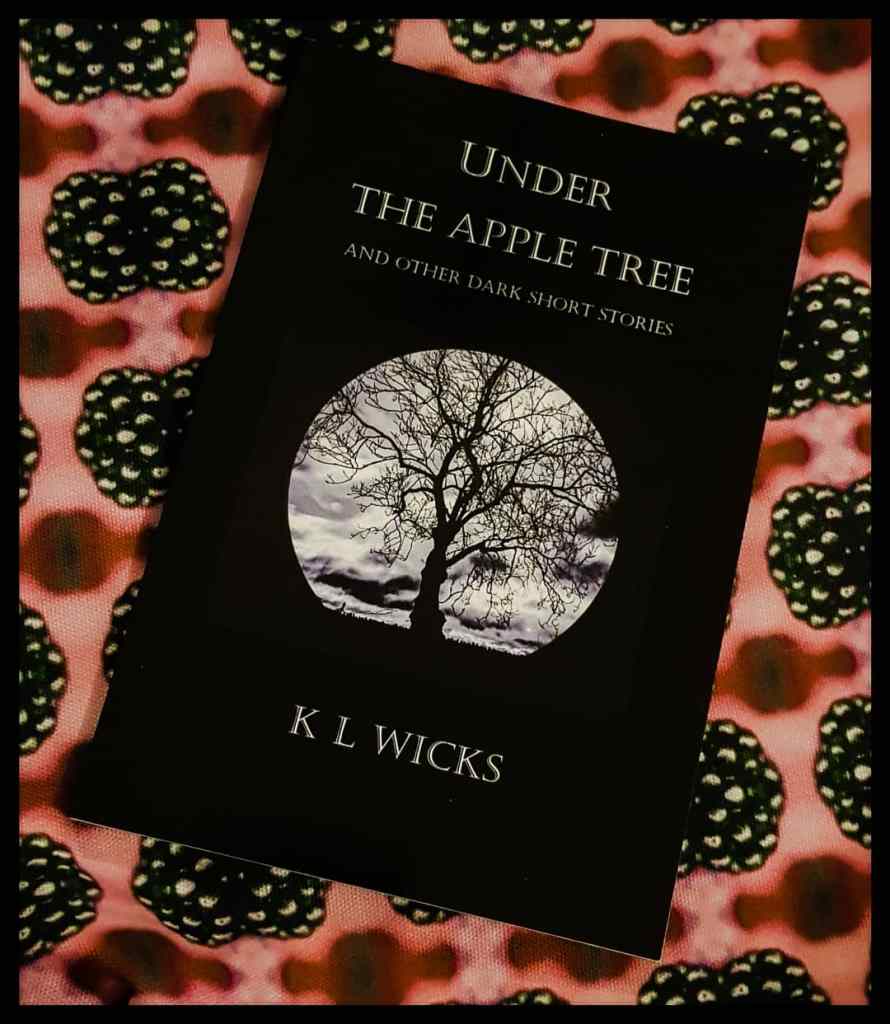
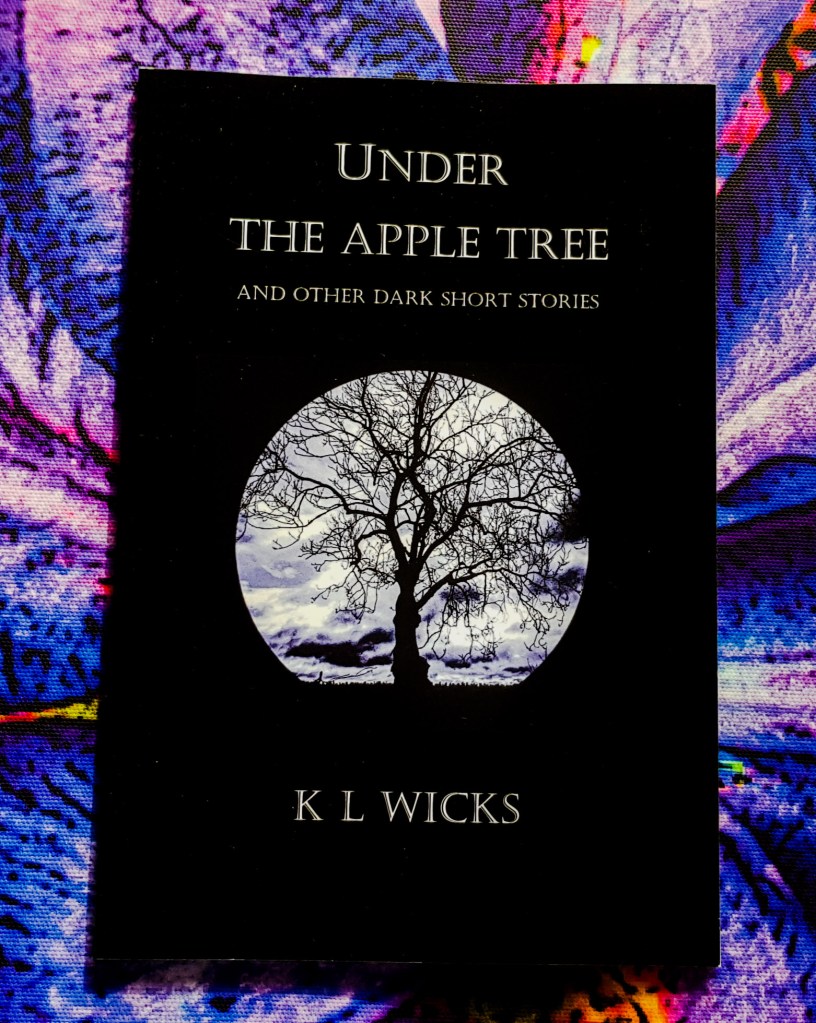
Under the Apple Tree and other dark short stories.

I have been very lucky to get some awesome reviews for my first book of short stories, so thought I would share a few with you. They can also be found on Amazon with the book (link at bottom of post) and of course just in case anyone is looking for a creepy read to fill the time 😉

Reviewer 1 – Six creepy stories that are guaranteed to lodge themselves firmly under the skin. Each story invites the reader into a world where you are certain that from the very first word, things are not going to end with a cheery musical number. They are ‘dark’ stories for a reason. A quick read for those looking for a chilling end to the evening, each tale comes with its own twist. Personal favourites include ‘Doctors Visit’ and ‘Clocking Off’.

Reviewer 2 – Thoroughly enjoyed these short stories reminiscent of Roald Dahl’s ‘Tales of the unexpected’. Particular praise for ‘Clocking Off’

Reviewer 3 – All the stories here have their own flavour. Another review mentioned Tales of the Unexpected and I’d say that’s on the money. Imaginative, well-written, I’m looking forward to more from this author.

Reviewer 4 – Although the stories are set in present day, the author’s writing style is reminiscent of classic horror like Stevenson or Shelley, which can feel odd at times but carries the stories well. And, similarly to the classics, there’s not a lot of gore or curse words, which makes this collection enjoyable for fans of all ages. In a way, Under the Apple Tree: And other dark short stories remind me of scary stories you tell around the campfire or are passed around during sleepover parties, and like those stories these tales stay with you for a long time.

The full review for No.4 is much longer and covers each story separately, but this last paragraph made me smile very much.

I can only hope that people get as much enjoyment from reading my stories as I did all those years ago reading every one else’s.

Fiction is pointless

Fiction is pointless. What do you think when you hear those words? Do you agree? Have you ever given thought to why fiction is a thing? I am a writer and horror fiction is my chosen genre (or rather I think it chose me). So I was disturbed to hear these words, from someone close to me at the time. Not when we first met, he just said he wasn’t into reading fiction and we left it at that. But a couple of years later, I was curious and wanted to know, why didn’t he like reading fiction?

The answer threw me completely. Fiction is pointless. I have to confess, I believe I took the defensive route immediately. As someone who has enjoyed many hours of escapism growing up immersing myself in books and movies and writing my own stories. I thought it was essential and it had never dawned on me that other people may not share that. I think I unpicked that jumper thread because I knew my husband would never read my books or be interested in any of my fiction, I wanted further explanation. I didn’t quite realise the can of worms it was going to open.

I tried so hard to explain it, what joy fiction could bring letting your imagination run riot as they say. He shook his head at me. Then I worked out something vaguely in the back of my mind. When talking about stuff previously I had asked him about playing as a child and imagining things and he said the phrase which was starting to make more sense ‘I could never go full cartoon’ like everyone else. I didn’t quite understand it, but couldn’t think of a way to get him to describe it better at the time, but now it came back to me. I had it, and said ‘when I read books, I actually see what I am reading in my head, there are pictures of what’s going on. Like a movie’.

And that was it. What seemed like such a small thing as one person liking fiction and the other not, uncovered something very profoundly different and something that would affect nearly every aspect of our lives thereafter. We discovered he has Aphantasia, a lack of visual imagery in mind. He didn’t see pictures in his head, and to be honest, was pretty horrified that I did. And it turned out apparently 98% of people do in some way or another as well. The adjustment to this has been long and sometimes not easy. It’s made me analyse my own thought process all over again too, because as it turns out, I have Hyperphantasia, which is considered an over active and vivid imagination. Now I know other people aren’t like me either, they don’t have constant dialogue, pictures, songs, films, memories and ideas all jostling for position at once in mind. It’s been a strange old road, and this year has just made it all the stranger…

(c) MKW Publishing

The Kingdom Under the Sea – Book Review

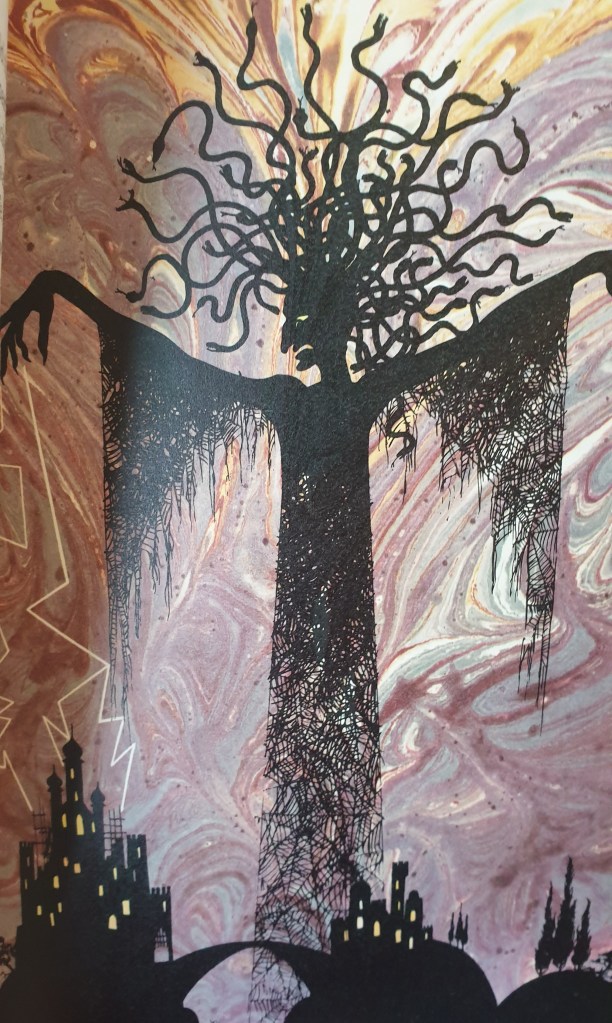
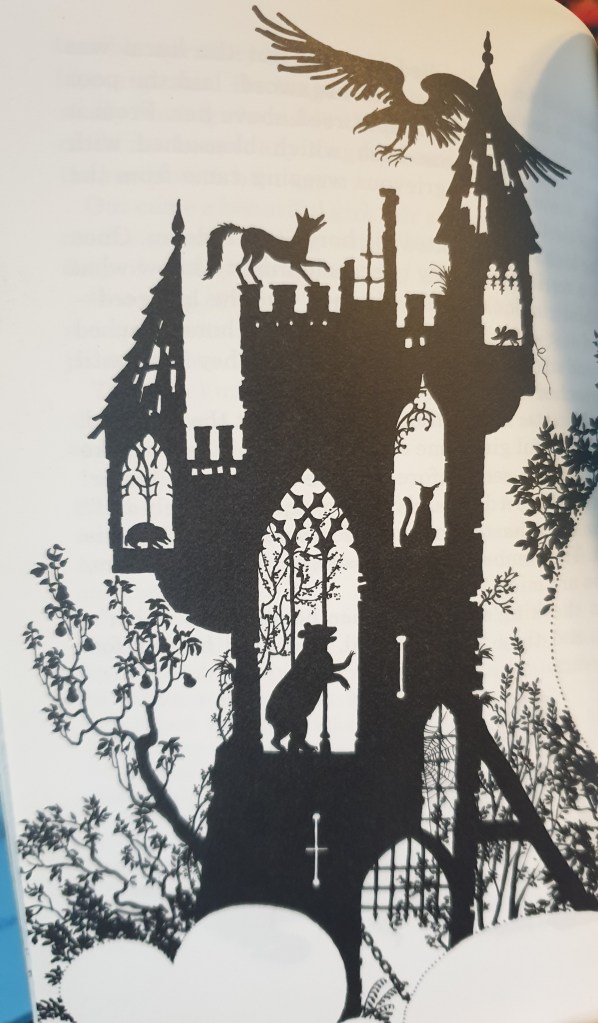
This was an absolute favourite of mine growing up by Joan Aiken, the stories are wonderfully illustrated by Jan Pienkowski, which made it stay in mind long after the book was put down. Both writer and illustrator have inspired me very much with this collection. The whole book is a delight, and I can only hope to bring this kind of enjoyment to a reader with my own books one day.

These stories are all Eastern European fairy tales with a strange surreal quality to them, all vividly brought to life by a great writing style and silhouette style artwork to accompany.

As you would expect from original fairytales, there is a dark twist or theme running through them including a queen being bricked up alive in a wall!

I recommend this if you like a bit of dark, strange and the surreal.

The Kingdom Under the Sea and other stories by Joan Aiken and illustrated by Jan Pienkowski.

(c) K Wicks

A creepy read (A Parallel Abyss)

I haven’t had much feedback for this one yet, other than it was compelling, they were hooked from the first page and the story unfolded at breakneck speed. I take that as encouraging. This was an odd story to write because unlike my first book where I knew the whole story and just had to put pen to paper, this one unfolded before me. I suspect that is why it comes across as happening at breakneck speed because that it is how it is meant to be.

I don’t actually know how to slow it down to be honest. And when I have re-read it through, I get so engrossed in the story, the excitement and the fear of where it’s going, that I am completely distracted by it. Good if I want to escape with my own book, but not so good perhaps for the reader? Chapter one is available below if anyone wants to take the plunge…

A Parallel Abyss – Chapter 1

I also have colourful bags available for sale as well as copies of my books if anyone wants to buy them directly. Or bags available at Rebubble and books at Amazon.

(c) K Wicks

Under the Apple Tree – Going well

It’s been just over a year now since I released my first book of short stories – the second one is half finished, but this year has really hampered creating for me. Under the Apple Tree and other dark short stories came from various ideas I had been mulling over for decades and two of the tales actually are adapted from real life experiences shared with me by someone close. So it was really exciting to receive a good review, then another and now I have six, all of them positive. One review mentions being reminded of The Outer Limits and The Twilight Zone, and another actually likens my stories to Tales of the Unexpected by Roald Dahl. That in itself is an achievement! I loved reading Roald Dahl growing up, have read my fair share of creepy stories and watched all three of those shows. Some of those horror tales obviously left their mark on me. I can only hope to do the same for someone else.

Part of one review – “Although the stories are set in present day, the author’s writing style is reminiscent of classic horror like Stevenson or Shelley, which can feel odd at times but carries the stories well. And, similarly to the classics, there’s not a lot of gore or curse words, which makes this collection enjoyable for fans of all ages. In a way, Under the Apple Tree: And other dark short stories remind me of scary stories you tell around the campfire or are passed around during sleepover parties, and like those stories these tales stay with you for a long time”

(c) K Wicks