When Someone Else Saves The Day

We are conditioned for everything it seems, and expecting someone else to save the day is one of them, perhaps. We even have a saying ‘a knight in shining armour’ to save you. I never liked that idea, just sitting around and waiting for a hero to swoop in and save the day, whether it be a knight or a maiden. Of course, we like it in movies, it’s predictable and safe, and usually leads to a happy or at least satisfying ending. But what of those stories and the ones in particular I have selected for my usual rundown.

Robin Hood – I would consider this known by most, so goes top of the list. The classic tale of wrongdoing and justice for the people, in the most peasant revoltish kind of way possible. And they won. So we are told that he was a myth, a legend and these days maybe just a money maker.

William Wallace (Braveheart) – again, we are led to believe there was someone so passionate about their beliefs, countrymen and way of life, they managed to rally an army of followers, but ultimately failed. That’s the kind of hero they want you to see, the one who sacrifices themselves, and still loses.

Boudicca – One of our rare female heroes in history that apparently rose up and fought back, only to then be killed, of course.

Guy Fawkes – Another famous one that has been allowed to persist in its telling and in fact commemorated each year still to this day, the same tale over and over. So close, but they too failed.

Those are all apparently real people (maybe not Robin Hood), from our past on this small Island, but the fact we have stories like that leads me to two conclusions.

a) These people did exist and overthrew what was then in place, but after victory time passed and although their names persisted, the stories could be re-written to show they didn’t win. Couldn’t have the peasants getting above their station and believing in themselves.

b) Or they are part truths or perhaps completely fabricated stories to try to instil in our collective psyche that we will always lose if we fight back. Either conclusion ultimately gives the same result.

So I ask myself, what advantage would that give the programmers? Having a people not believing in their own collective power and what they are capable of could be a handy tool if you wanted to hold people down, and decide what they are allowed to know. Knowledge is power as they say.

There are also a number of films, even though many films have been made of most of the above, and there will be countless others I don’t mention.

Terminator Films (John Conner) – The central character of these films being the one to save the day and bring an end to the turmoil.

Poseidon Adventure (The Preacher) – I have only watched the 1972 film for this, but thought it was great. Someone trying so hard to save people, showing courage in the face of adversity, only to die at the end himself, but he did save some. It wasn’t all for nothing in the end.

And there are other movies, where we are led to believe that there is only one who can save everyone. The One.

The Matrix – Neo

Star Wars – Luke Skywalker

Harry Potter – Harry Potter

Lord of the Rings – Frodo, but Tolkien did a switch there, because Frodo wasn’t the one or the hero after all, he failed, and Sam was the hero, not because he was chosen, but because came through when it was needed most.

But in all those films, they didn’t just do it by themselves, they had friends and something to fight for. And it may sound as corny as the films do sometimes, but love, friendship and what is right in this world is worth fighting for and believing in.
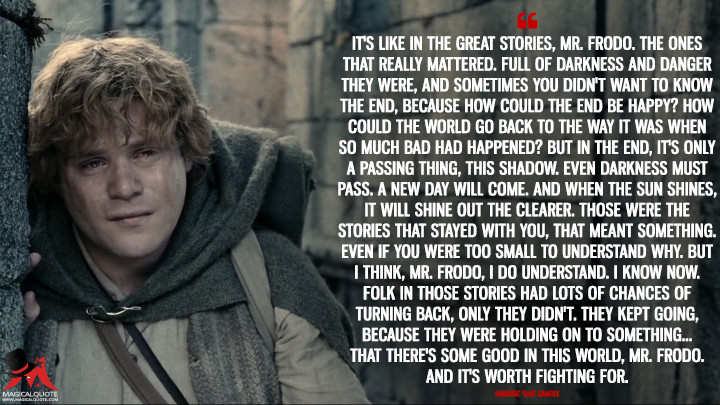
From The Two Towers (internet source: magicalquote).

(c) K Wicks

Cruelty

It’s not a nice thing to know your fellow man (and woman) are capable of such stark levels of cruelty towards each other and other sentient creatures. I have read a few news stories lately which reminded me of a feeling I carried for much of my life, a bewilderment I guess that people who walked and talked like me, could do such awful things. I read about lots of grisly things when i was young and growing up, but two incidents stayed with me in particular, both within a couple of years of each other. I was 12 when James Bulger was killed, and was more than horrified by this terrible atrocity. It was perpetrated by kids, only a year or two younger than myself and I was shocked being honest. I didn’t know it could happen like that, I thought us kids were the ones who had to be frightened of adults, not other kids. It changed my view somewhat of my peers at the time. My mother was equally horrified and it was no accident I had read all the serial killer books in our house, they were hers. But I didn’t know of another tale of the past, another equally shocking event. Mary Bell. If you haven’t heard of her, look her up, but the thoughts should not be with her, they should be with her two young victims and their families. She has been released with a new identity just as with the 1993 killers. Odd isn’t it, that we would go to such lengths to give new lives to the coldest and disturbed in our society, and then let them back out to ‘integrate’.

The other incident in the news, was Fred West. It was shocking, and there have been others as you well know, but those two within a short time hit home that we aren’t all like each other, and people’s motives can be very dark and twisted indeed.

There have been many recent stories that have reminded me of the cold heart some humans have (or lack of heart completely), but two got me thinking again about the senselessness of it all. A poor boy murdered by his parents and dumped in a river. A young man almost starved to death after being locked away in an attic by his parents. Such a personal level of cruelty, up close and very personal, family in fact. So is it really so hard to believe that if people can be that cruel to family and ‘loved ones’, they could be equally so to others. What are they capable of towards strangers?

And what of the ones who were like those children, but maybe never got caught, had some self-control or restraint, and then grew up to be the adult version of that. The ones who perhaps understood that you can still torture people and ruin them without ending their life, but just by making it miserable. And when they see you are distressed and harmed (emotionally or physically), it makes them happy as that is their purpose. I do suspect that those are the type of people now in charge of the behaviour unit and the government, and that those type of people have infiltrated most levels of society where you have a middle-man service. I touched upon that briefly in my article It Looked Sinister, because I had already realised we are being dictated to by some very cold and heartless people. And they usually want to have power over people, in some capacity. So, I will always look at those who make their way into positions of power, whether it be law enforcement and justice, teaching, medicine, entertainment, business and any other walk of like where they ‘need’ to be around people. And it’s a tough one, because alongside those people are the complete opposite, the ones who do care, and want to help and make sure others flourish and bring a bit of good into others’ lives. So, what do we do? They look the same, wear the same uniform and say the same things – how do we know? And that is the big one isn’t it – how do we know who is a good person and who is a bad person? We don’t, because it’s not that simple. Good and bad is a bit of simplification of what goes on internally and emotionally, so to paint it a simple thing is misleading to the thought process I feel needs to be engaged for it.

Let’s look at it in a more basic and helpful way. Not whether they are good or bad, but does this person mean me harm? And that could be any harm, physical, emotional, financial, whatever is it. Take away the good and bad, as they can confuse the problem. How many times have people got away with things because they ‘seem like a good person’ or appeared to be as such. Or someone was damned because they were a ‘bad person’ to either you or someone else. Notable, but ultimately irrelevant. Because we all know that someone can be an arse to someone else, but not to us, so we shouldn’t judge people on that, but we do. Sometimes people make lots of excuses for wrongdoing because they were a ‘good person’ and they get away with it, and just so, people are judged harshly whatever they do, because they have been judged to be a ‘bad person’.

We should really be assessing whether someone means us harm and what they are motivated by. And re-assessing it again, and again, and again as necessary. Because people change, as do their motives and intentions and sometimes circumstances, and the moment you realise their intention has changed to a harmful one or one of hinderance towards you, it must be addressed. Acceptance can save people an awful lot of hassle in their life, just accepting it is what it is. That doesn’t mean you have to be demoralised by it, in fact it can be quite the opposite and motivating for you to move forward. We are the change we are looking for…

(c) K Wicks

Things that came before

It’s hard to know just when, how and who for much of our past. What they say versus what we see doesn’t always stack up, so I will let you make your own mind up on what time period these buildings and structures were from, or what purpose they served/serve. There are many theories to consider other than just the official narrative, and given what we have experienced over the last two years, I believe questioning the official narrative has now become imperative.

Waylands Smithy, Oxfordshire
Ashdown House, Oxfordshire
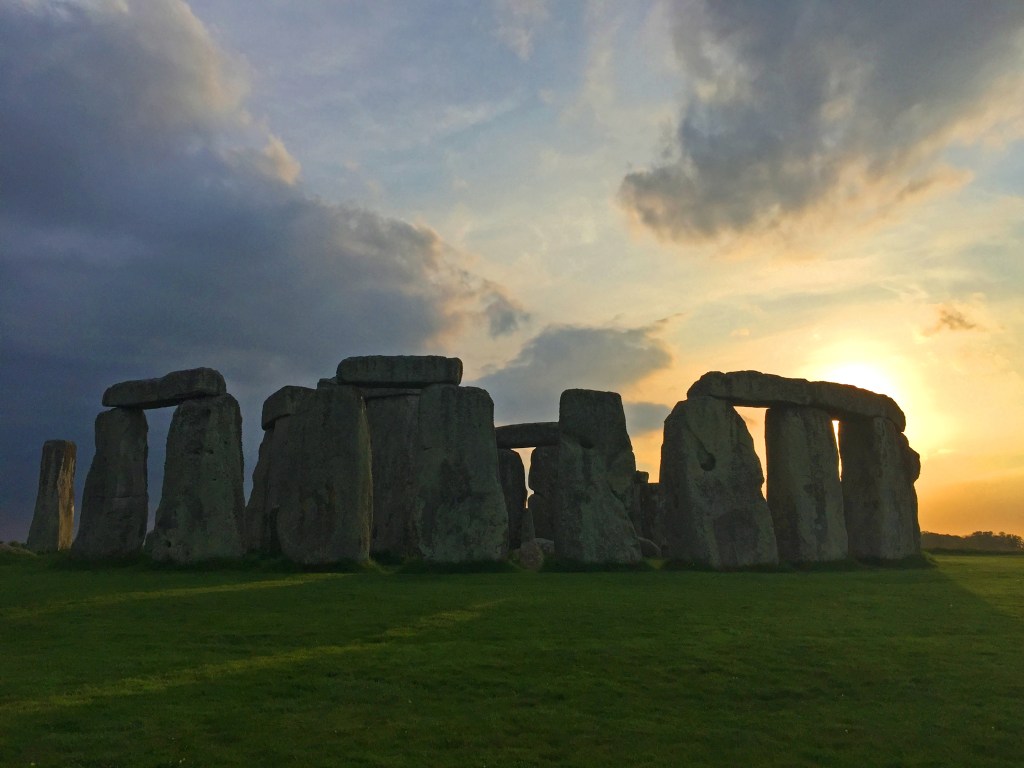
Stonehenge, Wiltshire
Salisbury Cathedral, Wiltshire
Karnak Temple, Egypt
Silbury Hill, Wiltshire
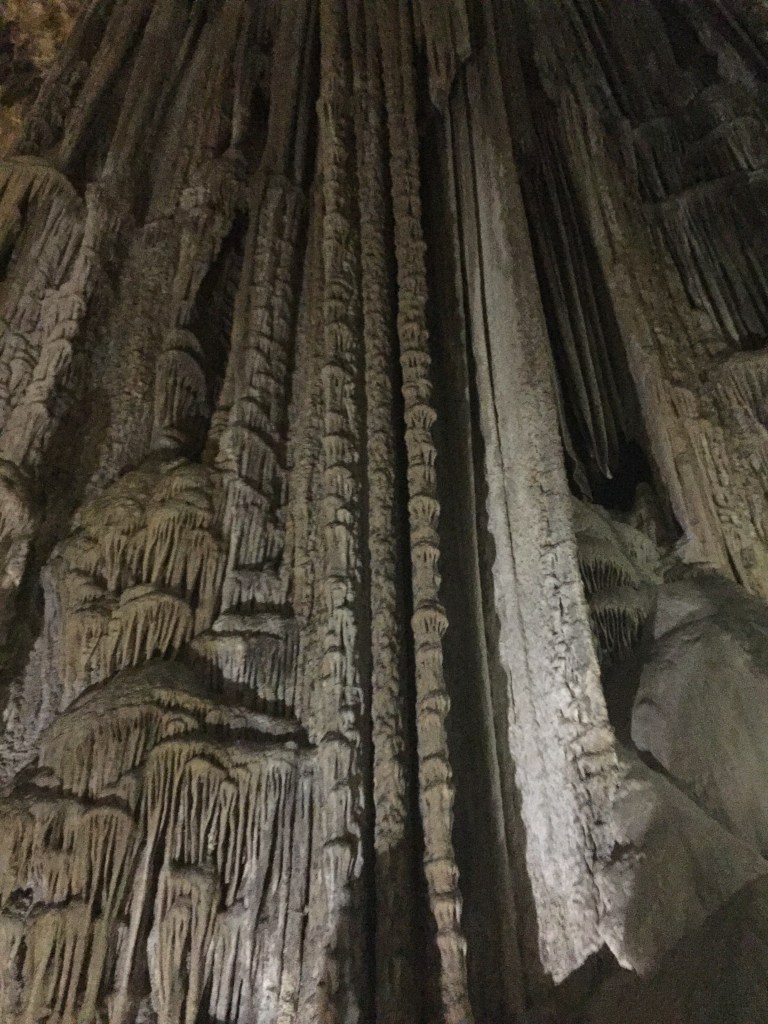
Nerja Caves, Spain
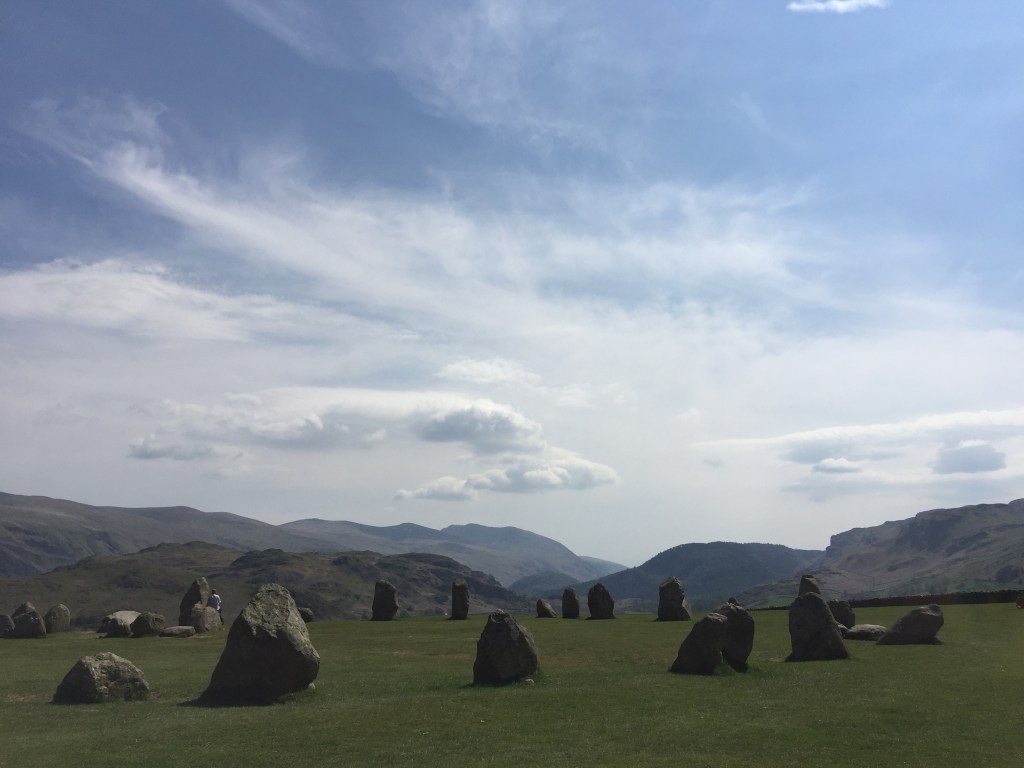
Castlerigg, Cumbria
Tintern Abbey, Cornwall
Dolmen de Viera, Spain
Mortuary Temple of Hatshepsut, Egypt
Tewkesbury Abbey, Gloucestershire

All I can say is, we definitely don’t build them like we used to.

(c) K Wicks

Dreams

DREAMS

(This is a chapter from my book Meeting in the Middle of Nowhere, link below).

Another reason for our differences arose shortly after we met. The subject of dreams came up and he reacted a bit strangely about it in my view. He doesn’t have them, none that can be remembered in any way at least, but found it bizarre that I did so much. And that I could replay them the next day. I have them every day, sometimes recurring, but mostly all dramatic and tiring. I had spent years despairing of them sometimes, unable to shake them upon waking. Having them follow me throughout the day, the feeling, the memory, the tiredness. Sleep is often not refreshing for me, but because my brain feels so overworked everyday just by thinking, I require sleep. I cannot escape it.

The whole concept of the above is as foreign as it could get to him when I broke it down. Why would you go through the motions of things that aren’t real when you’re asleep? All I could do was agree, it is weird and I cannot explain that bit, in fact, I have been trying to for a while now.

I watch a lot of horror (or at least have done), and often used to have apocalyptic dreams involving zombies, alien invasion or some such drama. Even when I hadn’t watched the films for quite some time, they could come back any time. Or that is how it looks on the outside. It’s easy to say that our dreams come directly from what we watch – and I have considered it, but what I go through is usually relevant to real life rather than fantasy. Anxiety, stress, worry, fear, anger – all the things we are taught to suppress in our daily lives. They just happen to manifest by way of ridiculous scenarios.

Again, to someone who does not have dreams, or visual replay of any kind, that is crazy talk. But to me it’s normal now, not enjoyable, but a bit more controllable. The trick is, not to get so wound up or anxious in real life, because it will follow me into sleep. There is no respite or escape in sleep, my brain does not shut down, and it just goes somewhere else and takes me with it.

As I got to my early twenties before I knew how to drive, I began to have driving dreams. I wasn’t even learning and had no immediate plan to, but as it was something I knew would come up, it began to feature. My mother didn’t drive and neither did my two older siblings so I had nothing to gauge it on either, so maybe that added to it. The amusing thing about those ones though, was that I had no idea how to drive, so in the dreams the car would usually roll into a hedge or down a hill. Expressing to me my main concern was that I didn’t know how to, rather than I would have to learn.  There was a partly funny, partly scary one though, where I was driving up a hill so steep that the car just tipped back on itself. So I will admit, when going up steep hills thereafter, my brain would default to a mild fleeting feeling of panic, remembering that dream.

Another that featured a few times, were teeth dreams. Occasionally I would have a dream where some of my teeth fell out. If you read any of the dream interpretation books, they say ones like that mean you are worried about money. Personally as I always had a dentist appointment booked around that time and have a fear of the dentist, I put it down to that. Although once you know how much you have to pay for your dental treatment, that could definitely give you teeth-related money dreams!

But as a depressed teenager cut off from the real world by my own mind, I found day-dreaming to be my saviour. I found living with my mother’s weirdness very draining and my only escape was to wander off in my head. I would dream of normality, try to imagine my future, what I wanted to be, dream of being brave and impetuous. Anything that could distract me from my actual reality, I read books, drew pictures, watched films, embroidered, wrote diaries, cleaned, walked our dogs (something that helped me get over agoraphobia), anything I could to not have to stop and be where I was.

I must admit, there is still a similarity as I do not have a quiet mind. But as an adult, I don’t need to daydream anymore, because I can change what I want if I need to. If something in my life is worrying me or is wrong, I can sort it out. I didn’t have that luxury when I was 15, so dreaming was my temporary way out.

The study of sleep and dreams has been going on for an age and I am aware there are people who don’t dream at all. Or some who don’t remember them in any way who do visualise, so this is a varied subject whatever your thought process or visualising capabilities. There are also the extreme sleep conditions, where people have night terrors and actually act out the fear or anxiety being experienced. Where dreams and nightmares can take on a life of their own. There really are some strange things going on inside our heads, whether we are in control or not, and even whether we are awake or not. That can be quite a scary concept.

(c) K Wicks