What You See Here

What you see here will lead to only one logical outcome.

But how did we get here, and where is here anyway you might say. Well, let’s review it.

I’ll go back, to The Before Time and start from a couple of decades ago. If you read the piece I am referring to, you’ll know I mean to before mobile phones and the internet. But it is more than that, it’s to before lots of things happened and were put in place to lead us to now. The starting point of this subject to give it reference is housing. The housing market to be precise and the knock-on effect it has had on much around us and people’s lives. The system of rental and ownership, and what the implications of that were, are and seem to be going forward.

I developed an interest almost 20 years ago in housing. Not entirely by accident, I landed my first office job in an estate agents. For three and a half years I got to see how it all worked, being closely involved in all the paperwork, understanding how mortgages worked. First hand as well as i purchased my first house while working there so went through the hoops myself. And over the next few years, my mind gave it more and more thought. It was hard work getting a mortgage back then, raising a deposit (which luckily family helped with), and qualifying for it. That’s the basics, but behind the scenes of that there is much more.

I knew I couldn’t ever get a mortgage on my own. I would never own my house as a young person if I chose to remain single. So just as some people may have money on their mind in a potential partner, I had security in mind. I’d moved around a lot as a child, and desperately wanted to have a base that wouldn’t be whipped out from under me. Renting proved not good enough as the landlord could go rogue or just simply decide to sell, it was a worry. And one I didn’t want dominating my life. I wanted to buy a house, as that to me seemed the logical response to not wanting to be relocated and uprooted every 1-2 years. So, I’ll admit, I was strategic in my choices, because of the end goal I had my heart set on. And, not to overlook the main thing that really facilitated this – family. Without them and sticking to a job with prospects, I had no hope.

I knew how hard it was for people to attain it. Like many others, I was told by my family growing up that is what you should aspire to, house, family, job, security. None of that factoring in individualism or circumstance, and actually, quite conveniently overlooking those things when being judged on it. But that is something else. Within this construct of ‘own your own home’ there were many things I noticed that were set up or in place to make it so that you didn’t really own it. If it’s a flat, you never own it only lease it, and for a house, the fact you borrow the money to buy it, means it is owned by the mortgage company/bank/lender until such time as it is paid off. Sounds simple though, how could they possibly mess with that?

In my mind, this is how it happened. They messed with the interest rates, making mortgages unaffordable to get for lots and suddenly making existing ones harder to manage. Then they changed the amount you could borrow, however briefly, to five times your salary. Now, just that alone should have set off alarm bells for many, but instead they rushed ahead and took the bait. At the time, I said, but don’t people realise they won’t increase wages, and then will increase interest again? I wondered why it was suddenly ok for everyone to start living well beyond their means. (and another side point to this, we do not teach people about good financial sense in school and seem to wait until people are already in debt before advising them on what to do, by then it’s too late).

But back to the set up – once you have the massive mortgage, and the massive house you think you needed, you realise that often what comes with it is a massive increase in stress and worry. Because a change in the interest rates can make you suddenly unable to afford to live there, or a change in your salary, or a life event. So even if it’s just subconsciously, you are distracted. What should be bringing you security, actually brings worry, because now you are insecure about it being taken away.

People who have saved and cut back, so they can pay off their mortgage early and enjoy the final security it offers, are the ones who had the right idea in my mind. For decades they did the right thing. But then another change happened, and one I figured was going to have a long-term effect, but it hasn’t quite played out yet as not enough time has elapsed, so it is mere speculation at this point. But the pension pay-outs, doubled with the equity release seemed to have come about around the same time. Oh, and not to forget they increased the retirement age as well. So someone standing there with a big pot of money, saying, hey you don’t have to wait another ten years for this (now they had made it longer), you can have it now. Quickly, fast, now, now, now. It is very clever how mentality has been speeded up, patience is no longer seen as a virtue. And can easily be countered with the argument, but we are only here once, and you can’t get back time. And that is correct, time is more important than money in the bigger scheme of things. But they have made it so that you appear to be able not to enjoy time, unless you have money. So we are in a bind. And then they pulled the sneaky trick of slowly taking away the future and that also makes people throw caution to the wind as they say, and what may have been ‘saved for a rainy day’, gets allocated to what we then decide through circumstances beyond our control is the rainy day event.

And ordinarily, I wouldn’t have a problem with any of that either. People should live now, don’t wait for life as it won’t wait for you, and don’t put it off. But it ties into something else. Not long after they encouraged lots of homeowners and pensioners to borrow, release and spend. They then cried no money, the pot was emptying too fast, people wanted to draw too much. Then the recent events happened and more money that we could ever imagine flowed like water through the slippery fingers of government. So what was to follow, the inevitable. We won’t have enough left for pensions, retirement ages will need to change again maybe, bills will need to go up, job security has faded into the mist, and then they start that they will need to take people’s houses. What are the chances that it will be the people who have any kind of loan or borrowing against a property who are targeted first. And because there are so many disgruntled people who have been shut out of the housing market over the last few decades, they seem to think it’s ok to do it to people. The attitude of “well I can’t have one, so why should they”. Rather rife it is amongst the self-entitled I have noticed.

I have read some snidey comments online these last few weeks about how older people should have to sell their houses to pay for social care. Intermingled with ones about how unfair it is that old people are even allowed to live in big house by themselves. So I presume it’s just jealousy driving the second comment, but the first one does seem to highlight a social inequality. With the ultimate winner being the social care providers/care homes. And of course, the government makes a nice tidy sum of tax every time someone buys a house. So ‘encouraging’ people to move, usually brings in more revenue for them too.

With the price of care homes being what they are, it really does seem cheaper to hire a full time carer for in your own home, at least you know you or your family member is being looked after, won’t be neglected and shut away from friends and family and might have a chance. Looks like there will be a few carers and trained medical staff looking for work over the coming months, so it might just catch on. But it seems they want you separated and being able to be isolated at the drop of a hat. My logic is as follows, they make it easier to get divorced while simultaneously piling on more pressure within the family unit. Families encouraged to put their elderly in ‘care homes’ and shifting responsibility. Jobs start being further away, cars get cheaper so that people can work further away, people move away, school restrictions and ratings encourage people to move based on education, not family. But that’s ok, they brought in the internet to ‘bring everyone together’ while distracting them at the same time – which only created a false sense of together and it seems to have driven people further apart and created more problems. They want people to feel isolated, fearful and worried and have engineered society to be as it is today with that driving it and pushing it to where they want it to go. Of course I can’t say for sure and that’s just my view and perspective, but I feel it will lead to only one logical outcome.
(c) K Wicks
It was a piece at a time

They took us a piece at a time, such small pieces that we didn’t even notice. They changed the way we interact, how we view the world and more importantly, how we view ourselves and each other. And with an overwhelming influence of institutions, they have shaped where we are now.

So, does this mean they have thought of everything? Does this mean they know what they are doing? Does this mean we have already lost our free will and freedom, if we ever had it to begin with?

Because on the face of it, it does seem to be a bit of a lie. Freedom. I will talk of the UK as that has been my main residence for most of my life and where I am from. We have not been free here in the British Iles for quite some time, it would appear to be at least 1000 years of ‘rule’ by a monarchy. We have had regulations governing us and controlling us for countless generations, so is it the concept of freedom we are chasing? Because to me it doesn’t seem like it was ever a reality. You are free within the limits and boundaries of society. So not free then?

We have had quite a strict country at times, turbulent, unsettled, in peril and at war with itself. All the time being in a struggle to create an appearance of harmony and stability, whether it is the case or not. Because many people are more than happy to be ‘seen’ to do the right thing, rather than actually doing the right thing. Appearances – they have much to answer for. The perception of what is going on around us and outside our own personal realities is shaped by external influences, you can’t deny that. But when you look at what those influences are and what they are shaping, there has been a level of concern in my mind for quite some time. And let’s be honest, many of us are all controlled by money and debt these days, no-on is free unless they can afford to be. So again, the term freedom is a matter of perspective, so how can you call agree on what freedom even means?

I don’t want to be somebody’s experiment or puppet, and don’t want to see people controlled and dictated to from birth to death, yet that is how life has been engineered to be for lots of people. What else would I chose for them if I could decide? I honestly don’t know, because this last year and a half has taught me that I had massively misjudged people and what they would fight for. What I think is best for others, really isn’t because they aren’t equipped to deal with it. The differences in ideals, wants, hopes and fears are now affecting every part of life because opinion and not fact seems to be running the show. I don’t mind people having their own opinion at all, I just won’t be living by them, and the second they try to pass off said opinion as fact, I am usually very quick to point that out. There is a difference, and one which we must understand here as they have been very much intermingled for the purpose of confusion.

It really isn’t a conspiracy to understand that there are people and institutions that for generations have been working on formulas and techniques to manipulate and control people and society. It’s not a big secret anymore and we didn’t only just stumble upon it – us ‘theorists’. Which by the way, is a very cunning use of words to discredit people. It’s so simple, yet incredibly effective. But the words conspiracy theorist aren’t really for people like me, as we know what we are and what to do when faced with someone calling us names (I too have been on the playground of life). The word is for others, to make them feel better about not thinking outside the box, to be able to call them something and separate yourself from what they are saying. Fortunately I like to look at the meaning of words and try to only use them appropriately. So previous to this whole debacle I believe I was a conspiracy theorist – I was analysing things to see if there was an ulterior motive to what appeared to be ‘normal’, but I no longer feel that title fits. I am now a society factist. And I will explain why.

The word conspiracy and its meaning = a secret plan by a group to do something unlawful or harmful.

So, very easy to grasp. But this current concept going on around us is no longer secret, and if you looked in the right places, it never actually was.

Theorist = a person concerned with the theoretical aspects of a subject; a theoretician

From my perspective, the moment something stops being theory it either becomes fact or ceases to exist. Much of what I had theorised about in the last two decades has now become fact or transpired the way I thought it would, so I have upgraded myself to factist. Although I would happily drop back down to theorist in a second, it was way more fun to speculate on things and they just remain as a wondering. But when you realise others have had the same thoughts and have tried to expose what is really going on and in the making for decades, you know you can’t make people see. They have to find their own way there, because we are up against a very well laid set of ideas.

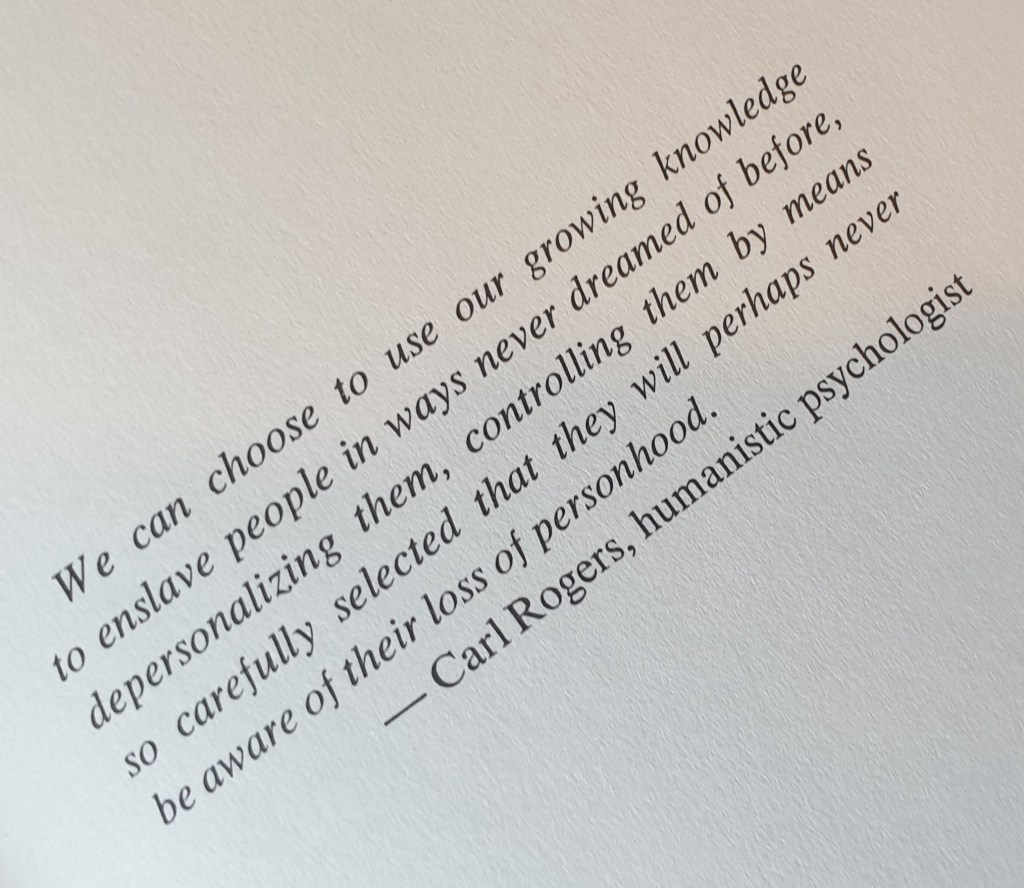
Picture Quote – The People Shapers by Vance Packard.

(c) K Wicks

Mobile Phones

As mentioned briefly in my other post The before time, I want to talk about mobile phones. I have never been a fan of telephones, as an invention, yes, it is fantastic. For personal use, no. I do not like talking on the phone, for a couple of reasons. Firstly, I don’t like my phone voice so it makes me uncomfortable the longer the conversation usually goes on. And secondly, I cannot see the persons face, so I find it hard to engage for very long. I can imagine them, but it’s not the same. Facetime suits me better if I have to.

It started with landlines though, before they were just used for the internet. I hated ours. I hated the unpredictability of when it would ring. A shrill noise to cut through your thoughts. A doorbell has the same effect. And an alarm clock when set. I also have neither of those in my life. To me it was the intrusion into what you were doing, as well as suddenly having to muster the energy or want to talk to someone. Going in blind to a conversation with potentially a complete stranger.

So fast forward to mobile phones. They designed something so that you could be reached by anyone with your number, all hours of the day. Great for business or if you need to be reachable. Other than that, it became a burden to me very quickly, and I suspect other people too, a source of anxiety and stress. Until one day, after having quite severe anxiety issues because of being called and texted every day by the same person, I decided to take control of it and not let my phone or someone else influence my moods too much. It was simple. I switched off the ringer. Silent. And it has remained that way for over 10 years now. I also run a business and it was one of the best things I could do for it. I stopped getting interrupted, was still contactable, just not at the convenience of other people. I was available at my own convenience. I worked out the root of my issues, identified them and took steps to sort them out.

As the years have gone on it has changed even further. Smart phones now instead of just mobile, suddenly it wasn’t just a phone, it was a mobile computer. You could play games, communicate, run your business, shop, watch TV and engage with multiple things at once. An awful saying/joke emerged which made me sad – “What is the fuzzy bit round the edge of the screen? Real life!” And then apparently laughter follows. But not for me, not for that. My humour towards the destruction of human interaction and qualities is limited, I see it as a bad thing if it is your only reference point for life and people. They have now been with us for a couple of decades, so time has told, and people do not seem happier for it. I find it odd how in a time of information, we seem to know less than we ever did. And in an age of unlimited communication, we have never felt so far apart.

Hawks Tor, Dartmoor

(c) K Wicks

Fear

This is another chapter from my book – Meeting in the Middle of Nowhere, this one regarding a subject that has consumed much of my thought over the years. Once the difference between Hyperphantasia and Aphantasia was established, it led me to requestion this particular theme and review it from a completely different angle. (If you are not familiar with my book or these terms – I have Hyperphantasia = over visualising in mind and my husband has Aphantasia = lack of visual imagery) And in these strange times where many people are being openly manipulated through fear, it would be wise to understand what it is and how it can affect you.

Fear ~

When we found out about the difference in ability for visual imagery, one of the subjects I raised was fear. I wanted to know if he was affected by horror movies. Although he doesn’t really care for them, I know he had a phase of watching them when younger, and I thought, if he doesn’t get anything from them, why would he watch them? That is one of the areas that I always felt uses your own visual imagery against you, horror films. Creating tension with unseen horrors or just nothing sometimes, only a piece of music – letting your brain make up something more terrible than they could.

And I was correct. It was a flat no. He didn’t get scared watching them or any time after, because his brain literally imagined nothing during the scenes where you did not see the monster or alien. Long scenes of nothing but tension will often lose his attention, and rightly so I realise. Therefore, he never thought there might be monsters under the bed, has never been afraid of the dark or something he can’t see.

“Why would I be afraid of an idea?”

A very logical question, I felt, because without visual imagery, there was nothing to be scared of. He doesn’t visualise what might happen, he doesn’t put himself in the place of others, and therefore no emotion at all is attached. They are just pictures on a screen and when they are finished, they are gone. No recall or replay happens after the event. We can discuss concepts and ideas, but I no longer make any reference to anything visual or implied visual, there is no point and it holds up a conversation.

I watch less horror myself these days. Once I realised my brain was imprinting most of what I saw and could recall it at any given moment, I decided I need to be a better filter. My moods and emotions are greatly affected by what I read, write, watch and see, so I choose what takes my attention wisely now. I have spent a big portion of my life being affected by my fears and phobias, something he simply cannot relate to. I have a number of them and have learnt to manage them over the years. Some may be familiar.

Example: When I was about 8 or 9, I watched Jaws. As you can possibly imagine, it didn’t do me any good. It affected me so much I didn’t go swimming or have a bath for a year. Only showers. Because my brain decided to visualise and imagine jaws coming up through the plughole. Or in the swimming pool, the filter became my point of fixation. I had nightmares about the sea, about swimming, about sharks. It haunted me greatly.

After a year or so, I started to go back in the water. But with a very changed mind-set. Every water experience was a chore, an anxiety-ridden feeling I tried desperately to hide. I was a tomboy and wanted to be cool. So swallowed my fear and did it, along the way reading as many factual books about sharks as I could. Trying to dispel my unnatural fear of something that did not inhabit the same terrain as me.

Around the age of 12 there were a couple of experiences that reminded me I was not over it, just working through it. In the Army Cadets we were on annual camp and part of our training was being made to jump in a lake, swim out to a small boat and back to shore. Sounds simple enough. Let me set the scene as it really was – it was a grey February day, a freezing cold lake in the woods, and the water was black as night, zero visibility. I was the only girl taking part because the other three had managed to come up with excuses. My fear was so paralysing I couldn’t think about anything other than what they were about to make me do. All I knew was that I couldn’t bottle it in front of everyone.

As the only girl they tried to make me go first, but that is where I put my foot down, no, I would go second. I may have also watched the film Alligator by then too, which only added to my already massive issues. Watching someone else jump in first and struggle to the boat did make me feel a bit better. I was a competent swimmer so my concern wasn’t skill based. I jumped in, and as my head went under just for a second my panic hit a new level. The only reason I think I managed it was the adrenaline from the fear. That same mechanism got me bronze medal at the cadet championships too, for swimming. Visualising a shark actually helped me there!

I am still not over it, I just don’t go near the water anymore. I love swimming as a sport and exercise but it’s not relaxing or enjoyable for me. Or even being on water; over a decade ago I visited The Gambia on holiday and had to go in a dugout canoe, the rim was only a centimetre above the water line. I was so tense I gripped the edge of the canoe the whole time, with fingertips only ever so slightly hanging over the edge, crocodiles and piranhas being my fear there. Again, I was just trying to save face but hated the experience and that I put myself through the anxiety of it.

So I now avoid water still because of a scary film I watched. It sounds pathetic, but the struggle is real. To my husband, it sounds mad and he can’t believe these things have affected me so much, but he kind of gets it a bit more now. He just doesn’t get why I continued to keep watching films that would give me nightmares and real fears. Zombie films also have their place in my Hall of Horror Phobias, but I now feel I am trying to put it to good use by writing books. I am torn though; when you work out what scared you so much, do you really want others to go through what you did? It’s the author’s dilemma for me; just because I can, does it mean I should?

I have also observed that fear and anxiety can be and are used in conjunction with each other for manipulative purposes.

Example: After my breakdown my mother was my sole company for most of the day. At first she seemed to be trying to help me get better, then after a year or two, the rhetoric changed. Instead of preparing me to reintegrate into society and become a real person again, I began to hear things like,

“You’ll never cope without me.”

I think it was from that point on all I could focus on was getting old enough to leave home. I didn’t care that I might not cope and the world was scary, I desperately wanted to have the chance. She, however, seemed to be filled with regret and constantly talked of plans involving me and her in the future. I was afraid I would never get away which added massively to my anxiety. Obviously the events that followed did ultimately see me get my wish to leave, but at the cost of everything. It took me quite a number of years to work through all of that and put it all where it needed to be. I can’t say I had it harder than anybody else, but it was definitely weird.

(c) K Wicks – Meeting in the Middle of Nowhere.

Photo and words taken from the film V for Vendetta.

New poetry book coming soon

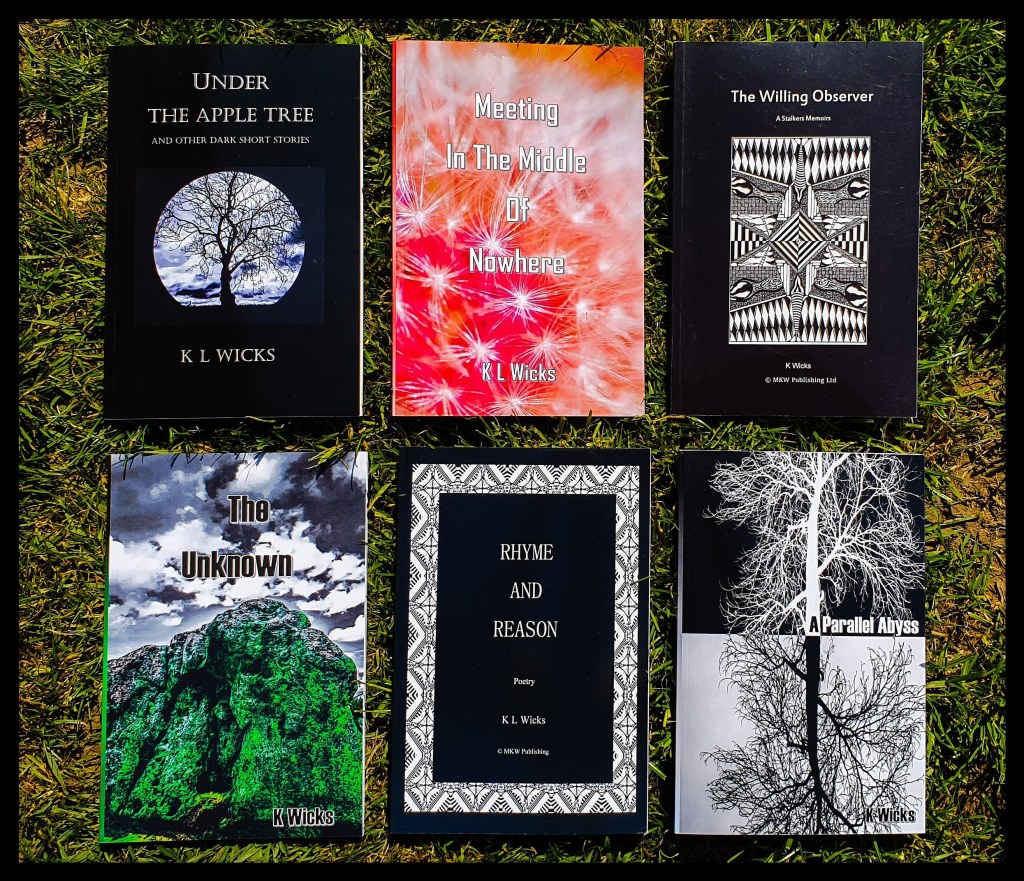
I have decided to put together another book of poems, this last year and a half has seen my need for finding reason even greater than before and it’s how I capture my mood with words. And I seem to lack the ability to present it in any form other than rhyming, so Rhyme and Reason 2 is coming soon. They all follow a theme and might be nice to have them in one place, even if just for posterity. Someone on twitter commented that they would like to see one of them taught as a lesson, when all this is over. It’s a nice idea, but I prefer the concept of ‘when this is over’.

I may change the title as it turns out there are a number of poetry books named so, which I didn’t check before naming my first! But this time I am taking more time and have a different cover design lined up compared to the usual black and white I like. I have updated my non fiction cover as well so need to get a new copy of that for new photos.

This last year has been a strange one to say the least and being able to be creative and write fiction has been difficult. Especially since some of that faction was based around a totalitarian regime being rolled out with the medi being used against us. It stopped being fiction and being honest, I didn’t want to write it anymore. I am trying to find my writing again, with a number of half finished projects lingering and waiting for their slot. Hopefully the poetry book will get me going again, and the book of short stories that needs only a couple more can materialise. I am considering a follow up book to Meeting in the Middle of Nowhere, but am not sure from what angle yet. And the novella which was so rudely halted by reality, maybe that will even find itself again.

(c) K Wicks

How It Starts To Tie In

There have been little things over the years that made me think there was something wrong with the bigger picture. I thought they will go for money, heat/power, health and food. Control those and you control people. What they want to control us for? That is yet to be seen.

Small at first, but they all added themselves to what I shall now name as the ‘Portfolio of Doom’. Sufficiently dramatic I think for where we are now, but at least I know I was not crazy, or a doomsayer. How can you be when what you thought and said would happen began to roll out.

Cashless – that one is obvious I think and my article Cash covers my view on that.

Smart meters. They just seem like a more efficient way to bill people on the face of it. But in my head, it made it easier to monitor how much you use. And also gives them more access to switch it off at the source. I also thought it odd that fireplaces were being closed off and thought if we ever need them as back up, they won’t be there. And now they are starting to take away gas boilers, it doesn’t look good.

They have already been interfering with our health, well before this last year I already had suspicions that much of the mainstream information and advice is not from a place of good. It is from a place of profit. Through personal experience and observations, it seems obvious the motive is not to prevent, but to attempt to cure. Like the old industry saying goes

~ A patient cured is a customer lost ~

There is also now much talk of scaling back agriculture, stop eating what we tell you, come down on the people who could sustain us outside of government run facilities. Farmers. Replacing Farmer with Pharma.

When the adverts started for a certain home exercise bike and now full exercise routine, where you are part of an online workout or something, I thought then – one day they will have each house hooked up with one. You’ll have to cycle to ‘earn’ your daily quota of electricity and food and to prove you are exercising as expected. They’ll be able to monitor your heartbeat (fitbit) what you eat (calorie apps) to decide if you have earned rewards. And in the last two weeks, we have indeed had articles starting on rewarding people for exercise and good diet, how are they going to monitor that I wonder.

If people welcome this kind of influence over their lives, then I can only presume they want parenting. With the controls coming in on spending through cashless and digital currency, they are targeting choice. As if they have decided that people can’t be trusted with their own health, choices and future. But who are they to decide that? But what is worse, is that it seems they overloaded us all with more choices than we could ever need, then blamed us for not being able to deal with it. So then they have to take away choices to dictate everything. To them it makes it easier to control us. To us it takes away something that gives us freedom. Over our bodies, our minds and our lives. What to wear, to eat, where to go, who to hang out with. It seems it would be a very predictable and sterile world without choice, but maybe not everyone liked having it in the first place.

When you look at the bigger picture, lots of it doesn’t feel right. All the institutions are made to control us, not to protect us, but it is under the guise of protection, For your own good, for your health, for your safety. For the greater good. And other things that should set alarm bells going in your mind. They are not our caregiver; they are not our parent. So it disturbs me to see grown adults treat them as if they are, and wait for further ‘instructions’ on how to live. It wasn’t meant to be like this.

My view on the passport debacle is very clear. They are not needed and they are definitely NOT about health. In fact, everything they do proves it is not about health, but what they say – people believe. And I cannot be clearer when I say to people, by all mean listen and give what someone says the time of day, but when it comes to trust, trust what they do, not what they say. If the two match up, then you are all good, if not, then steer well clear and possibly don’t not base your life decisions on what they say.

(c) K Wicks

Conditional Release

I’m very concerned that many people do not appear to have realised that they are being used and manipulated for the purpose of control. It’s not for safety and it is certainly not about health. Whether they will understand that fully remains to be seen.

I shall tell you a story of when I was a much younger and see if you can see any similarities or parallels as I do.

Just before I became teenager, my mother was quite paranoid. On the face of it she seemed very relaxed, everyone else thought she was really chilled and laid back. And so did I, because most of the time that is the image she conveyed. But when I think back and review the things that I had issues with at the time, it dawned on me into adulthood what had actually occurred psychologically.

She seemed rather fixated on me being murdered and being found ‘dead in a ditch’ as she put it. Got funny when I started having friends and wanting to go out, and was definitely uncomfortable with the idea of boyfriends looming. I used to spend a lot of time out playing, weekends were the best because you could get up to all sorts. Not worrying about stuff other than what time your dinner would be ready, and even then, that wasn’t a priority until you got hungry.

So, when I was 12, one Saturday, my little group of friends and I decided to go up to the ‘fourth woods’ and make a day of it. (named as such because we lived on a military camp and all the surrounding woodland was MOD property, not sure if that was the official name, but that’s what we called it). We stole some food from our kitchens, and went off to build a fire and try and make a shelter and ‘survive’ in the woods for the day. We were army brats keeping ourselves busy for the day. I had a great time. When I got home however, there was fallout.

Because I had been out all day, despite being with about 5 or 6 other people, she said I had gone off on my own. Still, I didn’t see the problem. She had been worried for hours because she didn’t know where I was and if I was safe. (that’s where the dead in a ditch comment started and continued). Fair enough I thought, that seems fair. But it didn’t end at that, no no. I got lectured for quite some time about how it made her feel and how out of order it was for me to make her feel like that. After the lecture, I got grounded. For six weeks. And not just any six weeks. She took my entire summer holidays away from me. I was allowed to go the shops, and I think cadets a couple of times, but no going out in the day with my friends.

Extreme is what I decided it was, even at the age of 12 I knew it was over the top. I was being punished because someone else was afraid. But as I was the object of the fear, I would also be a pawn to it. I was told I would lose 6 weeks of my freedom.

This is where I drew parallels when our current scenario began.

Because it didn’t end there. What happened in that 6 weeks was that she continued to drum into me how many dangers there were for me, a child soon to be young woman, the dangers were many. And she kept repeating them. It took a while for it to really do its job, but gradually over a couple of years, I did become more fearful, more suspicious and concerned. Not for me, but of her. I started to question why a parent would want their child to be so scared of people and the world. I understand about wanting someone to be safe and fearing the worst. We live in an unpredictable world where many things can kill you and ultimately something will. But to take your own worry and concern and impose it on others is damaging, and in my view, wrong.

And I didn’t just get my freedom back after 6 weeks as promised. Indeed not. The goalposts changed at the last minute. I would be allowed out again, but only for one-hour slots. Not just one at a time. Oh no, something far more elaborate and designed to stop any fun. I was given check in times, I had to check in every hour on the hour, thereby ensuring I had a maximum radius and had to be constantly aware of the time and consequences. And had to tell her where I would be and who with. Being monitored and reviewed to make sure I was complying. Taking most of the freedom and fun out of things after that and limiting enjoyment.

It is no surprise to me that now as an adult, I developed having a maximum radius I like to be away from home before I start to feel anxiety, and it is no surprise that I have a job where I constantly run to deadlines, but serious ones which cost people time, money and stress if you don’t stick to them. I was conditioned by various influences including my mother, I am not ashamed of it, but I do not like it. And have tried as best I can to undo some of these weird things that were imposed on me by adults when I was a child, but which have then gone on to form part of me through to my own adult life. I reflect on these things to understand them and people’s motivations, I know in some buckled way, what she did was meant to be from a place a love, and some people may say she was just trying to keep me safe…

(c) K Wicks

It’s A Strange Reality

To be honest, reality has never been completely normal for me. Once I was aware of the world, time, mortality, people, ideas and so on, I didn’t know how to be ‘normal’ – although I kept trying for quite some time. Everything is constantly changing, there is no stopping, standing still and taking stock of it all. To me it’s like trying to review what it was like being on a rollercoaster while you are still on it.

Reality has been really thrown out of shape this last year and a half for many. When we started to hear whispers of this ‘pandemic’ in January last year, my brain adjusted and adapted without me even trying. You see, for the past two decades, maybe longer, I have been fixated and focused on the idea of a virus. A virus outbreak to be more specific. My interest was actually first piqued in the early 90’s at school when we learnt about HIV/AIDS in PSE (Personal and Social Education – i think), I became quite interested in the science of it all and concerned by the risk fed to me by the media. Then came foot and mouth, and bird flu, and swine flu and the rest of the more recent ‘outbreaks’ which did the rounds, leading to the culling of many animals and overall made very little impact to peoples general day to day lives. But each time, I would be on alert. Watching and monitoring for any evidence or paper that would show it has crossed over, it had mutated, the risk has increased. But it never happened. No evidence ever did materialize and I did not see what I had decided were the next stages of a real outbreak with a viable threat to humans.

Along the way, I also happened to get into Zombie films. They used to freak me out, and played on what I decided was a natural fear of unseen disease, but in zombie films they made it seen, and it looked like you and me, it was the grotesque exaggeration of it all really impacted me (I think having Hyperphantasia did not help here at all!). But eventually it made me question the reality of their scenarios and setting for it. Picking it apart so I could understand it and know when to have appropriate fear. It can easily be misplaced and does not usually go well when it is present but not necessary. Fear really can control you.

Around 2018 I got quite into a game on my phone, I believe it was called Pandemic, so no guesses needed what it was about. The player is to start the virus in their preferred country and then gather ‘points’ as you infect more and more people, adapting the virus and working out how to make it supreme and deadly. It seemed just like a biological weapon skill game, how to fuck up as many people as you could and kill the world. While you are doing this, the world fights back by trying to find a cure, and if you aren’t good enough with your mutations and variants, then they cure it and the world recovers. Now in this, other things occur – even though it is just one screen of the world with flashing blobs to pop, and seeing small blue planes fly around to sort out the cure. After a number of attempts, I won. I created the one that took out the world. And it didn’t feel like a win, in any way. In fact, something else happened. I ran through all the data in my mind, all the scenarios and variants being played out in a ‘simulated’ setting, but I realised all that data goes somewhere. Yes, it could be paranoia, I considered that and thought you know what, whether it is or isn’t, I’m not playing anymore. It felt uncomfortable and I am only usually faced with that kind of discomfort when my spidey senses activate. I stopped playing it a year before the wheels were set in motion with Event201 in Oct 2019. Once that started, it was inevitable what was going to follow.

So, last January 2020, whispers from abroad started to happen. A co-ordinated effort to get the patchy information out and start reacting – they did a good job at first. It was substantial enough to take notice, more than just an article here and there, top medical people were discussing it. But there was something I couldn’t quite put my finger on that didn’t add up. All the stories and pictures seemed very set up, not natural at all. They were so specific with giving us a ‘heads up’ on everything and doing things so illogically, it gave it away to me. And the fact that all the governments (mostly) gave a co-ordinated response – that does not happen and I don’t believe we are that organised to do it if we were indeed ‘taken by surprise’ by a virus out of the blue. But where it was heading didn’t look good to me, real virus or not. I decided to start ordering a few more packets of things for the cupboard and organised to use some of our savings to send my husband on his dream trip, to Egypt to see the pyramids. I had a feeling the way they were telling it, travel would not be something we should be planning too far ahead for. I worried he wouldn’t be able to go, so we booked it and he went, in the first week of March and was back before lockdown. By this time however, my view of it all had changed. Not on him going away, I still think that was the right thing to do and the right time. The overview of my personal thought had changed.

In all my wondering and thinking of viruses and pandemics, something occurred I did not foresee. All the makings of an outbreak but without there being a virus. With this new scenario playing out, so came a new state of thought, I call it Schrödinger’s virus. I now simultaneously live in a world where the virus both exists and doesn’t exist. Part of me is ready to accept that there could be a virus that has the ability to cause untold mortality as they say, but with no evidence to back that up, that idea is put into my theory category. And in day to day life and from what I see it doesn’t exist. Death rates and figures, funeral directors and all parties who should be able to make it obvious but they are saying the opposite, so believe both, or neither, or one? We are also being pummelled by high level propaganda every day from every media outlet and social media side, it’s difficult to not be consumed by it. I wrote a fictional book a few years ago about a virus outbreak, not a zombie one surprisingly, just one that changes humanity. I worried though that there may be too many plot holes or that it didn’t quite hold up – having seen what was rolled out and used to convince the masses to be under the spell of pushers peddling their wares, I really shouldn’t have worried. I feel like I am now living a badly scripted, badly acted plot hole. It has taken a twist though with recent increases in infection, but not unexpected. I have been theorizing on all this since last March/April time and following the articles as best I can, which only a few months ago predicted that the roll out of the miracle cure, is in fact causing unintended (as far as we know) consequences. Only time and data can tell on that one – I want to be wrong. I really do hope I am.

(c) K Wicks

Seeing things differently

It’s no secret that people see things differently to each other, think differently and react differently. It’s pointed out to us often, within men and women hugely – a classic book I never got round to reading springs to mind – Men Are from Mars and Women Are from Venus. I have heard this book mentioned and referred to by title on many ocassions (never an actual quote). But almost possibly to deflect from the fact those differences can cause issues and it’s easier to breeze over them and wave them away as ‘they just are’ rather than address them. It can be hard to get along with, communicate effectively with and have a balanced relationship with someone if you are unaware of why or how you are different. Just acknowledging it exists isn’t really enough in my opinion if it’s a fundamental one. We give people many excuses for their behaviour often without delving into the reason for it. Or think that by giving it reasoning can go someway to excusing it. Not in my mind. I like to know the why, it usually helps me to determine any possible conslusion, judgment or result that may need to occur.

There are many reasons why people don’t get along, and with some people you never will. But I find it interesting to understand why, even if the fault lies with me, it’s still good to know that. There are lots of important lessons around this I think, helping to form how we see the world, how we think the world see us, if people have that concept. But understanding why you are different can actually help you to fit in. Not in the tradiontional sense of adapting to others ways and fitting into their pattern – but finding your own fit. To a point, we all have to get along; living side by side and weaving our way through life together (unless you have removed yourself from having to). But finding out who are can be a tough one and coming up against others opinions, ideals or wills can be a challenge when they clash with your own. In this modern time of instant and sometimes public ommunication, being aware of the impact of influences is important.

But it should also be factored in that ideals, thoughts and perpsectives can change with time and experience. Your own and other peoples. It would be odd to expect to be the same person at 40 that you were at 20, impossible in my view. So it shouldn’t be a suprise that you may ‘outgrow’ people as they say, or ‘drift apart’ or simply just change. All of those can be correct, and are ok. But if poth parties aren’t aware or mature enough to really understand that, then there can be difficluties and I guess, arguments and fall outs. It’s not easy when you may have outgrown someone, but they haven’t you.

On top of personality and general interest differences, there are the fundamental ones that can affect things. For that I will reference one that can go completely undetected, for decades and even life, but is a really important one in my recent experience. The ability to visualise in mind. Some people can’t. Most people can apparently, and there is a percentage who over visualise. Although they don’t actually know, they have presumed that only 2% can’t visualise – calling this Aphantasia, the small percentage, maybe 10% they say over visualise – called Hyperphantasia. And everyone else they say is on a varying scale of being able to visualise between not at all and all the time. That is what they used as the base ‘normal’ level.

I didn’t know this was a thing, until well into my 30’s. All my life I have visualised, over visualised and remembered much, places, dates, times, people, events, amounts, information. Usually relevant to my life, some of it outside events and extremely useless trivia that seems to hang around of it’s own accord. I naively presumed that everyone did this. So, the applecart in my mind was well and truly tipped over, when through various discussions and disagreements between myself and my husband, I discovered through continued questioning and reasoning what I consider to be a fundamental difference, and one that was actually the root of many of the issues. He did not visualise. At all. It sounds small doesn’t it? He doesn’t ‘see’ pictures in his head, and I do, what’s the big deal? I wish it weren’t one, and that it was just as easy as he is left handed and I am right handed. But the nature of what unfolded from that was more complex – there were different areas it affected firstly between us, and then indivdually. We also both had to content with understanding we really aren’t like each other or everyone else. And being honest, it can throw you sideways a bit when you just thought you were average and like everyone else. Then also realising that no-one else is really who you thought they were either. It can bring a whole lot of questions, and did. Opening a few more strange doors into self knowledge that I couldn’t help but venture into.

I then tried to work through it all and address which areas I felt it affected and why, trying to help my husband adjust to this new knowledge and explain to him as best I could, what is going on in peoples minds. While at the same time trying to integrate this new aspect of thought into my own assessments, of myself and others. It was a game changer for me and has given me an entirely different perspective on my past, present and future, and how I view and try to understand other people.

If you would be interested to read more about this experience, my book Meeting in the Middle of Nowhere is available on Amazon.

(c) K Wicks

Cash

I see lots of talk about cashless, the people for and the people against. I’ll put my two pence worth in.

I find it a strange concept, but work well with it, money. Cash has been the norm for a very long time, and in principle, theory and practice it works. You earn it, you spend it, you live. It seems simple. And it is. But somewhere along the line, someone decided to shoehorn themselves between the simple transaction of one person giving it and one person receiving it. The banks are the middle man between you and your money. They hold it for you and in turn get paid for that privilege. In fact banks only get to make huge amounts of money, because we have money. They also then get to see what you do with your money, there is then a financial record for you. It’s a win win for them.

Then someone else decided that there needed to be another middle man between the seller, the bank and the purchaser. They introduced the merchant fees via card payments, so now there are two middle men making money from the seller/buyer transaction. So now you have two outside parties essentially making money from the fact that you have it, and that you decide to spend it. Seems ridiculous to me, but what do I know.

Now, with the looming threat of cashless, I felt there is a need to review cash again and how it actually affords a number of freedoms many seem to overlook. That is my assumption, and it could be that people may just not care, but either way the outcome doesn’t change because you may feel differently about it. It is not the idea in principle of having a cashless society that bothers me, on the face of it, it sounds practical and efficient. All your monetary transactions recorded and monitored, reviewed and analysed. Doesn’t sound weird at all. Much. Have to say, despite the fact that I lead a very boring ‘record’, I don’t really want there being a central point showing what I watch, eat, read, wear, like, don’t like, who I talk to, what I say. Why should that be recorded anywhere – back in the day you would have had to pull together an awful lot of receipts for that, and follow someone for a really long time. Now most people share all that on public forums, which is fine if they don’t mind. I personally still believe that I wouldn’t want anyone finding my personal diary if i had one. And that is what it would contain. Your hopes, dreams and fears. Who you like and hate that week. But now it is all online, shared on a daily basis, freely. Another thing that I don’t understand, and think maybe I am just wrong about people and they really don’t mind what I see as an intrusion.

Back to the issue of cash – the problem I instantly think off with that idea, is all the areas of life it will affect. Firstly though, I’ll put the plus sides forward and you see if you think you personally will benefit from any of these. They will be able to make sure you pay all your taxes on earnings because they will know about all your income. They can stop drug dealers and money laundering (but fail to mention the amount of it that happens online). And as far as I know criminals have bank accounts and crypto currency is being used in all sorts of enterprises, so it might not minimise that after all. That’s the advertised benefits for the system creators.

So, what are the upsides to us the user of this digital credit system, the ones whose money is being taken from us or will simply bypass us, to be given back at somebody else’s whim, because from where I’m sitting, all the benefits are with the controller of your money. As we are pushed into a society where social credit scores are becoming the norm, reward based games and point scoring being inducted into people’s psyche, I can’t help but worry that access to your finances will be dictated in the future as they try to have more control generally over people’s decisions in life. Like a parent who decides if you are ‘allowed’ to spend that much, or are ‘allowed’ to take part in an activity. We know these systems already exist in other countries, so it is not unreasonable to think it’s a blueprint to be tried on others.

Maybe I am wrong to think people should be outraged and horrified at the idea of someone telling you where to go, what to buy and who not to talk to. As a grown up the idea of being treated like a child again is awful and one I won’t be going along with. But to my surprise I have witnessed multiple examples of people handing over responsibility for themselves and their lives to the state. I can only imagine they think it is there to help you, or look after you, or to wrap an arm around you and tell you it will be alright. Once I looked into it further, I could see this was not by accident. I enjoy reading social history to try and work out how we got to where we are. And I suspect the concept was born after WWII when the ‘cradle to grave’ ran alongside the NHS being created. Giving the people the impression the government was here to look after you from birth to death.

Weirdly though, I read a lot about the Victorian era growing up and had no idea there would be government handouts and benefits when you got older. I believed that if you didn’t work, you didn’t eat, therefore you would die or end up in the workhouse/poor house. So thought I had better be resourceful and employable. From around 10 years old I thought this was how would be. I always thought at a minimum I could be a chamber maid or cleaner and was frustrated I wasn’t able to work until I was 16. It was quite a surprise to learn about benefits for unemployed people as well as disability benefit which made sense, and child benefit (which I couldn’t get my head around why we had that at all). I also thought it seemed like a way to control people, restrict how much they have and tarnish them. It used to have a bit of a stigma attached to say you were on benefits, not so much now. But on the face of it they were a ‘helping hand’ whereas I saw it as an apron string being tied around you, and it felt as such for the short time I had to claim unemployment in my late teens.

I kind of see the same thing with only cashless. The only way they can monitor, dictate, control and decide things for you is through your ability to live – money. It can all tie back to that. If you have to ‘scan’ in anywhere to buy food, what if you are rejected? What if the system crashes? What if they freeze your account? What if you don’t have enough to buy what you need? You can’t borrow any money because you aren’t ‘allowed’. It used to sound like crazy talk, and now it’s a potential reality. Sugar tax, another one that raises alarm bells (trust me, it’s all tied in), they decide you are too fat for whatever scale someone somewhere decided, so you are put on a diet by the state (because you know, got to save the NHS). You try to but a treat. Denied. You want to have a drink, water only. And if anyone else buys you something, they will know because of all the cameras and because you had to ‘log in’. That person will either be denied too, or deducted social credit points.

The odd thing about that is, some people do genuinely seem to like the idea, they have admitted they cannot control their own lives or finances, and they would feel safer and happier if someone else took responsibility. Or, they openly admit they want to see people ‘punished’ for lack of will power or habits. I can’t see any other reason for it, why else would people be okay with that idea becoming part of their lives or inflicting it on others, of having an overseer or surrogate parent setting all the rules and enforcing them.

Words and their real meaning seem to have been terribly lost of late, and the concepts that accompany those words are being overlooked or not given the time they deserve. I like to use words to describe exactly what I mean, but now know that not everyone has the same meaning for things. Not everyone can imagine with pictures in mind, but however you do, please try and imagine where this all goes. And if you do not see a problem with where we are or how we got here, then good for you. I however, am keeping a keen eye on what is currently unfolding at an alarming pace. These are strange times upon us.

A further piece on Monitoring if you need some help with vision of how far they might take it for the next step.

(c) K Wicks