A reading of my article – Towering
(c) MKW Publishing

We are mostly used to what we see today as variations in the colours of people’s skin, and the different tones and shades. But could there have been A Time Before, when things were different, light was different and the atmosphere was not as it is now. Where perhaps there was a different shade for all, or just some. And even now we think we see the same thing when we look at something, yet as explained in Seeing Colours – perhaps we are not, especially when it comes to colour.
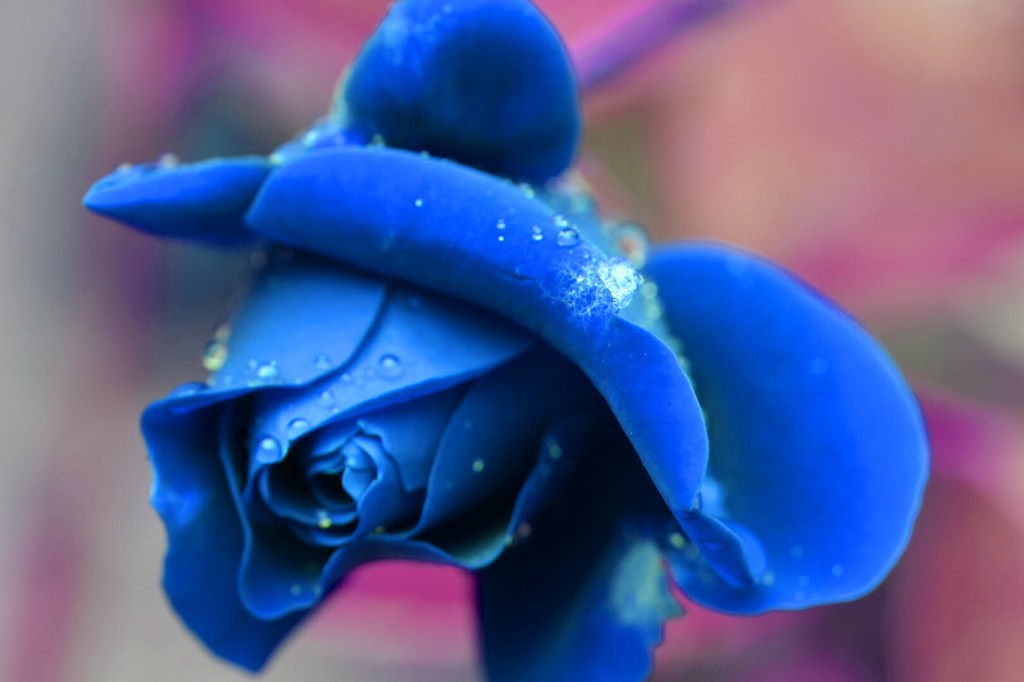
There has even been talk in the past green skinned folk as mentioned in Appearing From Nowhere, so is it such a stretch to maybe consider that there could have been a blue time? We are known as the ‘Blue Planet’ after all, maybe it wasn’t originally called so because of the water. And when we are sad or don’t get enough sunlight, they say we ‘feel blue’, which is probably just a saying and really is because blue is considered a cold colour mostly, so much seem appropriate for low mood or feelings.
Blue Bloods – apparently used to refer to someone of royal lineage, to separate them from the ordinary people and used for a system of hierarchy. But if you go down the route of giving it thought from a weird and unusual viewpoint, could it be that there was blue bloods, and we are the red bloods. And where we have purple being used in royalty to show they are special, could that be symbolism like everything else these days? Showing that the genetic mix of what used to be is still here? I guess that might be a follow up thought to A Trail of Blood, where I speculated about it being coveted for various reasons.
Blue Gods – Amun, the Egyptian god. Vishnu, one of the Hindu gods, the preserver and protector, but shown as always having blue skin. As does Shiva they say. They could just be tales, where there is a need to visually separate something from how you look if you are going to hold it in higher regard to yourself. Myths, Monsters & Legends often form and remain for all sorts of reasons, but the idea that they started from a real place, person, event or time, should not be overlooked or dismissed without thought.
Avatar – that fictional film, where the inhabitants of Pandora are blue. I also wonder if the naming of the world was significant too, and a little bit of Show and Tell going on. That if people knew what used to be, or what we are, then it would open a Pandora’s Box.
Morlocks – those lurking subterranean creatures in The Time Machine (film and book), with pale bluey green skin from their time below ground. And I’m sure it’s just a coincidence that the word Morlock is awfully close to Moloch. An ancient deity associated with child sacrifice. Not similar at all to the brainwashing and MK Ultra techniques used against the Eloi, so that when the siren sounded, they were powerless to resist or understand what was happening. Instead, just slowly walking towards their underground sacrifice, until someone else came along and broke the spell. But until that point, we are led to believe that system had been perfected over the millennia so that there was no trace of what we would call normal humanity or a drive to survive left. That it would take time travel to save them from that repetitive and grisly fate. Let’s hope that somewhere, in some time someone is gearing up a phone box, or a DeLorean, because if the tales of current times are to be believed, then we are already on our own grisly slippery slope…
(c) MKW Publishing
The strange restrictive world of the impending digital prison is sparing no area of technological society. The new target and current media driven agenda is social media bans for under-16’s. To help control what they digest and have access to, apparently, and to steer them away from everything someone has deemed ‘undesirable’. I have already written in Social, But Not Really about how weird social media is from my perspective, about how it is a strange grouping of people and ideas you would not normally ‘meet’ in real life or have such opportunity to be involved in, listen to or being able engage with if you did stumble upon something inappropriate for your age.
And lots of that happened when you were a child, but you were excluded because you weren’t old enough, grown up enough or mature enough to be part of it. I’m sure many remember times like that, where you felt it was unfair that someone else got to exclude you, decide for you and ultimately get to have an influence in shaping what experiences you were allowed to take part in. Parties you couldn’t go to, rides you couldn’t go on, things that were deemed ‘not for you’. It didn’t change the want to be involved, of course, just the reality of age and time holding you back, and the rules.
And now we have had an entire generation brought up on the internet and social media, but now the cat is out of the bag, they want to control it. And really, children have been allowed to do all sorts of things until someone decided otherwise. Usually having to convince the masses of it being a good idea. And on some things, I can see that was true. As discussed in Compensating, But For What Precisely?, when they ‘abolished’ slavery, it only counted if you were under the age of 6, you were old enough to work for an apprenticeship then it is said. The age of consent has changed somewhat recently in the UK from being 12 for hundreds of years. Spending decades turning children into mini adults, with Social Status, responsibilities, standards and expectations of conformity. Now, they seem to be hell-bent on infantilising adults, as discussed in Holding Us Back. Treating the entire population as if they have guardianship over your very personhood, while ironically, acting like Spoilt Brats themselves.
But wanting to restrict all children up to the age of 16 from social media is a strange one, which does indeed appear to be a trojan horse to get some kind of digital ID going for younger generations. I wondered if social media was in fact waning for people anyway, and the interest and engagement isn’t quite what they say it is, or want it to be. Maybe trying to make it appear more attractive to youngsters by restricting it, or at least hoping for that. But no fear, they have decided to go for registering all children at birth with a digital ID, because of course, babies will need bank access, or to be able to login to some kind of services. The obsession with Monitoring and influencing everyone, and what they think and do, definitely seems quite out of control now, and appears ultimately sinister and devious whichever way you try to approach it. And in the meantime, we all get dragged through the technological insanity of net- zero, land grabs for data centres, economic suicide, crippled infrastructure, wars and whatever else they can think of to distract and distress people with. I don’t think we’ll be getting off this rollercoaster just yet…
(c) MKW Publishing
A compilation of articles around Words –
(c) MKW Publishing
It is still a large and growing topic quite in debate. The Weather.
Man-made climate change on one side, and the apparent fight against it with net zero and all sorts of ‘crazy’ ideas put forward that will apparently halt the peril heading our way, mainly involving taking your money. And geoengineering on another, with the fight also happening against that with all sorts of ‘crazy’ ideas put forward on what they are doing and again, what peril may come our way. And while each side fight each other, and dismiss each other for various reasons. It dawned on me. Isn’t it the same thing? Geoengineering in essence, is man-made climate change. It’s the same problem and fight. So, to deny one, must mean you deny the other? Many people who shout about climate problems caused by human and animal existence, say they do not believe there could be direct dangerous manipulation with intent (by way of aircraft) couldn’t affect the whole weather system as well as more local ones. Yet, they believe or agree that humans and industry, and cows farting not intending to affect it, can. Go figure.
We’ve been told for years we affect things, the o-zone layer being a big one in my childhood. Letting us know through strategic placements that what we do on a small scale, will have massive repercussions. So, spraying one can of hairspray will destroy the earth, but constant pumping and dumping into the atmosphere and oceans by industries and technologies never seems an issue. As we have seen, those who tell you should do something, do not do it themselves. ‘Fly less’ they say, while all flying in private jets to a location to apparently discuss the need for people to… fly less, it would be hilarious if it wasn’t so destructive and hypocritical.
But it does boggle my mind that some are still denying the existence of weather programs, ideas, models and experiments. Often conveniently saying, ‘they wouldn’t do that’ or, that happened years ago, it’s not now. Strangely overlooking the point, that many nefarious and sinister things have taken place, that we often don’t get to hear of for decades. Some example covered in An Experiment, But A Big One, More Than Sinister and Experimental, or Just Mental?, so it does seem as though perhaps it’s an issue with more than one problem.
People are in denial that those in charge may want to harm them, then that leads to denial about possible programs in place that may be primed for that, and further denial of even giving thought to it. Perhaps fear and paranoia stop people giving it extra thought. It All Starts To Unravel goes into what may inhibit some people from giving thought to these types of things, or accepting of even hearing what others say without having a meltdown or episode over even the idea of it. But as far as I can see from my previous articles – A Change in The Weather, Sunny, Sort Of, What’s Behind It? Weather It’s A Good Idea and It’s A Cover Up, there should be no dispute over if they can, of that there is evidence aplenty, it perhaps should be over if they do…
(c) MKW Publishing
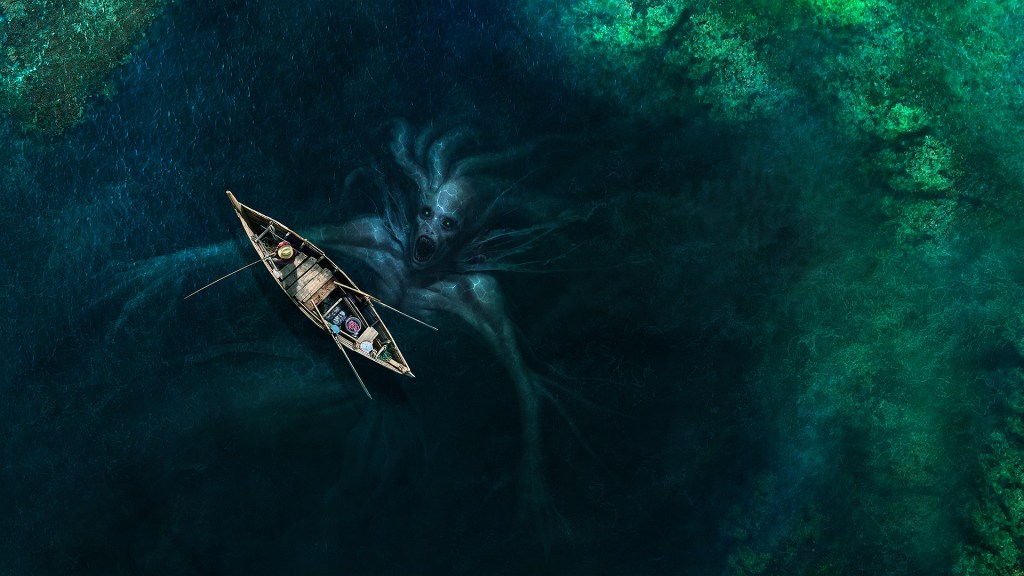
What does lurk in the oceans? The blue planet as they call it, covered in varying depths of water, containing life, danger and various mysteries of our time and ones of a time before. With Myths, Monsters and Legends of the sea being as plentiful as the ones we have for land. Fairy Tales of the deep, where things like mermaids, Ningen and the kraken are said to be.
Of course, there are also legends of other lands that apparently used to inhabit where we just have ocean these days. Lemuria, Lumania or the Continent of Mu, strange islands as mentioned in Maps and Islands, An Island, Or Was It? and Atlantis? No, That Would Be Silly…
But as we know it today, with all our technological advances, radar, scanning and satellites, it seems that perhaps many have forgotten the ocean and what may down there. Thinking it’s all been discovered or revealed, that if there was anything important to know, that you would be taught it in schools, or the Television might tell you. Yet, much of isn’t even accessible, or at least that’s what we are told. We can skim the surface, and dip down to certain depths with submarines and cameras to try and give us a glimpse into what goes on down there.
The Bermuda Triangle has been an ongoing saga for my entire life I think, mentioned in The World Got Smaller with a different angle on its purpose. Yet now there is a another ‘conspiracy’ surrounding it, and that it’s a restricted zone for the rocket launches that never make it past the firmament, with that being their landing area.
There has also been talk of lights in the water or coming out of the water, for centuries now amongst sailors and peoples of the coast. More recently so with talk of USO’s and that information about them is being suppressed. And not just in the ocean, it’s been said of large bodies of water almost everywhere, which we know sometimes have their own local stories of monsters and strange occurrences. There are sunken cities and temples, structures of unknown civilisations or origins, remnants of what has been submerged at different times through different circumstances. With some already being lost forever, as on land, and others perhaps waiting to be revealed before they too are claimed by the elements and ‘progress’. And there is always the far-fetched theory that there is something else down there, perhaps a life form, or beings that haven’t made themselves known to the masses, yet…
(c) MKW Publishing
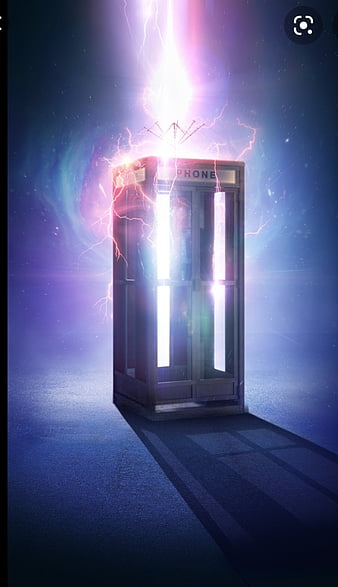
A phone box, and what they represent other than just being there to facilitate the need or want to talk to someone else.
Bill & Ted – where they were given a phone box to use, dialling to when they wanted to travel. Like with most films and representations of time travel, there is a machine, a mechanism, and a point ‘in time’ for you to travel to, and in some cases, return from. As discussed in Somewhere in Time.
Doctor Who – as we all know, his ‘time machine’ was a ship of sorts, shaped as a phone box yet was much more. But it’s still a phone box to the eye, a deceptive cover for its real purpose? Or is that the point, that we look at a normal phone box and think nothing else of it, just seeing it as a basic form of communication now, overlooking it like so much else that ends up just being part of the background or what came before.
Harry Potter – a phone box, not quite in the same way as the others, as this was just used briefly to show a ‘secret entrance’ into the wizarding world in London. But still something that allows you go ‘between’ worlds, and an older style red phone box no less, perhaps meaning what used to be was more important than we think.
ET phone home – not a phone box, or even a telephone as we know it, but I thought of it as it was still use of an old-style analogue signal to communicate to ‘others’.
Superman – in the old school films, it was a thing that Clark Kent would leap into a phone box, and suddenly come out as Superman, where you would think it was just a convenient changing room, and maybe it was. But perhaps, maybe it wasn’t and was meant to be something more.
The Matrix – the hardline. The only way for them to get out once they were in, with a phone connection being the thing that connected them. If you could get to answer it in time. But the idea that our energy or consciousness is able to be transported somewhere else through the analogue signal is an interesting one. And because everything seems inverted these days, I realised that once you were out of the matrix it was rather grim and no one had any powers, so it made me wonder if it was another bait and switch. That it is actually within the matrix you have freedom, or can have freedom if you ‘free your mind’. As that is where they could instantly download information, had to be there to access the mainframe, had to be in there to change things. Just a thought.
Or it could be that we do end up getting ‘trapped’ by all these signals and frequencies, that our individual biofields are heavily swayed, influenced or just plain controlled by external triggers other than that of nature. People will have varying degrees of sensitivity, so I can understand why not everyone can feel the same changes or differences in certain places. We are a finely tuned instrument they say, and potentially connect to more than we are aware of, so Choose Your Thoughts Wisely as you go about your day, we get to check who’s calling or knocking when it’s a door or a phone, but we don’t seem quite as discerning when it comes to letting thoughts in…
(c) MKW Publishing
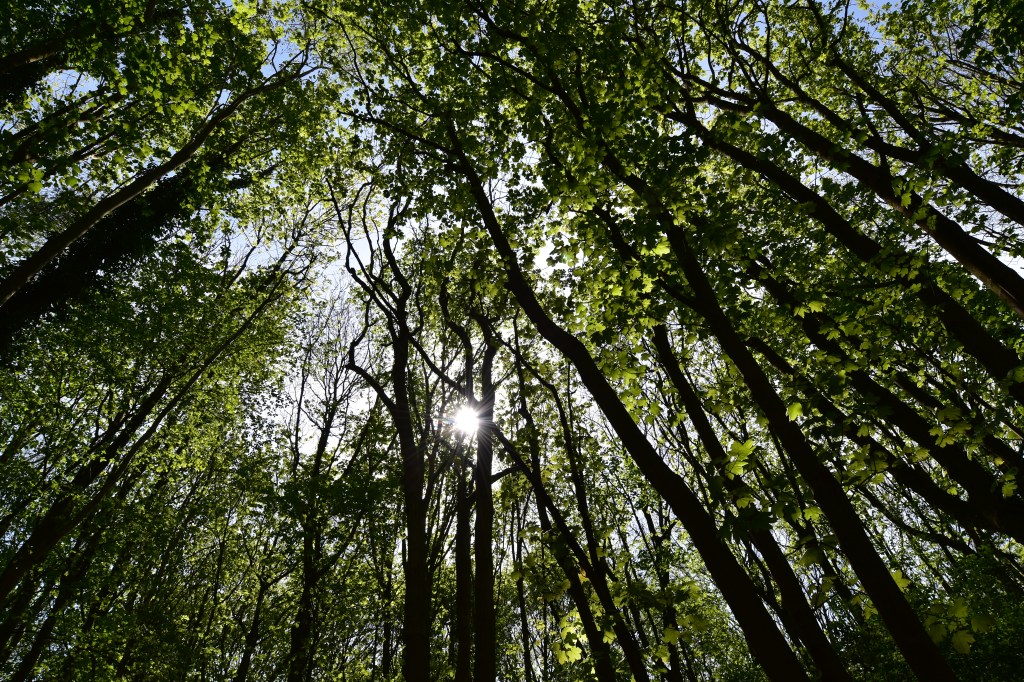
I understand and appreciate nostalgia, and have indulged now and again along the way like everyone else. Reminiscing of times past, good times, before times and when everything seemed and was different. Now we have more of a perspective on that than ever before, because things have changed so dramatically around us while so much looks the same. At the moment the country still stumbles on, people still go to work, shops are still open and people are going about their lives, because they have to. And I’m sure we have all looked back to simpler times in our lives, before we knew so much, before we had to pay bills and make our way in the world. Well, that psychological world has been turned upside down and inside out for some people, and rightly so, they are thinking back to when it wasn’t like this.
But, for people like me, it has always been slightly like this. Because when I think back to that simpler time, although it appeared to be as it was, something was still not quite right. Feeling that there was something else going on, that we were only given half or no truths, that corruption wasn’t on the side or running as a vague underbelly, it was the foundation and the keystone of everything holding ‘society’ together. As if what we see is just ‘the performance’ as you would being in the audience watching a play unfold on stage. Not seeing the set designers, the wardrobe and makeup department, the prepping, the pre-written script that has been so carefully rehearsed, you don’t get to see all that goes into getting it ready, or when it rolled out. Only seeing one aspect of it, perfectly presented and arranged for how they want it to be perceived. Often with twists and turns, shocks and laughter, to try and captivate an audience and keep them entertained. But not in a fun, amusement type of way anymore, where there is joy and cheer and people can come and go as they please.
More like the creepy movie theatre, where after the movie has finished, the doors are locked and once the lights come on you realise you are not where you thought you were. Instead, the paint is peeling, the chairs are collapsing and the crumbling ceiling no longer seems that it can hold its own weight. And instead of characters to keep you occupied and distracted so you don’t notice, it’s now an empty stage with no lights and dazzle. Like the Green glasses of Oz get taken off and you see it as it is, not how it has been painted. So, although I may not like how it is now, I do not crave how it was before, because that wasn’t normal either, just a calmer more stable version of now. I guess that’s why they say that ignorance is bliss, because once you know, something psychologically adjusts, and there’s No Going Back…
(c) MKW Publishing
 MKW Publishing