Fiction is pointless

Fiction is pointless. What do you think when you hear those words? Do you agree? Have you ever given thought to why fiction is a thing? I am a writer and horror fiction is my chosen genre (or rather I think it chose me). So I was disturbed to hear these words, from someone close to me at the time. Not when we first met, he just said he wasn’t into reading fiction and we left it at that. But a couple of years later, I was curious and wanted to know, why didn’t he like reading fiction?

The answer threw me completely. Fiction is pointless. I have to confess, I believe I took the defensive route immediately. As someone who has enjoyed many hours of escapism growing up immersing myself in books and movies and writing my own stories. I thought it was essential and it had never dawned on me that other people may not share that. I think I unpicked that jumper thread because I knew my husband would never read my books or be interested in any of my fiction, I wanted further explanation. I didn’t quite realise the can of worms it was going to open.

I tried so hard to explain it, what joy fiction could bring letting your imagination run riot as they say. He shook his head at me. Then I worked out something vaguely in the back of my mind. When talking about stuff previously I had asked him about playing as a child and imagining things and he said the phrase which was starting to make more sense ‘I could never go full cartoon’ like everyone else. I didn’t quite understand it, but couldn’t think of a way to get him to describe it better at the time, but now it came back to me. I had it, and said ‘when I read books, I actually see what I am reading in my head, there are pictures of what’s going on. Like a movie’.

And that was it. What seemed like such a small thing as one person liking fiction and the other not, uncovered something very profoundly different and something that would affect nearly every aspect of our lives thereafter. We discovered he has Aphantasia, a lack of visual imagery in mind. He didn’t see pictures in his head, and to be honest, was pretty horrified that I did. And it turned out apparently 98% of people do in some way or another as well. The adjustment to this has been long and sometimes not easy. It’s made me analyse my own thought process all over again too, because as it turns out, I have Hyperphantasia, which is considered an over active and vivid imagination. Now I know other people aren’t like me either, they don’t have constant dialogue, pictures, songs, films, memories and ideas all jostling for position at once in mind. It’s been a strange old road, and this year has just made it all the stranger…

(c) MKW Publishing

The Holiday (Movie) and Hyperphantasia

This isn’t a review because it’s not about the film as a film but more a point of interest within it – but can say from a review standpoint having watched it all the way through – it didn’t quite deliver. Face to face I can talk about films for hours but online I try to keep it brief.

This is your average rom com with popular leading actors with Cameron Diaz playing one of the leads in her bright smiley way (she is pleasant to watch). But the reason I bring up this film in a non review context and her character in particular is that there were two specific moments that perfectly showed what I think Hyperphantasia is or at least it gave a good visual representation of it. Which was actually quite handy as my husband has Aphantasia so for him, he can’t ‘imagine’ what’s it’s like. This was a good way for him to actually ‘see’ what I had been trying to tell him about my sometimes seemingly neurotic brain. He managed to sit through a small portion of the film having less of a tolerance for watching pap than I do, but he hot the point.

The two examples that stick with me after the fact are –

She is trying to sleep, and the next day starts running through her head, almost causing a panic attack because it was so frantic and busy. I know this process well. And the second is when she is explaining to the potential love interest why it wouldn’t work out and runs through the entire scenario she has already worked out in her mind. These two things in particular were and are exactly what I do (although this movie wasn’t about Hyperphantsia, I spotted what I now see as the signs of it). Until I knew how my husband thought i.e. no pictures, no imagining tomorrow, and sure as hell no run through of any conversation he had had previously, or was going to have in the future. I had believed everyone had this frantic level of thinking, planning and general non stop thoughts. I thought everyone thought through what they were going to do later than day, or the next day. I think I believed they just managed it better than me and didn’t get bogged down by it. But now I know better…

IMG_8661

(c) K Wicks

Hyperphantasia, A Down Side…

“Hyperphantasia is the ability for an individual to create highly graphic images in his or her mind’s eye”

I didn’t know I was hyperphantasic until near the end of my thirties, and am still happy to not be as this is a self-diagnosis, but it seems the most fitting description so far of what goes on in my mind.

I thought everyone was afflicted like me. That they had constant images in mind, memories coming back out of nowhere, replays of movies watched, or a rerun of conversations had. And similarly running through future events and conversations that were yet to happen, creating anxieties of possible outcomes of things that would come.

It wasn’t until I explained these thoughts to my husband that we started to notice a difference in thought process way beyond being a man and a woman. And after we discovered he is aphantasic, it made me realise that I might not be thinking like everyone else. In fact, it made me think no one is thinking the same at all.

It explained a lot of things I had been looking for an answer to. I spent a lot of time in my own company as a child, despite having siblings, I have always been quite able to entertain myself having many hobbies and keeping my brain as occupied as I can. I was constantly thinking, scheming, planning and analysing. This hasn’t changed. Phobias it seems though were very set too, being able to hyper visualise has made my fears never go away. Now I know why, I’m not so hard on myself, believing it’s not actually my fault. But for years I couldn’t work out why certain images wouldn’t go away, why did things stay with me for so long? Movies, articles, experiences, books, any input could come back at any time out of the blue. I have learned to control them mostly now, but it’s been hard work.

The one that stuck and commandeered my childhood was Jaws. I know I am very much not alone with that one, but it made me wonder if this is part of the reason and differences between us that makes some people have phobias and others not. Some people like horror and are scared by it, others not. And potentially, allow some people to identify better with others, or be more susceptible to fear. I suspect this may be why some people are prime subjects for being hypnotized, if someone can picture what you are saying, does that help?

But my nemesis was Jaws. Watched around 8 or 9 years old I think, it stayed with me. It imprinted in my brain and resurfaced often. My grandparents had a swimming pool and used to take us on holiday, to where there would always be a pool. I couldn’t escape it, but it was so bad that for the first year after watching, I refused to have a bath and would only use the crappy push on shower head. My brain took it further you see, it created a mini jaws that could come up the plughole, and then turn into a big shark. It took me about a year to get a grip on that. I just had to suck it up and deal with it. Then it became a weird family joke that I was terrified of sharks, and I just accepted it as that. A weird thing that didn’t bother most people. I must be the odd one out.

I still have it. When living in Spain for a couple of years, I had a pool with the rented property as it was part of the dream. But within two days of trying to enjoy a swim, it came back. I couldn’t help visualizing a shark, in the water, at the bottom in the dark where I couldn’t quite see. I was in my late thirties by this point. I felt like an idiot. But it was the same with swimming pools back then, I would focus on the filter, thinking it could come through there. And would quicken my pace, swimming wasn’t fun anymore after becoming an extended anxiety attack each time. Although, on the plus side, I did win a bronze medal for backstroke in the cadet championships because I was thinking of sharks. But for having a healthy relationship with water it did nothing.

By now understanding that my brain can latch onto anything it likes and I can’t control what stays and what goes, I am being more careful about what I read and watch. Hyperphantasia has led me to understand a bit more about why I am different from others, and has made me realise that each person is more unique that I had given them credit for.

IMG_5166

(c) K Wicks

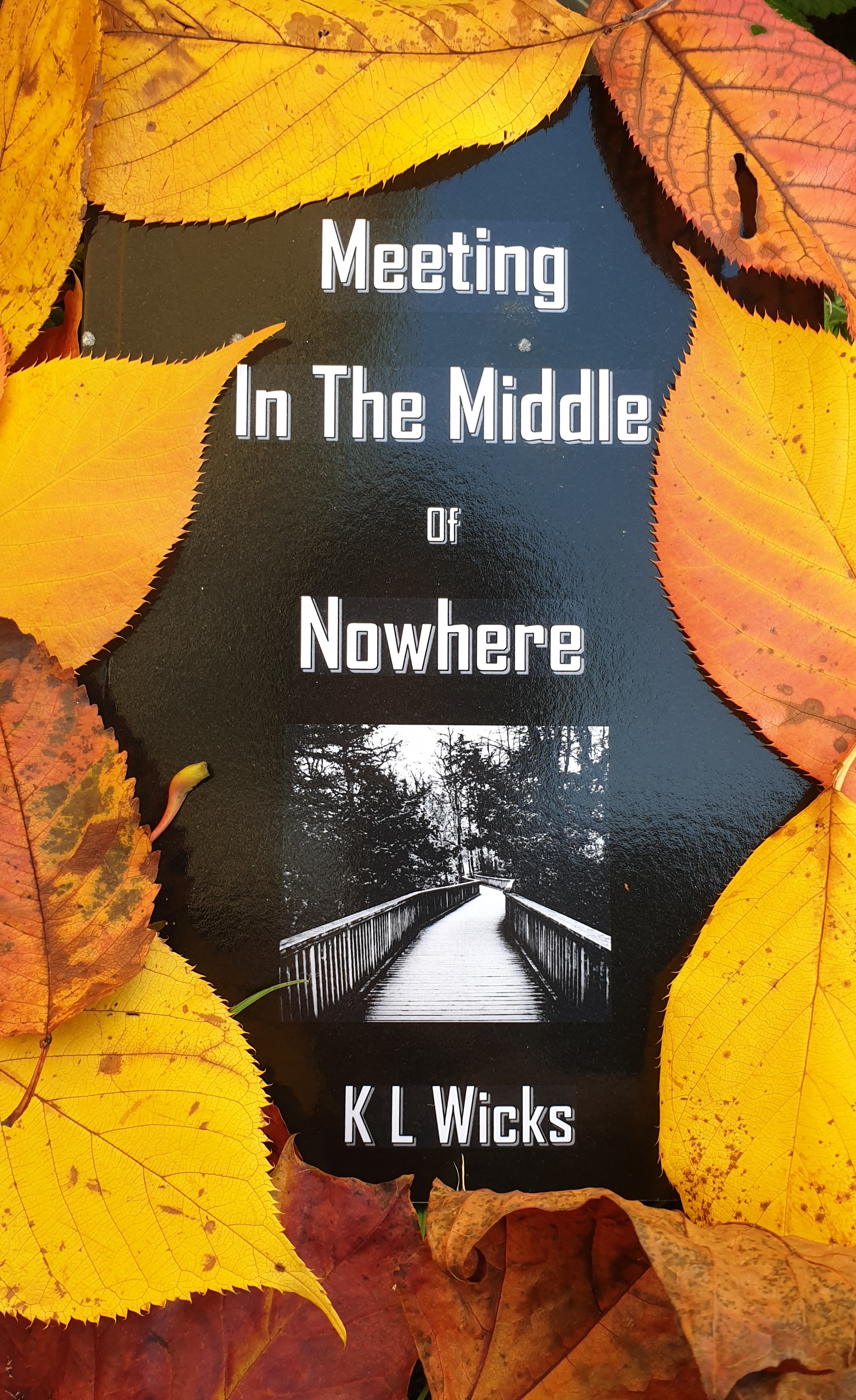
For more on hyperphantasia and aphantasia from a personal perspective then you can read more in my book, Meeting in the Middle of Nowhere.

Anxiety…(mine was more relevant than I thought)

Another chapter excerpt from my book – Meeting in the Middle of Nowhere. This chapter is more relevant now more than ever for me…

ANXIETY

Society alone can give you anxiety, a stressful home life or working environment can trigger these emotions and feelings too. But if through your life of extra upheaval, emotional blackmail and what would be termed ‘a very dysfunctional’ upbringing, what if you didn’t get the necessary experience to understand all this and know what was going on? What if you didn’t ever develop coping mechanisms or recognise what might be a weakness in yourself or potential strength? Then how can you hope to make it easier for yourself and work through it? This is the type of question I ask myself, then go to work trying to unravel what it really means. I also know you don’t have to have had a dysfunctional life to feel anxiety, it can happen to anyone, but it definitely makes the path a bit harder.

What I did work out was to spend less time worrying and trying to predict the outcome of things I hadn’t done yet or that hadn’t yet happened. This is where I feel mental time travel has held me back a bit. I missed out on a lot of experiences because I couldn’t stop theorising what would happen and how I would feel. I have a good memory for feelings, so unfortunately I still come across an event or idea that would require me to be in the presence of ‘people’ and I just can’t do it. However much I might want to be a part of the subject matter. Not because I am always anxious, but because now I have the experience to know I don’t want to cause it and will be awkward and can seem rude. There are some things I just like the idea of, but I ‘walk’ myself through and it does always end the same. I’m bored, don’t know how to join in, feel uncomfortable and want to go home.

This isn’t negative, this is realistic. I am not a naturally happy go lucky person, and I can deal with crowds if I have to. I’ve been to trade shows, tattoo conventions, festivals and work networking events, although that was a number of years ago now. I like to believe I could again if I really wanted or had to.

I have just worked out I don’t want to, I am not that person. I just tried to be for a really long time. I don’t socialise now at all, have very limited family and keep myself to myself mostly in real life, and I am happier and more stable for it. But it is a shame to think in order to have a quiet enjoyable life you can’t have people generally in it. I know now that’s because people are the random element I cannot foresee, predict, control or understand fully. I myself am included in that.

It is disturbing to me to see what society has become, how frustrated everyone is, how the goalposts keep moving and creating a confused landscape. It seems we went through a phase of encouraging everyone to be themselves when nobody knew who they were, and it’s all gone a bit wrong.

Just paying attention to the world around you and media driven news and propaganda can cause people to feel worry. Throughout the last century there have been many scare tactics and fear campaigns, just for the sake of profit and manipulating the masses. I just try and pick my way through what is around me and apply concern and worry to that which should be worried about. But anxiety for me is sometimes applied to things I cannot change so I try and minimise this where I can.

I know I have covered dreams already but as this is applicable to anxiety, a further reference needs to be mentioned.

Example: I have watched and do watch a lot of disaster movies, apocalyptic, life altering event films that give you the worst case scenario. I love them, partly because we always defeat the impending doom so really they are feel good films to me. I have gone through phases of having nightmares though, not so much these days (I have a theory about why), but most of these are and have been about disaster. Whether it be alien invasion, zombie virus, volcano, tidal wave or tsunami, they all had a common theme. I would need to save myself and my dogs. The panic at knowing it’s coming or of not being able to get away can often linger well into the next day. The nightmare is no longer happening, but the feeling is. My husband found it really bizarre that I even had dreams, and even weirder that the feeling of something completely fabricated can stay with me. Also that I went out of my way to watch films that would give me nightmares.

I determined this to be nothing to with the movies per say. But because I was anxious in real life about something happening to my dogs, or that I wouldn’t be able to save them or myself. The reason I decided this, was because after I met my husband, I very quickly stopped having those nightmares. Because I fully believe in the time of a crisis, he is exactly the person you would want by your side. In real life I began to feel safe, secure and protected (something I had never had before), and this transferred to my dreams. I am still worried about these things on a basic level, because they are possible, but it doesn’t take over as it did before.

The anxiety is managed, but not eliminated. How could you possibly not have some anxiety about the world around you? Firstly we are told we are hurtling through the massive void which is space, while spinning. We are at the mercy of unpredictable weather and on a geologically unstable earth. We are surrounded by unpredictable animals and people, and can be killed by microbes we can’t see. Just that little lot gave me much to worry about, before I even learnt about what terrible things humans do. So when I would hear people talk of being anxious, I used to think, yes, but are you anxious enough? Now I realise it’s turned into something else entirely. It’s become an industry, and rather than help people to cure it, they help to manage their anxiety, labelled it and designed medicines for it – at great profit to someone I’m sure.

I do believe people should be concerned about the world around them and of the harmful things out there that can affect people, but to try and have a quality of life too. That’s the balance I have always been trying to achieve. I now believe experiencing some anxiety is normal, this is a mechanism that has served its purpose well in the evolutionary past, as we are led to believe. I’m not sure we should constantly be trying to dampen our human responses just to function. At what level do we accept that the trigger for so many might need to be addressed – but when the trigger is life itself and society, what can be done? More medication I guess.

20211117_174135

Forethought & Consequence…

Excerpt from my recently published book – Meeting in the middle of Nowhere, looking at the differences between someone with Aphantasia – my husband, and on the other side Hyperphantasia – Me.

‘Without the ability to plan out future scenarios, forethought and consequence are hampered in my view. Being able to plan one’s life seems like it would be much harder, could come across as quite haphazard to someone like me and ‘on the hop’ as it were.

My mother was this way, ‘a bit flighty’ we used to say. And if she hadn’t passed away, I would have a ton of questions for her about my theories on how she ended up the way she did. So I was strangely prepared for this type of living although I don’t enjoy it. Before my husband and I met, I had been living in the same town for about sixteen years, and only two different houses in the space of thirteen years. From being moved around all the time and having no roots in my childhood, all I wanted to do was settle down when I grew up. So I did.

He had also moved around a lot, but hadn’t ever wanted to settle. He didn’t feel the need to do the same thing every day, didn’t want to see the same people and talk about the same old crap. He doesn’t do small talk and general chit chat just to pass the time, even with me. I would say he is an adventurer. He wants to experience life and be there, because without that, life really is boring. He can’t imagine being somewhere, he can’t ‘switch off’ and go into fantasy land, and he can’t sit there and mentally time travel to pass the time or rethink things. So he takes enjoyment from things as they happen.

I have a lot of hobbies, I needed lots of mental stimulation growing up and found reading, writing, drawing, movies, embroidery, cooking, cleaning and anything that I could find to occupy my brain. I feel like I accidentally experienced life because I just happened to be there and through other people and opportunities. All of it took mental planning and visualising, all my pastimes, all my career choices and ambitions. If I don’t think about them in advance, I don’t get geared up to do them. My motivation sometimes needs motivating.

He doesn’t have any mental pictures to inspire him and with this, boredom took on a whole new meaning to me. I understood why he seemed agitated and bored a lot, because he genuinely is. There is no forethought happening to plan tasks or time filling activities. And it’s a vicious circle, bored because you aren’t doing anything, but literally can’t think of anything to do. Travel seems to be the thing for him, getting there is part of the adventure and then being somewhere, doing something. It’s live and happening. So we have had to find a way to work with both. So that I don’t feel completely unsettled by never knowing what’s coming next. I need time to mentally prepare for things, and so he doesn’t feel like his life is Groundhog Day. It’s easy to say ‘find something to do’ but this doesn’t strike me as an easy task for him. Hell, it’s sometimes not an easy task for me and I have a million and one things going through my head to do.

Another classic saying springs to mind for this chapter ‘Look before you leap’. This for me has always been associated with thinking ahead and for awareness of consequence.

But within an awareness of consequence must be a fear of it too surely? If there is no fear of the consequence because it is not happening, then why would you hold yourself back? I don’t think you would for some people, but you wouldn’t really know why. On the other hand, having an awareness of the repercussion and fear of it does not automatically mean it can be averted either. I have found a classic example of forethought and consequence causing two quite avoidable injuries I sustained in childhood.

Example: I was about seven or eight years old and I had a push bike. A Raleigh BMX to be precise, red and white. I loved it and would blat to the shops or down to my friend’s house, no problems. On this one particular day, I was biking to what we called ‘the 10 0’clock shop’ – probably no mystery as to why. Running parallel to the very straight main road, was a side road with a row of houses, but was steeply dipped coming up at the shop. So I decided to take the dipped road, with the intention of peddling as fast as I could down, so that it wasn’t such a hard slog up if you got some momentum behind you. Sounded like a solid plan, and it was.

Until for what would appear to be no reason at all (I now suspect Hyperphantasia) I started to wonder if what I had been told was true. Does your front wheel buckle if you let go of your handlebars while going really fast? Now, you may think this thought might have just been dismissed and I continued on my speedy way. No such luck. I wanted to know. Had to know if my imaginings of it all going horrible wrong were correct. So, I let go. And true to the information I had been given and had imagined, my front wheel buckled. I flew over the front of the bike and fell face first onto the concrete.

I really hadn’t given enough thought to what would happen next in a physical sense. What did happen was a lot of pain, a fair amount of blood, some smashed in front teeth with one completely missing. And luckily a random lady coming out of one of the houses to help patch me up. I felt stupid, I’m not going to lie. I wasn’t really sure what it was that had made me do it, I had put logic to one side and just went for it. It scared me a bit when I started to understand what I was capable to doing to myself. We are very breakable, and I guess as children it can be a hard time learning that however your brain works.

Example: Around the same time in my life, we had three dogs. One of them in particular had an issue with things coming through the letterbox. Anything that came through was, for want of a better word, savaged. So, again, in my ridiculous childhood thought process, wondered. Could it be possible, that if I put my hand through the letterbox, it will get treated with the same contempt? The answer is yes, but only temporarily. In the dogs defense, as soon as he realised it was my hand, he let go. Unfortunately his tooth had punctured one of my fingers, there was screaming and lots of blood. A few stitches in my index finger and I was fine, but started to see a pattern forming. I didn’t trust what I was told or even my own thoughts and felt the need to prove these things, even at great cost to myself. It was here I think I first started to understand about instinct and how you are just going to have work out some things for yourself. Where others may be giving you really sound advice, take heed. That does not mean take the advice, but keep it in mind.’

meeting-in-the-middle-of-nowhere-new-cover-front-only-may-2021


(c) K Wicks

Different Futures…

Another excerpt from my now published Meeting in the Middle of Nowhere…

Before we knew of Aphanstasia we decided to move to Spain. It was a leap of faith, we hadn’t been married long and tried to think of the best way to use our resources to have a good life. We discussed everything and we moved. It was hard and there was a lot to organise and sort out, but because he functioned great in the moment, it seemed a breeze really.

Only a small hiccup of a drunk taxi driver at the last hurdle trying to get to the airport to leave. But another one saved the day and we got there. The drama that unfolded when we were there though couldn’t have been anticipated and was caused mainly by a long list of shoddy agents and bad neighbours. We didn’t really have a chance to settle down and find our feet to plan anything. Instead going from one idea to another and having to change it every other week because of what we had found out, or how we had been treated. It was extremely frustrating. And it was in these frustrating times that we stumbled across this major difference in our thought process. He wasn’t planning ahead at all, he had no concept of our future in Spain and never had. That kind of explained why he always seemed to have objections to things, he speaks his mind at the time, there’s no saving it for later. It can make him seem quite outspoken, but it really isn’t on purpose I now know.

I have to be honest though, when I realised I was on my own with planning our future, it sealed the deal for me. I was already struggling and had thought I wanted to come home, I just didn’t want to ruin it for him. But deep down I must have known we weren’t going to be staying in Spain. I was grossly under prepared going there anyway (I can’t even speak the language), and knew this was the right thing to do.

I couldn’t do it for us both not on home soil. I had spent over thirty years working out how to function in this society, it sounds awful to say, but I actually felt too old to go through it all again. I needed the support of familiarity – not people, or friends as they are thin on the ground, but where I recognised. I realised that was my reference point, my safety zone. I felt like a duck out of water and wanted to correct it as soon as possible. I don’t often live with my mistakes once I have acknowledged them.

IMG_9611

(c) K Wicks (Photography taken in Spain)


Aphantasia #2

This was written nearly two years ago, and most of this has found its way into my book covering this in further detail – Meeting in the Middle of Nowhere.

“It’s been nearly a year now since I learned of this and have been trying to understand Aphantasia, i now know it is in varying degrees across the board for the people who have it, partial for some, full for others. I try as best i can to understand what it is to not have visualisation, to not imagine at all and to not picture anything in ones head, its a concept i had not considered but now makes perfect sense.

For full Aphantasiacs, the difference from partial seems to be startling too ( i can only comment on full as that’s been my experience). There is no escape from the stark reality before you, what you see is all there is – without dreams and mental pictures to carry you away, what you see really is all there is. I have the ability to replay movies in my head, run through what i saw mentally, recall faces, remember looking at lists, posters, people, i can see it all in my mind. But trying to explain that to someone who doesn’t, well, i have been told it sounds like the most alien thing in the world.

“You can play movies in your head?!” Yes. I can retrieve almost anything i have seen in my life, whether i remember it correctly is another matter, but i have something there. I can picture all of my family, past and present, i can imagine i’m looking in the fridge when i am trying to remember what i need to buy (when i forget my shopping list). I use it for so much, and also i realise, for escapism. Even just standing in line or waiting is assisted by my mind wandering, occupying itself with either something i want to do later, of something i might have watched the night before.

So, looking backwards and forwards is natural for me, spending possibly very little time in the present. Reviewing what was, and speculating on what might be. But not for one who doesn’t imagine – there is nothing to ‘look’ back on, and the future doesn’t exist. So living in the now takes on a whole new meaning, and seems that it can lead to immense impatience and frustration with the world and people. Mostly the people who seem to be ‘in a different world’. It’s because they actually are – which was quite a terrifying revelation to one who doesn’t ‘drift away’ in mind – while driving, cooking, walking, and everything else we do, most of us probably are mentally somewhere else. “So no-one is really in reality or sees the world as it is?” And that was the terrifying bit, the reality of that question.

I’m still learning on this and will keep at it”.

IMG_0147

(c) K L Wicks


Meeting in the Middle of Nowhere


PTSD

This is a chapter excerpt from my recent published work – Meeting in the Middle of Nowhere.

PTSD 

I wasn’t sure where this fit so it has its own small chapter. I also wanted to include it because before we knew of Aphantasia, my husband was actually rather dismissive of this condition. He said he didn’t understand why people were so traumatised to have this in the first place and why it goes on for so long. He can be extremely perceptive, so not getting it confused me and maybe because I had been diagnosed with this very thing, made me start to piece things together. Trauma and PTSD are different for everyone, but I believe memory and mental time travel made this last longer than necessary for me.

I had a breakdown and suffered from PTSD (Post Traumatic Stress Disorder – just in case you haven’t come across this term before) from the age of fourteen, then spent the next three to four years at home with just my mother. Very limited home schooling and little or no socialising outside of the house. Then just before I turned eighteen, my mother suffered a massive brain aneurysm. I’m not going to lie, it was the most shocking event of my life. Whatever trauma I thought I had experienced up until that point, was completely overshadowed. It was on my watch too, I was home late from an appointment mid-morning and found her, having to call the ambulance and deal with the initial fallout. We had dogs so I called my step-father and the ambulance left with her, leaving me alone in the house with the dogs for company.

But what I do find interesting is despite the awfulness of what was happening, a part of my brain kept functioning but in a very detached state. Reason and logic were working on a different level. It happened on a Monday, and although my older brother lived away, I knew it was his day off. So I didn’t call him. My reasoning being, I’m about to change his life forever, nothing will be the same after this. And although I desperately wanted company and to share this tragedy, I wanted him to have one more normal day. And he did, I told him the next day. So there is a part of me that does and can keep functioning when the other part of me has shut down. All I can call them are split experiences, I have access to both and took part in both, but which one I focus on can determine how I cope with them.

It has taken me years to get over that event. To make matters more complicated she survived, but not in a good state. She ended up stuck way up north where we were residing at the time, so very cut off from anyone. I was the only child left living at home and made the choice to not look after her. I left and chose me and my upcoming life instead. You may judge me as harsh for leaving, but if you knew the full background you would possibly understand. I was followed by years of guilt for leaving, having to find out what had happened in my life so I didn’t have to have it following me anymore.

It was five years later she passed away and although I was relieved, I was not left with a sense of peace for some time after. My guilt at not being there to save her, and for not looking after her kept followed me. Every minute of that experience is etched in my mind, and for years it replayed whenever it felt like it. But the whole five years it went on for too, and after the funeral. It’s for things like this that I do not appreciate having such clear memories with full imagery. The only thing I could do over the years was to dissociate the emotions that I had attached to them, gradually minimising the impact and effect it would have on me. My life is still up and down as I am, I’m just dealing with it slightly better these days.

After knowing people like me see images and memories in our heads, my husband did understand why PTSD was such a thing for so many people. Even giving me a bit of insight into how people without imagery may still be affected. He says that maybe by not being able to adequately remember or visualise a traumatic event end up leading to a lack of closure. You aren’t able to work through it and put it behind you. I know it’s different for everyone though so it’s always going to be hard to say for sure.

(c) K Wicks

Meeting in the Middle of Nowhere

A Sense of Self and Identity…

Chapter from my recent book Meeting in the Middle of Nowhere, looking at #Aphantasia #Hyperphantasia

Another question that I felt I should approach, was to ask if he had a sense of self. He didn’t know what I meant and I explained the term. This is something that has taken much of my thought. How the world views me, how I view myself and the world, all the things I feel this encompasses and can affect about a person. Being able to do this has helped me with each identity crisis I have gone through (and possibly caused some of them), helped me make friends, improve my career and assisted me generally in life.

So if someone were to not have a sense of self, I felt this would lead to feelings of a complete lack of identity. But without the concept of self and therefore identity, it seemed there was nothing to lack. It is only when I explained how much the sense of self affects ego and people’s motive and actions, he began to understand. And I was wrong, there isn’t a lack of identity at all, in fact, there is a person who knows what they want and who they are without the need to question it. I envied this slightly.

It’s like explaining another world to someone who has been travelling alongside it their whole life and didn’t know. It was quite a shock to reveal how apparently 98% of people function and think (within the parameters of what we know anyway). And the consequence of that was to cause him to rethink everything he thought he knew. It was hard to watch and to know I had opened that can of worms.

It’s almost like the scene I guess from the 1988 movie ‘They Live’ when he puts on the sunglasses and sees that most people aren’t like him. It throws you and makes you question everything. Added to that potentially having SDAM meant any attempt to try and recollect things was hard work. To try and work back through what has come before to understand yourself, when you have minimal data stored about it can cause great frustration.

I also realised this meant possibly most terms that start with self may be in the ring for being different. Self-esteem and confidence was one I wanted to explore further, because he appears to genuinely not care what people think of him. I wondered if this had developed because of his lack of sense of self, or perhaps the no filter honesty streak. That he might have received such a shocked response on numerous occasions without understanding why, that he developed thick skin as a side-affect.

I theorise it’s because without an ‘image of yourself’ how do you think about how others see you? How can you interpret what others may think of you? Learning this was quite pivotal in growing up for me and I didn’t know how he might know or work out what others would think. I now know, he doesn’t know what people think of him. He’s very perceptive about others intentions though and can work people out quicker than I can, but building a picture of someone in his mind doesn’t occur. Or the concept that other people may have a mental picture of him.

Mine however works very differently, I am very aware of how the world may view me, or how I would like it to view me. My thick skin developed over time and through logic. I found it easier in the end to unravel why sometimes I was being an idiot or hurtful and change those tendencies. Not to take anything to heart and let it get me down or let it be the motivator for a life decision. People can be a major influence on your decisions without you even being aware of it – but really it is only the perception of what they think that affects us. Often tainted by our own experiences or outlook. Perspective can be a great thing, if used when needed.

But having a sense of self is what has helped to drive me forward in my life, helped me to look at what I want to aspire to be and to do it. Without that self, I am not entirely sure who would have been steering the ship, so to speak.

My husband does not aspire to be anything in particular other than what he is. He has no ambition, and frankly after piecing it all together, I am not surprised. There is nothing until it happens, so what would you focus on as your goal? How would you have a five year or multi stage plan? He worked hard and just got on with life. Fortunately I look at people and who they are, not what they do for a living or how much money they make. Although I have ambition myself, it’s not something I presumed everyone else would have. I don’t judge someone for not being like me. In fact it seems strange to have that expectation, how can anyone be like me? They haven’t lived my life or seen what I have seen. It’s far more interesting to me to see the differences in people and work out how they came to be. We are all different, I just never saw that as a bad thing.

(Meeting in the Middle of Nowhere).

IMG_3026


The Holiday (Movie) and Hyperphantasia

This isn’t a normal review a because it’s not about the film as a film but more a point of interest within it – but can say that although watched all the way through didn’t quite deliver. Face to face I can talk about them for hours but online I try to keep it brief. This is your average rom com with popular leading actors. Cameron Diaz playing one the leads in her bright smiley way (she is pleasant to watch). But the reason I bring up this film in a non review context is that there were three specific moments that perfectly showed what I think Hyperphantasia is or at least it gave a good visual representation of it. Which was actually quite handy as my husband has aphantasia so for him, he can’t ‘imagine’ what’s it’s like. This was a good way for him to actually ‘see’ what I had been trying to tell him about my sometimes seemingly neurotic brain.

The two examples that stick with me after the fact are –

She is trying to sleep, and the next day starts running through her head, almost causing a panic attack because it was so frantic and busy. I know this process well. And the second is when she is explaining to the potential love interest why it wouldn’t work out and runs through the entire scenario she has already worked out in her mind. These two things in particular were exactly what I do (although this movie wasn’t anything about hyperphantsia), and until I knew how my husband thought, I had believed everyone had this frantic level of thinking, planning and general on stop thoughts. I think I believed they just managed it better than me. It turns out on the whole not everyone does, but then there are those of us who do…

IMG_8661


(c) K Wicks