(c) MKW Publishing

(c) MKW Publishing

(c) MKW Publishing
Something nice to have as an extra to yoghurt or ice-cream, or whatever you might like to add a bit of a fruity twist to. From left to right – raspberry, blueberry, passionfruit and the final one is fruits of the forest with blackberry, raspberry and blueberry.

(c) MKW Publishing

(c) MKW Publishing
It seems there is now finally some public debate on whether it’s a positive thing to have thousands of people arriving and staying who do not speak the native language. As well as many other traits and values that are an issue, and it has opened a can of worms. But one which was starting to burst at the seams and rot, so needed to be opened and dealt with.
One of the main issues being highlighted, is the cost for interpreters within social services and businesses, which is being paid for by the taxpayers. Again. Now, we have had people here for decades who can’t speak English, older generations of foreign-born people who use their younger family members to talk and write for them. Which I kind of understood, and thought at least they are making their way and utilising a resource they have at hand rather than being a direct drain or paid for. Not anymore, as it appears the taxpayer is the resource at hand now, for everyone and everything, except native people who pay into it of course.
Language is an interesting thing on this island, and we already have a different language just over the way in Wales. Where the signs are in Welsh but also written in English for our benefit and the purpose of getting by. People who move to Wales do not have to learn the language, because English is the one that is agreed upon. Making it easier for people to communicate and understand each other. Spoken word isn’t always needed to convey a message, but it definitely helps in the long term if you want to co-exist and thrive.
In a job, it would be essential to be able to communicate effectively and read instructions. The odd story emerging about deaths due to incorrect medications because the nurse couldn’t read the labels. A basic error with a deadly consequence. But does highlight why it really is important. And as mentioned in Words and Meaning, it helps to separate people and communities if they can’t communicate effectively. Or can’t understand things, or themselves. And even if you do speak the same language, you still might not be on the same page, and things can still be wildly misunderstood. In the US they have announced you will have to be competent in English for driving trucks, which again is an important one, because if you can’t read the signs or the safety instructions, can lead to an awful outcome. Which can still happen even if you can, but it minimises the risks from a certain angle.
Part of the argument on the internet seems to be in favour of it being ok that people in work industries and business settings not speaking English, and they cite the fact that because some English moved to Spain and don’t learn Spanish, it should be fine here. And in principle, yes, that would be fine. If it was under the same conditions. Because as we well know, Spain doesn’t give brits handouts, accommodation, benefits, interpreters, food, or any extras for free. In fact, you have to contribute, pay your own way and make the effort or you are ignored. Which is actually the easy part if you are that type of person anyway who is able to get by. But you have to contend with being second after the locals, not being part of anything unless you speak the lingo and knowing you are technically a foreigner in their land, even if you do speak it.
I am actually one of ‘those brits’ who moved to Spain for a bit, didn’t speak the language, and struggled because of it, despite the Spanish being helpful and being able to pick up basic words and phrases while there. But I didn’t need to work there as I worked remotely for my business, and realised that also means you don’t have a reason to learn the language. Necessity is the mother of all invention, they say, and by making one aspect super easy, seems to create an apathetical mentality towards the other sides of it. I’ll do it later or tomorrow, but if you were hungry or homeless, you might be a bit more willing to do it now. And as we have observed over the years, the benefit mentality has steadily grown over the decades, once frowned upon, now being painted as a ‘right’. That people should have their money confiscated by way of tax, a penalty for working, and handed out by way of the controlling institutions who get to decide who qualifies by their standard at the time. While clearly taking their very large percentage first, and although we always knew there was corruption, it seems now it is more rife that can be dealt with. With so many hands in the Endless Pot of Resources, they can’t take it off us quick enough to keep it flowing and using it to maintain their lifestyle, mentality and untouchability. It seems it helps them for us to be at odds with each other all the time, not able to be on the same page, or agree or communicate effectively, or be on the same path as a collective, showing that Moving People Around is a big part of their strategy. And as many seem to be realising, it seems it has happened many times before…

(c) MKW Publishing
The very first flash of red was noticed amongst the leaves and flowers, the strawberries are coming…

(c) MKW Publishing
Generally, we seem to be surface dwellers. But it would appear that there may have been other surfaces previous to this one, with tunnels and caves, catacombs, and abandoned cities leaving evidence that something came before. Some mentioned in One Thing Leads to Another, and In The Old Underground, where a more grisly and sinister history starts to be revealed.
But there are also rather magnificent relics and remnants of a time past. Of splendour and creativity, audacious buildings and temples, statues, and art. Some of which we have kept, uncovered, and incorporated into our ‘modern’ times. Two films have popped up in mind a few times around this subject –
Oblivion, where the cities were covered with mud and silt to a new level, creating a new surface and great canyons showing the old, now buried depths. With only the tops poking out for some of the taller buildings, looking only like a fraction of what they once did. And sometimes some of our structures look as though they are just the top of something much larger. Or the ones that have been excavated to full capacity, seem of a size that betrays the given tales of that time. What we see, doesn’t entirely match up with what we are told.
And when I see what I’m are told are old photographs of Tartarian cities, I can’t help but to imagine only the tops poking out and the rest buried, or deliberately flooded as we have done in the past to create vast dams. Losing many historical sites and artefacts in the process.

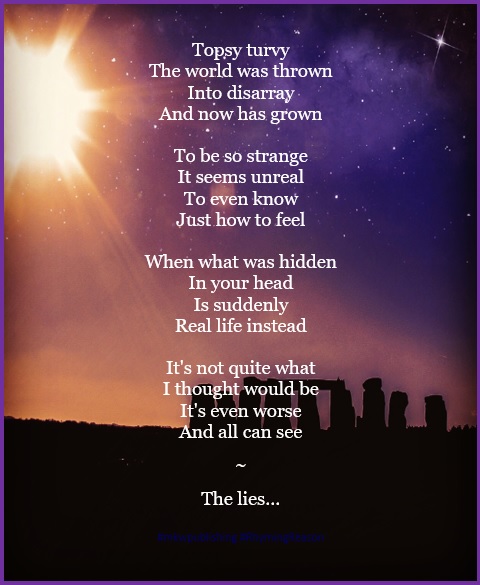
Return to Oz, when Dorothy goes back and discovers Oz in ruins and people having been turned to stone. In particular, the stairs shown when she first gets there reminded me of the Crystal Palace Park staircase. And how easily things can either be destroyed or tidied up so that no one would ever know what was there. Or the context in which it originally sat no longer visible around it, getting a new story and placing as time goes on. The things that didn’t make it, I presume their grandeur was too much, and the lies and tall tales were not enough to cover it. So, fires and ‘wars’ were used as a destructive cover to clear the way for a new mindset and landscape. And there is much speculation about the need for a great number of asylums that popped up across Europe and America, perhaps to remove those who remembered things, or just knew too much of The Old World.

So like Dorothy in that sequel, they are told it was a dream, a fabrication and a lie of their own making, so are led to the psychiatrist for ‘treatment’. Makes me think that’s really what ECT and lobotomies were really about, to find a way to disconnect the memory, the identity and a sense of self so they can disrupt the chain of generational lifetimes being handed down. To also help to bring about their isolating and traumatising system of ‘healthcare’ to be forced on people thereafter, breaking people, communities and networks down through systematic and traumatic events. To the collective and to people on an individual level, so that it might facilitate what seems to have been called ‘The Great Forgetting’. But maybe some things can’t be erased and lost completely, if the talk around cell memory and water memory and consciousness is really a thing, then it’s not as simple as just trying to rid someone of their memory. Because that’s not where the information is stored, only accessed. Perhaps Mufasa was right, we need to remember who we are…
(c) MKW Publishing

(c) MKW Publishing