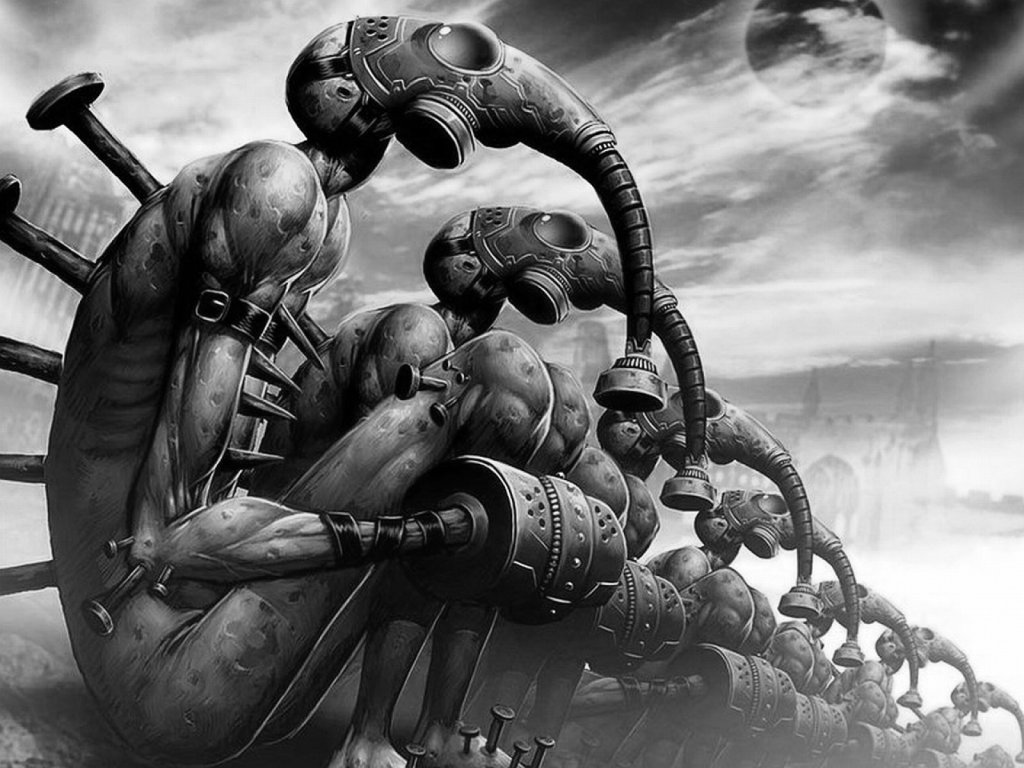
Running the Numbers

After reading a rather interesting article online about theories of population numbers and cloning, I noticed a number of my previous articles and ideas stray into this territory. Providing some extra pieces of information to add to the overall questions I have, rather than offer any answers.

Cloning – Mentioning twins and identical strangers, made me think of my articles Films, Real Life Twisted or just Fantasy? and Seeing Double, where perhaps there are switches made or doppelgangers utilised to pull off some deception. We know people hire body doubles and lookalikes for films and appearances in the world of entertainment – it’s just maybe the stage and screen for that is a bit bigger than people realised. With all of those Characters of Illusion deliberately placed and made to look like someone else, so you aren’t really sure what you can trust anymore, even when you see it with your own eyes as the illusion is no longer just behind a screen. We now know it can walk and walk and be seen with your own eyes, and if you trust those all of the time, then it’s an easy trick to pull off.

Mysterious population boom / adoption boom (1980’s-2000’s) – there are some startling numbers in the strange talk of Chinese towns and the cities that were built and never inhabited – tying in perhaps to my thoughts of Ghost Cities. And maybe they weren’t just there as a movie set or a forethought after all. Maybe they have already been used and are waiting for the next group or time. The add adoption stats from Kazakhstan around the same time also looking a bit odd, making me think of A Train of Thought, with their own style of ‘orphan trains’ happening, but a century after the first lot, almost as if the previous batch has reached its expiry or is now Past Its Best and ‘new stock’ was required.

But if the stats of adoptions and various ‘movements’ of children are true, there really is something strange going on, with a jump in numbers that seems to have no logical explanation. And now we have birth rates falling dramatically in various countries and certain demographics, swinging wildly from massive growth, to massive drop. For that there are indeed some ideas and speculations. With tweaks in society to engineer reasons or excuses why so many children might be parentless and require mass programs to address that. I suspect all manner of ‘people relocations and replacements’ have already happened we aren’t aware of in particular areas of the world, with it then being used for purpose and rewritten as necessary.

It was pointed out there seems to be a stark drop in birth and maternity hospitals in various countries, and with people asking questions like “Are real people disappearing?”, it makes me think there something to notice, although, we are still using stats and figures provided by the entity that lies a lot, the state. So, it will always have to be taken with a pinch of salt, or with variables added in to account for the errors, omissions, changes in data etc, some of those ideas and thoughts of populations already discussed in Downsizing and A Numbers Game. With a look at where everyone ended up in the The Missing Dead, also hinting at there being something afoot with the official records, and what we see versus what we think we know and are told, doesn’t quite add up. Which does happen a lot these days, and maybe always did but we just weren’t paying attention, but now we are, Perhaps we should try and work out what it is we are actually seeing…

(c) MKW Publishing
For A Living

Life and money. Two things quite under attack at the moment and have been for a while, see my article It Seems An Attack for more on the various ways in which it’s being felt. But I was giving thought again to words, and how we arrange them for purpose and meaning, in particular, towards life and money.

That familiar greeting for many when meeting someone new and discussing your ‘situations’. What do you do for a living? Or how do you earn a living? Either of them quite adequately conveying there is an implication you must have a trade to live. Either a trade of skill that can be converted into payment, or a personal trade of time or something you have to offer in order to ‘qualify’ for assistance or to justify why you don’t have to.

Living beyond your means. Again, one we have heard over the years, of people who can’t budget or are just spend happy – like we have in government today. It should be known as spending beyond your means, because that is what it is. But even the phrase itself is a strange one, to live within something, a set financial boundary which isn’t at all set is it? Because it changes almost on a day-to-day basis now, so even if you are able to budget and manage, you can only work on a month-to-month basis, as you never know what.

The Cost of Living – just as a term it sounds ominous, making it a familiar phrase as with others of late, but a serious one where someone has run the numbers and looked at The Bottom Line, to see if you fall into their categories of A Costly Life, or a Profitable Death?

Earning your keep. As if you have to justify your existence, with input and output turned into industry and given a monetary value, so you and others can value yourself on that. Becoming as faceless and sterile as the concept itself. Time is Money and all that. Yet, on one side we have people being made happy with money, and then we have the other side where it’s used to make people miserable. Making Money from Misery for that happiness. Two sides of the same coin if you will.

But overall it implies that without ‘a living’ you won’t be able to survive and actually live. And it is society that determines your ‘living worth’, with salary rates, taxes, pensions, costs, benefits and fiscal terms and traps to swallow you whole from cradle to grave. What Are We Worth? looks at the more sinister aspect of that, and There Is A Price touched upon the need to have everyone seeing things in monetary terms, including themselves, so they would continue to play that large societal game of Monopoly that has now somewhat raged out of control. And doesn’t appear to be slowing down any time soon…

(c) MKW Publishing

In the Woods

The thought started with Robin Hood. Wondering if it has any basis in pieces of reality, thinking through the storyline put forward in the film Prince of Thieves. Of the crusades, the absent king, hiding in the woods, and the fight to save England, apparently. But it wasn’t to free England, was it? No, it was to fight to save it for sovereignty and free it from the grip of greedy usurpers they say. Taxing the very soul out of the people and creating unneccessary poverty. That tale was set in the late 12th century, but it could be today, couldn’t it? And because so many things have been twisted to fit the narrative, or simply changed to rewrite reality I can’t help rethinking old stories, sayings and things that once seemed just as they were.

Robin Hood – there have been a few people throughout the centuries that have apparently fought and won certain battles for this country, for justice and for freedom they say. Covered in my article When Someone Else Saves the Day, sharing my speculation about these all being fabricated and used for purpose as a beacon perhaps, to pretend the people won through sheer courage and luck. Or maybe they did, and the myths and legends just sprung up thereafter to make sure people wouldn’t forget it can be done, who can say for sure.

Because it is such a good story, I wondered if maybe it helps to conceal its real meaning, purpose or foundation. Making me think of a forest related saying ‘when you can’t see the wood for the trees’. That we are so used to it, and like to believe it might be real, that we miss the real lesson.

Fairy Tales – many of these are set in forest locations, which make for a good creepy setting once daylight fades away, or such thick coverage provides a gloomy atmosphere. Where I then think of another saying we have about being ‘out of the woods’ when it comes to being in peril or at risk. That in many instances, it is the woods themselves that becomes the oppressive environment, rather than an being an escape from one. A few of the films I mention in my articles Urban Myths and Gateway Trees give examples of how the woods can be used for effect when telling a tale. Again, maybe that’s why stories often have dark and creepy forests; to try and give you a preset psychological idea that being in the woods can be a bad thing. That nursery rhyme of ‘If you go down to the woods today’ providing a bigger and perhaps more terrifying surprise than you would like, if you believe such things.

In real life however, it seems that forested areas are on the list to be restricted and removed for the general masses. They wouldn’t want you to have access to something that provides shelter, is a resource for building and heat, can provide food, creates an ecosystem and can offer you safety off the ground. Trees really are wonderful, and grouped together provide an awesome network which nature manages itself, and continues to provide all of the above as long as it can. We would do well to look after them…

(c) MKW Publishing

A State of Dependents

It does seem apparent that this country no longer wants independent, self-sustaining people and communities. The moves towards everyone being a dependent is chugging along, and has been in some capacity for decades, and even centuries, slowly chipping away at the sense of self, overall identity, expectations, security and rights.

Marriage – people seem to go down that road for many reasons. Social reasons, economic reasons, religious reasons, and so on. Being in love isn’t enough. You have to show it with a license, contract, a ritual, and then rules thereafter. Binding you and your spouse to the state as much as each other. I personally have been down that road twice now, and divorced twice, and before that, hadn’t given that much real thought towards the whole system. Because you are brought up to think it’s normal and expected, with old words like barren and spinster hanging around from earlier decades to help to influence decisions. Yet there is another side to it that I began considering over the years, of how the ‘rules of marriage’ were set up to be of benefit, not for love or commitment.

And who benefits from that arrangement? Unfortunately, men will be slightly in the firing line here, but they have been used for purpose as much as women have. Because it seems that some of the previous ‘rules’ in society towards women, directly held them back and down from individual opportunity, some things only being possible with a husband. Like having a bank account or dealing with finances. You know, the thing that ‘they’ decided was essential for sustaining yourself, was restricted, unless, you had a man around to do it for you – either husband, father or I guess sibling. So, like mentioned above, many people settled or got married just so they could live, could eat and actually ‘be allowed’ to take part in society in what we consider today as normal. If women wanted to breed, they had to be married or great shame would be heaped upon them, or the children would be taken away, adopted or hidden. Not so much for men. Women have been used as pawns for the longest time, and the result of much of that appears to be that many women picked men, that ordinarily wouldn’t have had a chance if it was just down to love and treating your partner with respect.

We even have arranged marriages as a species, which seems like a handy way to continue a tradition of making sure your offspring marry and breed, however, I see a psychological problem with and one that spreads into online dating in my mind. Because there is a similarity in my mind, where you vet the potential candidate, check out their history, their stats, what they are offering and so on, like the parents would with an arranged marriage. Taking away any spontaneity or a chance meeting face to face, it becomes an ordered and arranged affair.

Making women dependent on men, and men dependent on the state. I have already written about a certain aspect of this in Digging for Gold, or Freedom? examining the obstacles and conditions that seem to have led to that strategy developing. Then, strangely, a change occurred and suddenly women weren’t just allowed to work, they were allowed their own finances, full on careers and what we would call ‘freedom’ to do what they wanted, on their own if they wanted. But it wasn’t that simple, because in that there were also rules you were supposed to follow about having a career or family, not both, with shame still being wheeled out when needed, from both sides. Because the mindset of generations of conditioning doesn’t just disappear or change overnight, or in one decade or even two. It takes time and a fair amount of work to make people think how you would like them to, as my article Consumerism discusses. But now you had a changing landscape, where the state doesn’t seem to want anyone having any opportunity anymore, no freedom or choice or long-term plans.

And them being involved in people’s relationships, is just one of the many intimate interferences of the ‘rulers’ into people’s personal matters. Along with your birth, your health, education, finance, and death, they are also there to facilitate an upgrade or downgrade to your relationship status, or when you grow your family, after they themselves have put the rules of those relationships and family in place. Forcing you to adhere to the ‘terms of society’, with exclusion and torment if you don’t do as you are told. Quite a busted-up system really, where we are ‘allowed to adult’ with certain rights we are told we have, but are actually treated very much like children. And it does seem as though a rather childish tone has overtaken society currently, with the most childish and immature attitudes coming from the government itself. But if you get to always spend someone else’s money, and have no responsibility for that, then I guess it does lead to an entitled, childish attitude. But if we are the ones funding them, surely that means they are ones who are dependents…

(c) MKW Publishing