A reading of my article – Fads and Fear
(c) K Wicks


(c) K Wicks
What we believe we see seems to be a matter for debate. And although I was aware that people have differences in depth perception, and perceive colours differently to a point, I believed if you weren’t deemed colour-blind, then we all pretty much saw the same ‘colours’. There is also the subject of colour synaesthesia, where people will ‘see’ colours for things that you wouldn’t ordinarily have the need or ability to assign a colour for, but when hearing the word, letter or concept, the brain conjures a colour to accompany it. Of course, there are probably varying degrees of that as well, and until someone talks about it, or mentions it as a thing, they may just presume everyone does it. Same with Aphantasia and Hyperphantasia, discussed more closely in my book – Meeting in the Middle of Nowhere, of some people not having visual imagery in mind or an internal monologue. Sounds like a routine thing to acknowledge or understand, but when it’s discussed in real time from each perspective, the real differences in thought processes can be startling.
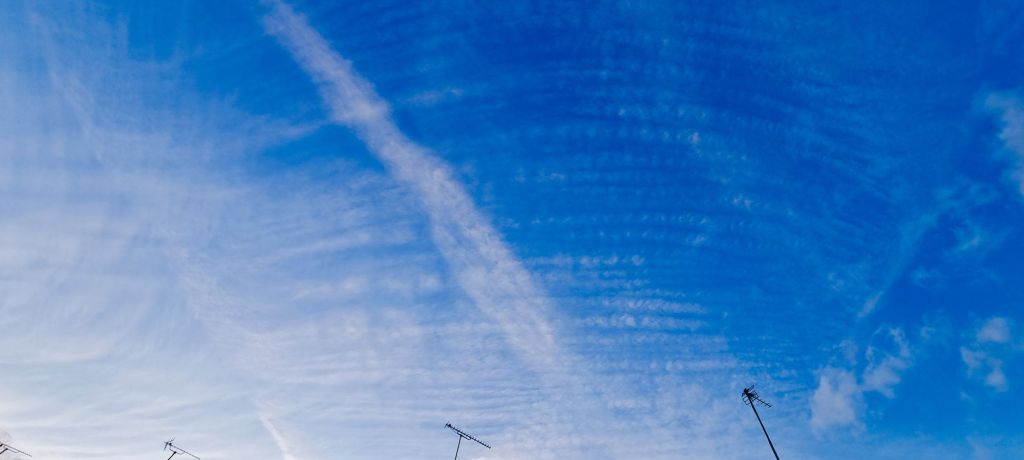
But it seems there are all sorts of other smaller differences going on too, that most of us still aren’t even aware of. So subtle or unnoticeable that they never get brought up or mentioned as a point of discussion, as it would seem as boring as walking up to someone and trying to start an interesting conversation by observing they have arms. Now, if everyone else was armless, then it may be a conversation starter, but we don’t walk around asking people if they see a blue sky if it’s a clear day. You’ll comment perhaps on that nice day, but not usually to clarify that the other person is also seeing a blue sky. Although, maybe we should be. The below picture is from a documentary I watched recently, and was quite surprised by two things about this image. Firstly, that there is only one colour in the image, and the ‘other colours’ aren’t actually there and your brain is filling it in for you. That confuses my brain, because I believe I am seeing four colours, but the second strange thing, was when the arrangement of colours was read out to go with the image, it did not match what I was seeing, they say the arrangement is as follows –
Top left = red / Top right = blue / Bottom left = green or aqua / Bottom right = orange
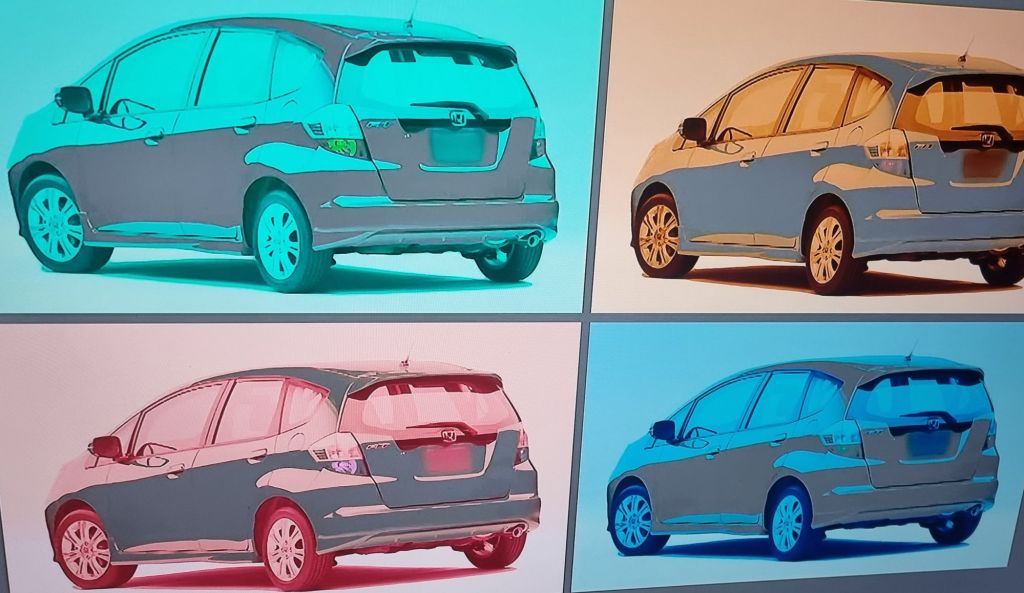
However, it is also seen as –
Top left = green or aqua / Top right = orange / Bottom left = red / Bottom right = blue
Yet the only colour available they say, is grey. Quite an odd one, and if there wasn’t a difference when the person on the screen casually explained the ‘colours’ being presented, I wouldn’t have wondered any further than the grey to colour aspect. Now I question how each brain is deciding to rearrange those ‘colours’ and see them differently to another brain. Does using the right or left side of the brain more dominantly determine whether the image colours are seen in reverse? Seems there really can be more to something than meets the eye…
(c) MKW Publishing
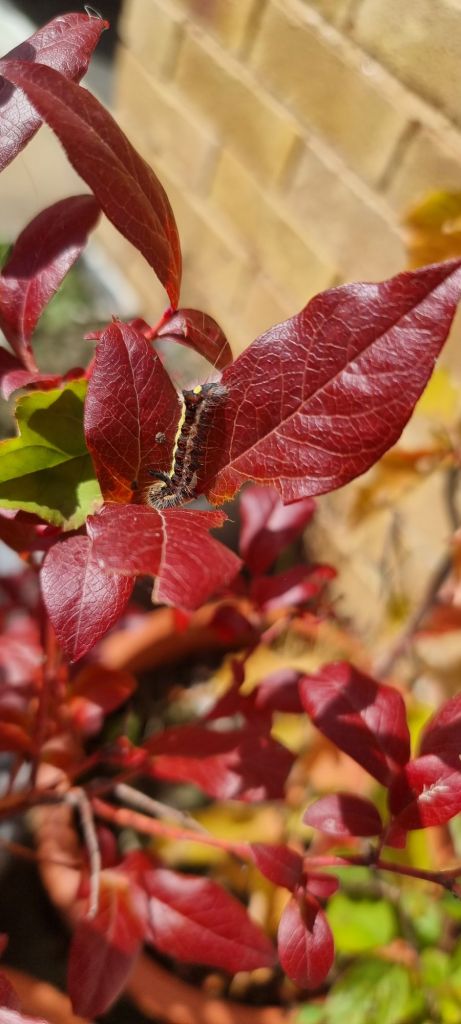
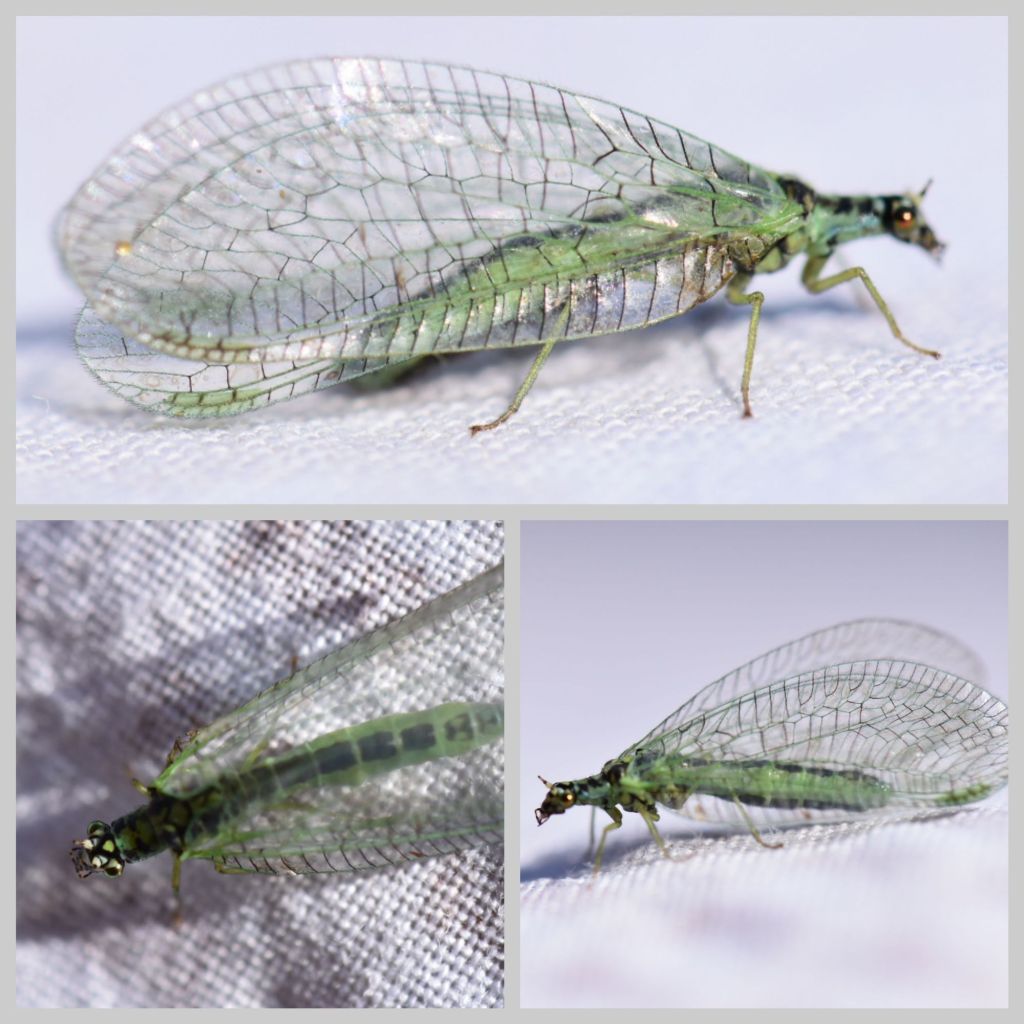
Had a few caterpillars this year, but a late one popped up on the blueberry bush chomping its way towards changing.


(c) K Wicks
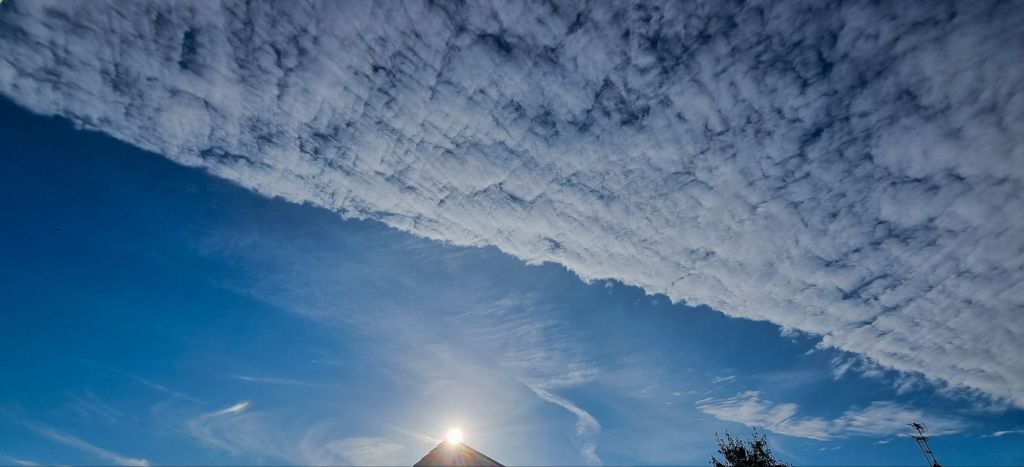
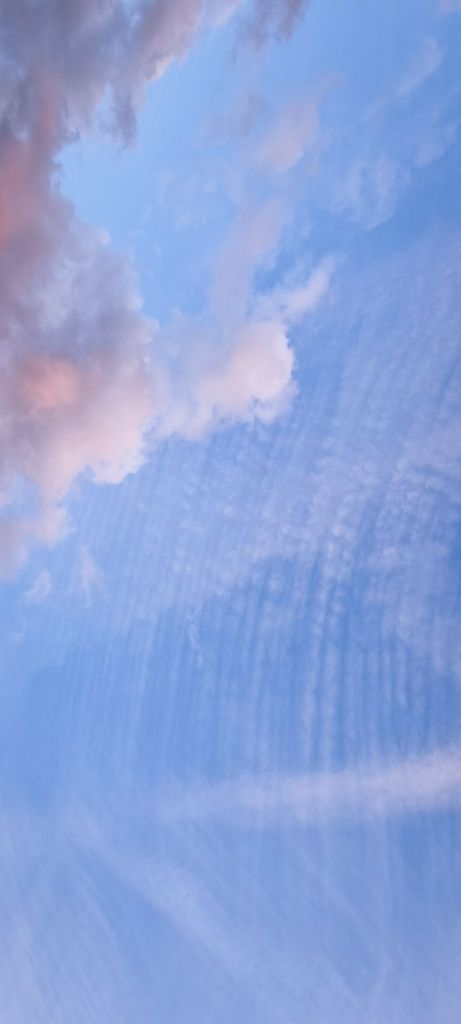
(c) K Wicks
(c) K Wicks
A compilation of article readings about Maps and Islands
Atlantis, No That Would Be Silly
(c) K Wicks
Not just tall, but towering. There seems to be a need to build extremely tall buildings, but not of a completely logical nature. Unless there is of course something of great value to hide or protect, or you are looking to protect yourself from something, as is said of some of the structures noted below. We have skyscrapers today, so it doesn’t seem to so unusual to our eyes to have massive buildings in cities, not so much in the rural areas though. They would stand out more, just as these remnants of the past do in these modern times.
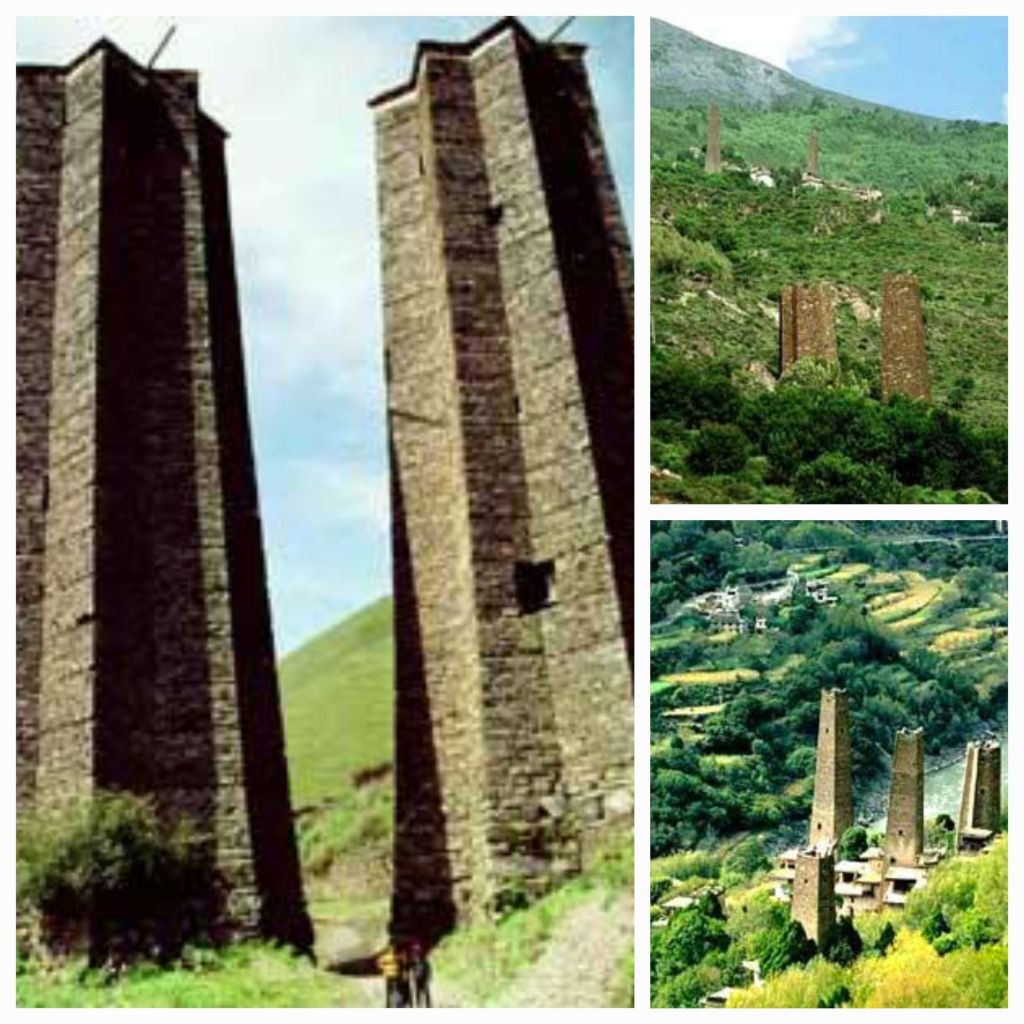
China – where there are many towers throughout the region of the lower Himalayan mountains, some of them square, some star shaped, but all very tall and looking like a remnant of something industrious. Maybe small components of an old system, like speculated about Star Forts. But it’s said they are ancient from around 200 AD onwards, probably for storage they say and as we do have very large silos today for similar, it doesn’t seem a completely unreasonable explanation at all.
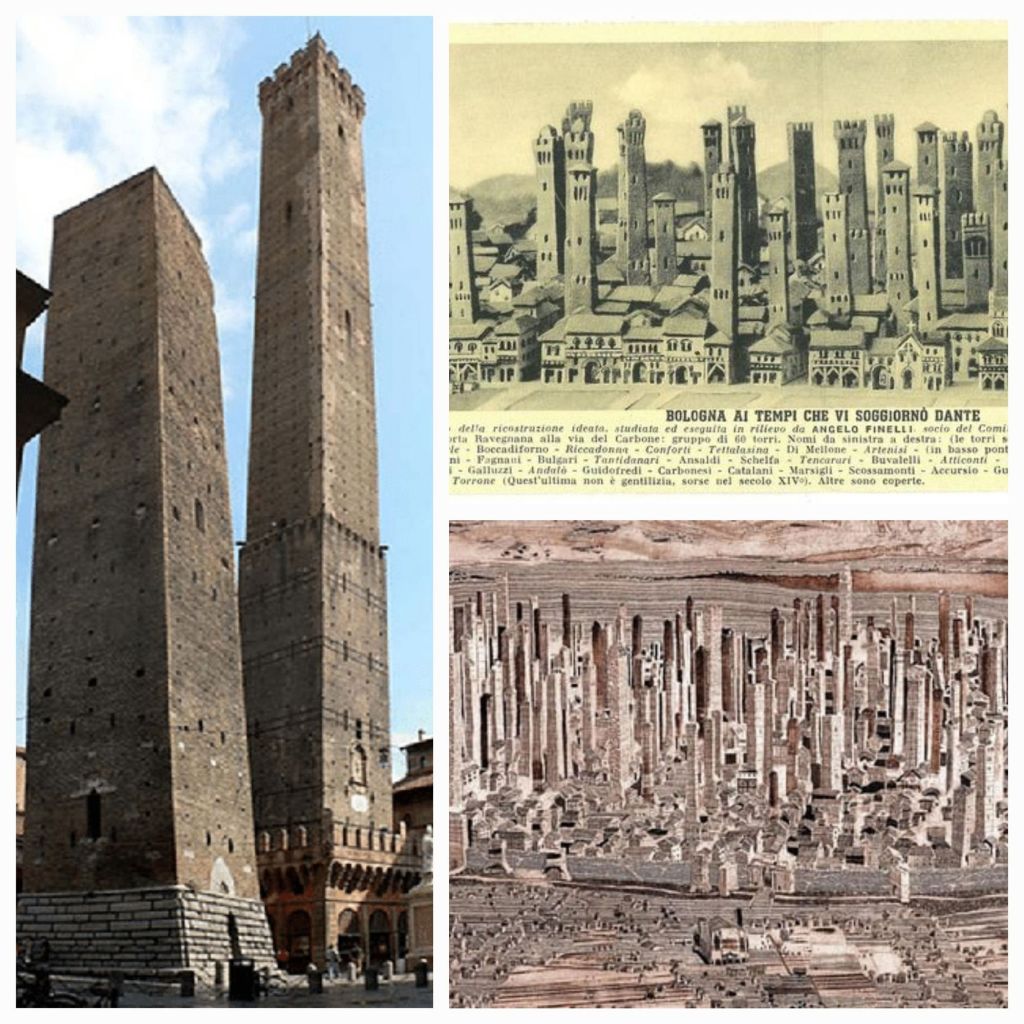
Bologna – the whole city was towers for hundreds of years, with only two towers remaining today. It’s said they were for defensive purposes, but with them taking up to ten years to build each one, and with no real threat put forward as warranting that type of defence, I’m not so sure. But for whatever reason, we like tall and towering structures, in great numbers in some cases.
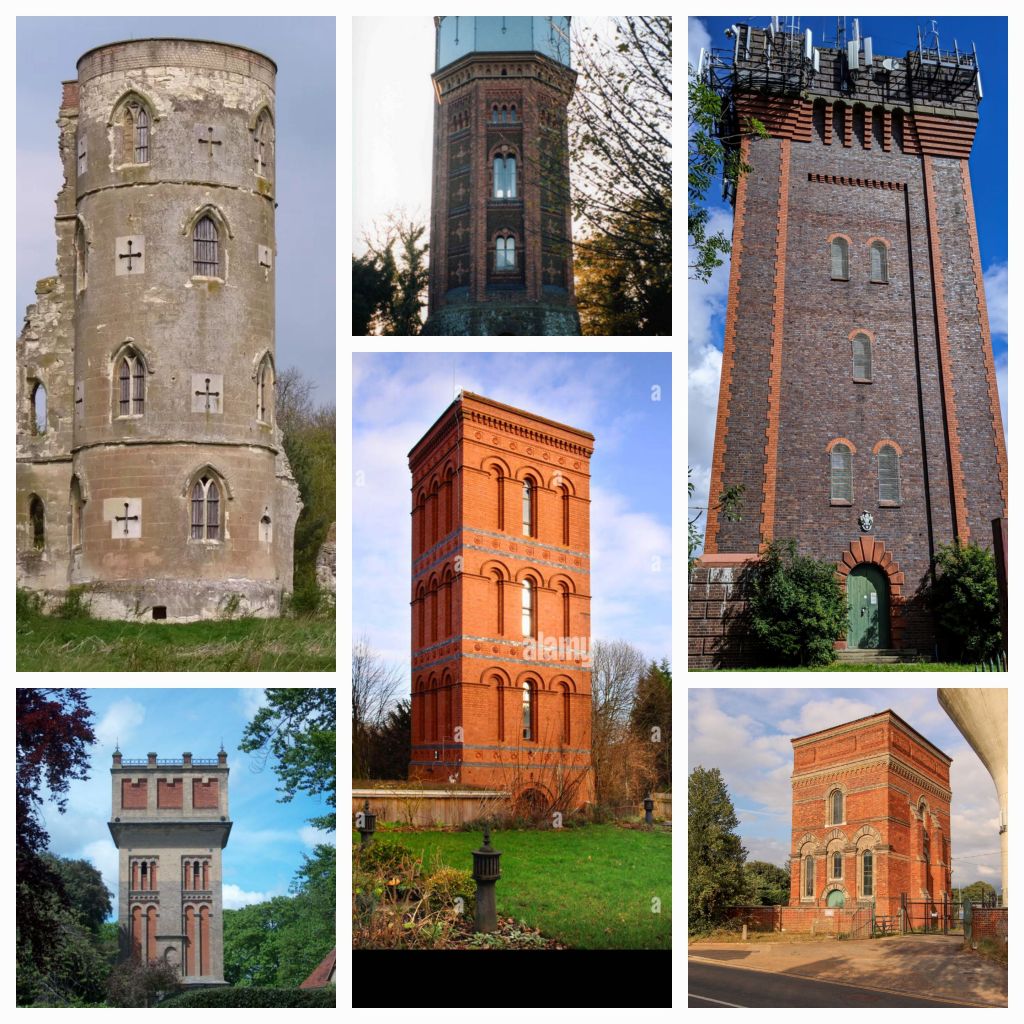
Water towers and folly’s – there are many dotted throughout England and quite probably Europe and other places too. Mentioned in my article – With Purpose, Or Just Folly?
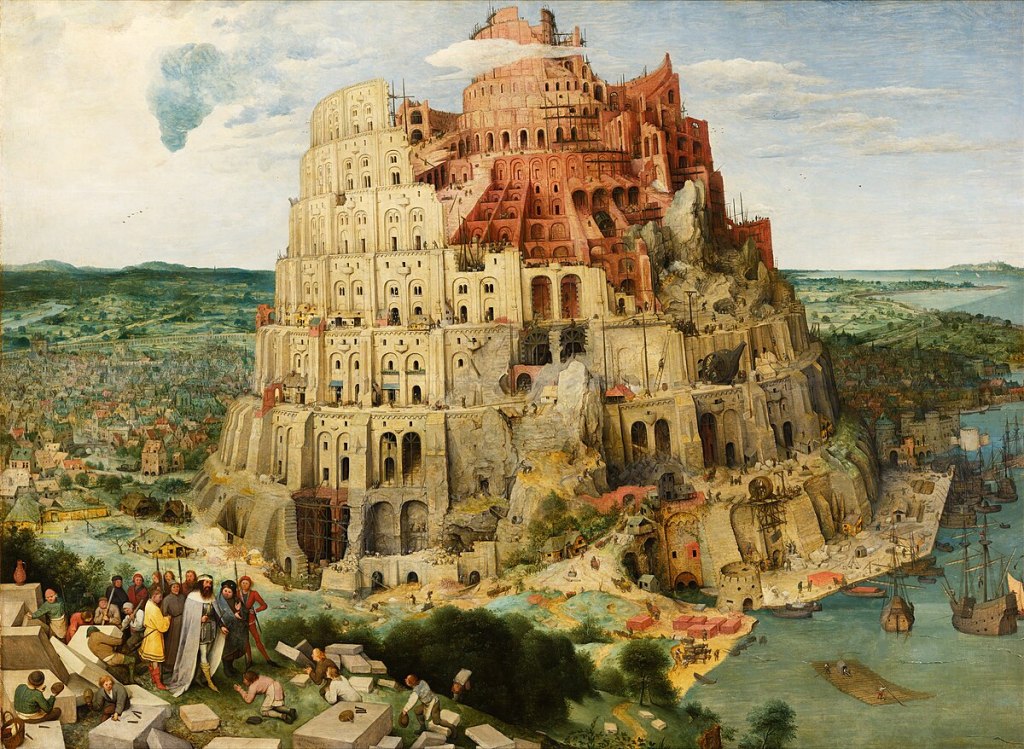
The Tower of Babel – a famous and disputed tower that was the culmination of one language and a want to break into heaven it is said. with a round tower being built to facilitate this. Although the site of Babylonia is known, and there are ruins of a vast city which are mostly still hidden from view, the small area allocated as the tower doesn’t quite fit. But strangely, there are three circular areas around the city, with spiral designs, and two of then having a very angled edge with one facing water as in the below painting by someone who never visited the site they say. It’s a tantalising myth, and with ruins of a city visible but still have covered and lost to time, who can say for sure.
(c) MKW Publishing
 MKW Publishing