
You may have seen the Venn diagram of multiple films overlaying to create our current situation. Ones like 1984, Brave New World, Handmaiden’s Tale, Animal Farm, Soylent Green, V for Vendetta, etc.
To me though, it feels like going through a series of games – as well as a long drawn out version of all of the above. Now, there are films which sound fitting within games too, like Maze Runner, Running Man, Hunger Games and similar. But for this I mean board games, and ones we were provided with throughout our childhoods, so I presume is another form of conditioning. And hopefully most of these games, if not all, are familiar to people.
Cluedo – that mystery of murder, trying to work out who did it, where and with what implement. Honing skills of observation and what you think is fact, proving that people can get it very wrong, but are willing to ‘stake the game on it’ when they call it out.
Mousetrap – of pitfalls and traps, not wanting to get caught, but inevitably you do. Like the hold your nerve games, like Kerplunk, Buckaroo and Operation. It can be done, but you have to develop steely nerves and a steady hand.
Snakes and Ladders – a classic of ups and downs, literally. But can be likened to what we would call the game of life I suspect. Convincing people that it’s the luck of the throw that determines if it’s a ladder you will climb, or a snake you will fall prey to and fall. Steps to Heaven, and a serpent to take you down. And in real life, it almost seems as if it is on the throw of a dice, luck and chance steering the outcome. But we know these days that it isn’t always like that, because sometimes the dice are loaded, or after your throw and number of steps is revealed, what once may have been a ladder, suddenly gets planning permission to become a snake by the time you ‘land on it’ – so it’s not an even match of chance at all.
Monopoly – this one seems obvious as a tool of conditioning, and to be honest it did then too, but in a naive way, you think it’s to help you. And in a way it is, but it’s to help you help them. Not the same.
Battleships – into the realm of strategy rather than chance, but with way more of a war overtone than things like chess. Where you get a small fleeting feeling of glee at the idea of destroying their tiny little plastic ship. I guess the computer games we have had for some time now of war and such, have done a great deal of programming as they were meant to. Catching the ones who care not for the strategy of it, but rather just the thrill or the other aspects of warfare.
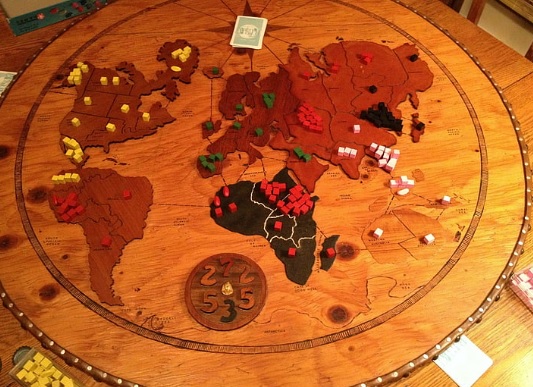
Risk – an interesting game of patience and strategy, with a long-term overview of taking great swathes of land and crushing borders, replacing people’s troops with your own. Need I say more?
And there will be many other games which were allowed to be provided to the masses, to keep them occupied and ‘entertained’, but clearly all of the mainstream things have been very carefully placed for decades. To very carefully prime people for requirement, and to give people the ‘knowledge’ you want them to have, keeping them always on the back foot, like playing Cluedo with only half the characters available, or you don’t have all the locations. And still thinking you can solve it. I keep thinking it all seems like a rather large jigsaw puzzle, let’s say it’s 1,000 pieces. You are given 15 pieces to start with, and a few hundred have been destroyed, some have been hidden well beyond sight, some have been duplicated, some have been replaced with dummy false pieces, and so on. And you are then expecting to be able to solve that puzzle eventually, and keep trying until it drives you into madness. Or, you decide that it is so ridiculous, that whoever changed and moved all those pieces has completely ruined it, so why would you bother to continue to try? You wouldn’t in reality, you’d decide the person wasn’t worth engaging with anymore, throw out the old pieces, and start afresh with a new one…
(c) K Wicks
 MKW Publishing
2 thoughts on “A Game? I Think Not…”