
(c) K Wicks

(c) K Wicks
Some more digital paintings coming up, colourful nature, seasonally themed and maybe a touch of weirdness here and there.

(c) K Wicks
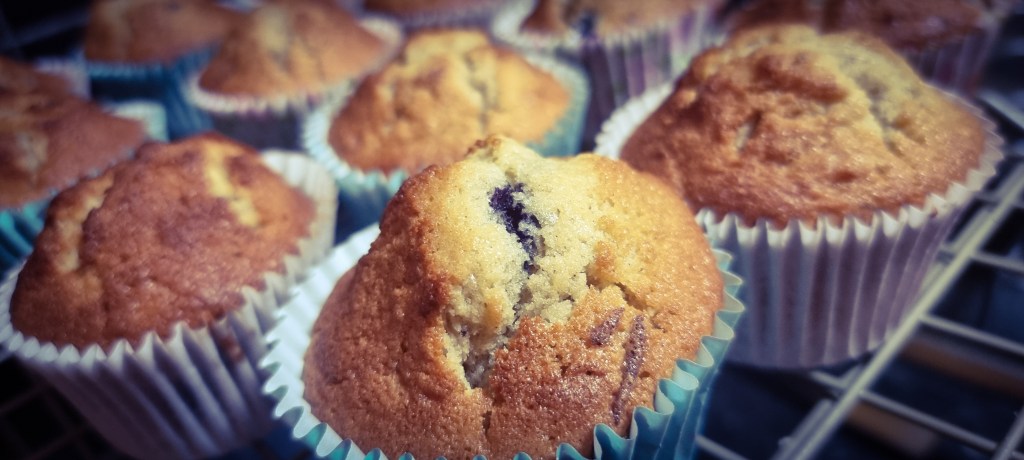
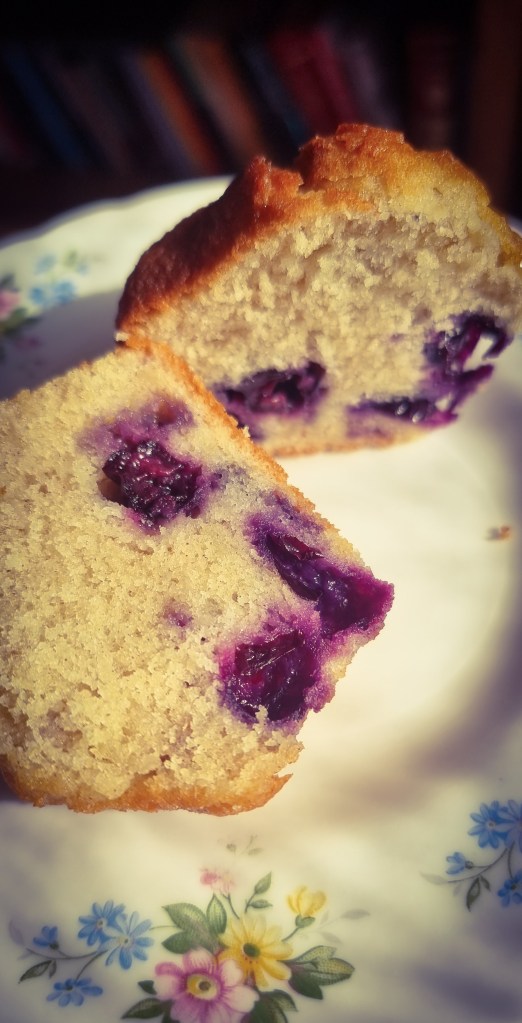
Thought it might be nice to try some apple and blueberry muffins. As the weather changes, it feels like cake times are coming. Or already here…
110g butter
250g caster sugar
250g plain flour
2 eggs
150ml milk
1 tsp baking powder
1/4 tsp salt
120g blueberries
80g grated apple
Some cinnamon
Cream the butter and sugar together, add eggs and mix until smooth. Sieve in the flour, baking powder and salt. Add cinnamon. Beat together, adding the milk until smooth. Hand mix through the apple and lightly crushed blueberries.
Fill muffin cases – this made 12, but I filled the cases quite high to get the towering muffin look.
180 degrees for around 25 minutes. (170 for fan assisted oven).
(c) K Wicks
It appears to be a running theme throughout various ancient writings, scripts, ideas and throughout the ages is used again and again. And it may be that it isn’t actually relevant in the bigger scheme of things, and it has merely become familiar so we replicate it, as we sometimes do. But could there be more to it?
Seven Deadly Sins – covered in my article Seven already.
Seven Virtues – the not so talked about opposite to the sins, as it seems they take a centre stage for apparently representing what humans are really like. But there are characteristics that are seen as good, wholesome and well, virtuous.
Seven Chambered Cave – in Mayan folklore they have a place called Chicomoztoc – The Place of Seven Caves which is where they say is the location that birthed humanity.
Seven ancient wonders – not all still with us, or entirely intact if they are. But still impressive, especially if they really all were as they say (Colossus of Rhodes, Great Pyramid of Giza, Hanging Gardens of Babylon, Statue of Zeus at Olympia, Temple of Artemis at Ephesus, Mausoleum at Halicarnassus, and Lighthouse of Alexandria).
Seven Seas – a funny one really, as we have one ocean technically, five named oceans, and sometimes seven seas. So, depends on your reasoning and which geographical definition you want to go by. But I remember it from Sinbad the Sailor stories, and tales of the seven seas.
Seven Continents – for each of the landmasses we have, again, sometimes it’s four, or five, and in times past people have used the term continent for much smaller lands, but today we know it as seven.
Seven handfuls of soil – in the Muslim faith it is said that Allah sent angels to collect handfuls of soil all of different colours, from which man was created. It is also believed that there are seven skies or heavens, so it features more than once there.
Seven Noahide Laws – and the Jewish faith too with the Noahide Laws, although it is said there may have only been 6 originally, but today we find ourselves with seven.
Seven Anunnaki – within the ancient histories of the Sumerians and around the Mesopotamia region the religions had deities called the Anunnaki, seven in fact, who reside within the Underworld and serve as judges of humanity.
I’m sure there are others, and many possible reasons for it, or possibly no real reason at all anymore. Time and change moving on our thought processes and starting points for such reasoning. Pieced together from fragments of ideas or occasionally ‘evidence’, sometimes with very little or no context. So, we do the best we can with what we’ve got, but you can’t deny, it does seem like we are missing an awful lot…
(c) K Wicks
(c) K Wicks
(c) K Wicks
Banyan Tree – A really cool tree, apparently originating in India but has found its way to Florida and Hawaii. Three places really not that close to each other, so we can presume that someone was involved in that perhaps, or the wild theory could be that all those landmasses were in fact joined once, and the only tell-tale sign of solid evidence of that being the flora and fauna. But because we have a crafty way of just saying we took it with us, it can never be proven. And to be fair, they often can cite the exact person and time they took it, but you would need to be specific for that, so people don’t give it any further thought. Also interesting as a tree as it’s known as a strangler fig, which is a tree known for invading other species and treating them as a host, taking hold well above ground and spending the first half of its life not rooted to the ground at all they say. The largest of these is in Florida, which I have actually seen myself, and it is impressive I will admit.
Yew Trees – native to these islands and known for their appearance in graveyards in the UK, apparently because they ‘thrive on the dead’ as it’s said. It being suggested that they absorb the vapours produced by putrefaction. They are also quite heavily steeped in mythology too they say.
Easter Island – no trees for a time, or so we are told. The story being that they chopped down all the trees and then couldn’t build boats or something, and ended up trapped there. With skirmishes, sea voyagers visiting and massive stone carved heads that are speculated upon.
Baobab Trees – these are pretty awesome trees too with a very distinctive look, but perhaps are another clue towards landmasses of the past, where it is already suggested through animals and geology that they were once joined, in the ideas of Pangea and Gondwana. Although I have wondered about it being a joined land in more recent times, and perhaps the ideas of flooding and land levels being susceptible to change could have played their part in the rearrangement or splitting of landmasses. But these trees are native to mainland Africa, Madagascar, and Australia, so make of that what you will. Their extra skill other than just being a tree, is that it can hold vast amounts of water, and is a lifeline for many where it grows.
No trees grow above a certain altitude, and obviously they don’t grow underwater either – although can survive being quite submerged for a time. Mangroves being the exception to this. But almost as though trees are a gauge of an environment and how well it can sustain life, all forms of it. We also can’t survive above a certain limit, or live underwater, and require certain conditions to thrive and reproduce, and it does seem that where we have trees, it’s easier for us to live and thrive than where we do not. Or at least that is how it appears. We can make do in deserts, but it’s not ideal. Add a bit of tree coverage or some foliage generally, and suddenly you have shade and an opportunity for a more elaborate ecosystem to develop. Limited ecosystems means limited opportunity for growth, but survival is possible of course.
They are easily seeded, by way of their own mechanisms and various animals and birds helping this along, and to spread then further. And they reproduce, they develop ecosystems, they help to clean the air and hold the environment together, literally in most cases, finding that once tree clearances occur, often flooding and landslides will follow in the years thereafter. They manage the land, have respect for each other while growing and filter what is around them as best they can. Think of all the apocalyptic scenes they like to show you in films, baron wastelands, dead stalky trees looking bleak and hopeless to signify no life or hope. But if you suddenly add a few tall, green and healthy trees, it doesn’t look so bad does it?

(c) K Wicks
 MKW Publishing