A reading of my article – Jigsaw of Life
(c) K Wicks

They say doorways are a type of portal, which change your state of mind when you walk through them, possibly leading to why people can instantly forget what they wanted when walking into a room. Because your mind has gone from one reality into another, although your physical self did not. Perhaps. They seem just like a practical way to separate rooms, and for purposes of warmth and privacy, doors were added.
But what if that particular composition is actually a mathematically important set up. Think of Ghostbusters, and the big building with its whole design being specific to be a huge portal. Mostly in films they are represented as round, steering the mind away from the average rectangle we see every day. A whole building being one gives a good angle for thinking big rather than small, and is a good side point. But for this we are looking at smaller, doorway like set ups.
Monsters Inc – the whole film was based around doorways being the portals to access children. A very watchable but creepy movie to be honest, but doors to different places, from another existence that is separate from ours, but can access it.
Portal – another film about alien portals appearing as doorways, haven’t seen it so can only bring it to the table as a basic premise, but it seems to fit.
Doors – a film about lots of alien doorways that appear on earth, not watched this one either but it seems relevant.
Shazam – a scene in this film shows a cave full of doors leading to all sorts of different realities.
Coraline – it’s a small door that leads to an alternative reality once active.
Beetlejuice – to get to the netherworld on demand, a doorway was to be drawn, to create access.
Poltergeist – it was the walk-in wardrobe that seemed to be a portal point when it all got crazy, but the doorway was important there too. And again, that was the other side deciding to step through to this realm.
And that seems to be a running theme throughout these concepts, that it isn’t always activated. But when it is, some weird stuff occurs.
Narnia – another doorway/wardrobe, but this one obviously leading to a rather fantastical land with adventures and perils aplenty. But still another realm being accessed via a doorway.
Mr Ben – a great and fun cartoon of putting on a different costume and stepping through a doorway to the place of that costume. So, a portal directly to that place with no ‘travel time’ involved.
Time Bandits – the initial contact for the crazy and wonderful adventure that followed was through his wardrobe, even though they didn’t go into it, something came out.
I also think about wardrobes and the fear that some have of them, and wonder if it because of films and stories, or because it’s a feeling you get about it. And that’s how the stories started in the first place perhaps, along with others of the boogie man, and the things that hide under your bed kind of thing. But I guess with all of these things and ideas, it isn’t just that there is another world through it, or something lurking on the other side that seems to be what is so uncomfortable or unnerving for some. It’s the idea that it can open the door whenever it wants to and step through into our world, uninvited and with unknown intent. And sometimes we might unknowingly open one of those doors without knowing quite what’s on the other side, and sometimes, just now and again, maybe we do…

(c) K Wicks
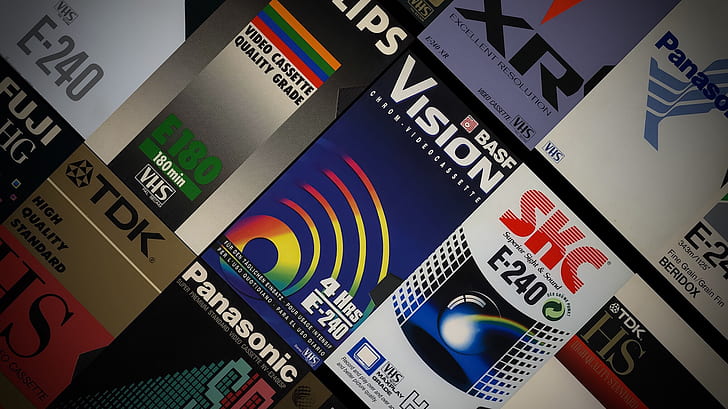
A little joy of our time. The video shop. It was a big part of many people’s leisure experience growing up, if you were born in a certain time of course. And that colour scheme we have recently become familiar with again, but for slightly different reasons. It was a special thing to be able to watch videos, remembered well by me as we didn’t have a VHS player until I was nine I think – so most of the 80’s were only watching normal TV, films at Christmas and very occasionally going to the cinema as an extra special treat. Then we had one, and of course no videos to watch as they were expensive, so you rent them, from Blockbusters. And along the way you learnt to buy blank videos so you could start recording programs, same with music tapes, but if you wanted to keep up with films that’s where you went. Seeing the ones rated out of your age range, trying to find someone to blag to rent them for you, Friday night hanging around waiting for someone to bring back a tape.
Completely different to these days, but I can’t deny I wanted the change to happen. I used to dream of having a ‘video store’ within the TV, and at just the push of a button you could pick any film you wanted and watch it in your own time, at your own leisure with no hurrying to get it back before you get charged a fine. Then we had sky, cable, save for later, amazon and netflix, all providing the efficient system of stored digital copies of all the things you could ever want to watch. No waiting, there at your fingertips all the time. Sounds great doesn’t? And it was, until you realise what it is you are actually doing. Giving up your real life, to spend your time watching pretend people, living a scripted and well arranged ‘life’ instead. It seemed so buckled once I realised, even though I was aware that it took you away and tapered off my viewing once I hit adulthood, I wasn’t really aware at how others were engaging with it. Video games will also be included here, because back in the day you could rent those too from the video store, and they have gained more attention for ‘influencing’ behaviour in recent years.
And although I have defended both in the past, I now think I was wrong. Films, TV and games can heavily influence some people, can desensitise, distract and confuse people. About themselves, other people, situations and reactions and responses they should employ in certain situations. ‘Learning’ from a completely fabricated and exaggerated version of an ‘experience’, and then basing real life on that, or your expectation of life of it. Reinforced over and over by repeated watching, or binge watching as its now a thing, and not by accident. They know drip feeding is effective, so one episode a week used to keep you hooked. But takes time. So, to make it all available at once means some can give themselves an extreme dose, which they do.
Previously with a TV schedule, it would be known what people were consuming, because they decided what and when. Now people dictate their own consumption, which seems like choice on the face of it, but is it? It is if you choose to not watch anything, but allowing a programming schedule to be given your time is an odd one. I would take it that your real life needs more in it if you have enough time for how many hours are spent watching. But that’s just my opinion, others may not want a real life, and instead find comfort and company in watching others have one instead. Even if it is a fake or scripted one.
And sometimes I think it’s nostalgia that makes people keep watching, because of a memory of enjoying the engagement and of being entertained. As well as the overall anticipation and socialising that often went with it. And that’s where I thought Britain is starting to feel like Netflix, where there’s too much, it’s tainted and not what it thought it was going to be. But you keep thinking of it like Blockbusters, with a feeling of how it used to be and how good it was back then. But as with the boarded up and changed venues now long gone, I get the impression that Britain as we knew it is as well…
(c) K Wicks


(c) K Wicks
Words and their meaning seem rather important in our lives, language being a pivotal form of communication, spoken and written, so easy to understand why so important. And currently we have a murky pool emerging of the redefining of terms and long decided meanings. Which serves a purpose, because if people can’t effectively communicate, then other things become more difficult and can be ultimately frustrating to people, and helps a lack of cohesion. Even between people who speak the same language, may often find they don’t understand each other. A famous quote springs to mind here –
“I know you think you understand what you thought I said, but I’m not sure you realize that what you heard is not what I meant” ~ Alan Greenspan
That saying could be used for so much these days, but will be necessary for the new hate speech laws they want to enact whenever someone sees it fit to do so. And on that basis, I guess it’s an interesting time to focus on those who believe that hateful speech is in fact being used. So, my question would be I guess, is it because the person had a perception of being hated which makes it so? Or what was said was said with hateful intent or content? And of course, with either option, one must then surely ask, who gets to decide what is considered a hateful feeling? When does a fact become hate? Or an opinion with no feeling whatsoever gets decided by someone who is not feeling what that person is. That’s why it is such a murky area being encouraged, because it will be based on how people feel about things that have been said. Stopping people being able to toughen up and be able to handle basic things and interactions in life, instead keeping them in their feelings and focusing on words, rather than using your thoughts and focusing on what people do. And you really do need both to be functioning to get through life effectively, being able to understand things and have feeling towards them is great, but know when to apply thought and logic and perhaps a little outside perspective.
Don’t go to bed angry, don’t make big decisions when you’re really excited or down, don’t react in the heat of the moment. All sayings to let you know that sometimes feelings takeover, and logic goes out the window for a bit but with time a bit of reason, things look and feel different. If you never learnt to process those things, or have something blocking normal responses like painkillers or other prescription drugs, then it may be extra tricky to manage your emotional responses. And if you happen to be in a position of power or authority, then it can easily be the motivator in what is a disproportionate reaction to merely words, which are not even deemed offensive in the normal walks of life. And you know what they say about that, offence is taken not given. So, can you really punish someone by law for taking words as hatred, when in most cases you cannot prove they were given as such? But I believe that’s the point. People then get distracted by words and their intended meaning and consequence of that perceived intention, rather than paying attention to what is being said, not how you felt when they said it. Because clearly their feelings are not quite as stable as some people may think, with Karen’s now being a thing. Developing ‘thick skin’ as they called it, was something I thought most people knew about, and while it shouldn’t make you seem impervious, it’s necessary to not spend your life being hurt or disappointed. And another of those sayings that seem really apt these days more than ever, stick and stones may break my bones, but words will never hurt me. Simple, yet says what it means. And although I knew what it meant at the time as a kid when I heard, I have understood more so when older why it’s important, and what happens when it is lacking in some.
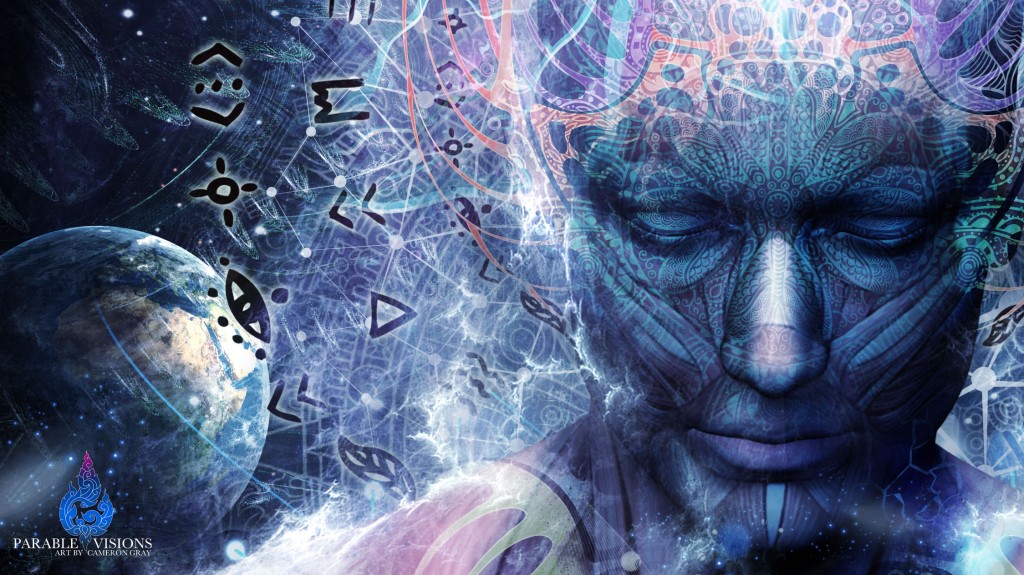
But back to words, and other importance of written and spoken language. Namely the use of words to cast spells, what they associate with Witchcraft these days, to give you a medieval view of the term and of witches and warlocks, hypnotising people with their ‘spells’. Makes me think of modern usages of them, casting being used for a ‘magical’ process of creating illusions for entertainment, with actors and specially written dialogue to capture your thoughts. Sounds quite a spell like to me, and on that basis we do indeed have witches, wizards and warlocks around today.
The word craft can itself mean a skill to deceive others, rather than just for a hobby or such, which leads me to think of another word to have it attached of late. Minecraft, which may indeed just be a simple game to be enjoyed, but I have suspicions. Yet the term being crafty is there, for deviousness and deception, with spells being cast and thoughts being harnessed in a certain way. Almost as if the outburst of feelings from them is being harvested to drive on the ever-growing vibration it creates. And if you would like an idea of just how far it is said that thought creates reality, you might like to read my piece Is it really the machine we should fear?, specifically the part about Tulpamancy. Many have noticed however that words have been weaponised in a way not seen before, propaganda and its uses now reaching into every aspect of people’s lives. Not to bring clarity or to further our ability to discover and communicate, no, it seems to be there to confuse and divide us, while being manipulated into dastardly schemes and regimes. And they really would like people to be too stupid to notice or understand, so if they are too busy arguing amongst themselves, or don’t have the right language or understanding to say anything, it means they are less likely to ever stand together. Or so they think…
(c) K Wicks
They want you to label yourself, it helps. I have already speculated on it being helpful to the establishment for you to have problems or differences that don’t ‘fit in’ with society, covered in articles such as More Than Pain gets Killed, An Error But A Big One and a chapter in my book Meeting in the Middle of Nowhere called Labels (the chapter is available as an article).
We are led to believe in previous times that people who had mental struggles were put into asylums, the weak and feeble minded, simpletons who would never contribute to society or be capable. Sort of sounds quite helpful at first glance, to assist with a small section in need, to alleviate the burden on others. The reality it turns out is something quite different, because when you look at the history we are able to look at, it actually differs from that tale. Instead, asylums were used for all sorts of people they wanted to either remove from society, experiment on or who had suffered emotional trauma and actually needed to be helped to deal with life. Not removed from it and sometimes then being put through even worse trauma than the initial event. And this is where we aren’t so different from those times of 150 years ago at all. It’s just now there is a whole business model of profits surrounding it, and a vast network to implement it, helping to convince people they need ‘fixing’ in some way, either mentally, physically or emotionally. And sadly, often the need to think you actually need fixing comes from the very place that says it can fix you. No real surprises there. Create the problem, offer the solution, appear the saviour.
For years though, they have only really had access to people directly, for example if they went to the doctors themselves, or spoke to someone else, or their family intervened and got the authorities involved. And some have been set up along the way, to appear mentally ill when needed to either be a scapegoat, or for it to be a get out of jail free card, as we have seen in recent years in multiple countries. Now though, people are lining up to be diagnosed with something, to have a label and category they can believe neatly identifies them, or something about them. But why? Why do the authorities want people to be broken and in need? Why indeed.
Think of times past, of how the poor and ill were apparently treated. They say it was a community affair at first, looking after your own and immediate others. Then as places grew and religion took over, the church decided to be in charge of that type of thing, collection of donations, creating work and helping to distribute supplies to those in need. Little side note here though, that there has been a system of cashing in on the sick for a while, as back in the days of leprosy, it is said you had to apply for a license to beg and were given a set amount of money you had to ‘earn’, and then miraculously you were cured. After the church came the system of government, with their workhouses and new regime to single out the poor and sick and put them into large buildings built for purpose. Now, I imagine that was a bit of a culture shock in itself, apparently suddenly having all the rather large and imposing institutional building popping up here, there and everywhere. And to then find yourself herded into one because someone somewhere has decided a new ‘social standard’ must have been quite destabilising. As with today, we are seeing a similar but upgraded version, where they tear down the old and install the new, redefine the terms of law, and what they deem as social needs. Back then we are told people were encouraged to shun and despise the poor, mentally ill and infirm, that we have always been looking for ways to make it better and to ‘treat’ them.
Unfortunately to me, it now seems that was a guise to hide the fact they were doing the opposite. Creating the slums, to then blame the people and their ‘lack of education’, moving them towards housing carefully placed by the powers that be, for the jobs they wanted you to do – the industrial revolution. But they had to get rid of what you did before, where you lived before, so you think it’s your choice and it’s the only way forward. That also feeds nicely into then forcing everyone into compulsory education, and again putting a new strain on people’s mentality and behaviour. And again, I think of now, and how they are forcing people to change with removing industries, burning down whatever they need to push their ideal of what they require from society next.
And part of that appears to be confusion and a constant need for a prescription. Because those things are what make them lots of money, and create an industry so vast and far-reaching it’s almost hard to believe. With of course, a rather sinister and handy system of control that surrounds it, making you dependent on them. That helping hand and thing to ‘look after you’ was actually just grooming you your whole life, to be accepting of what they ask in return – taking your money in return for ‘services’ in the form of tax, then seeming as if there is now an implied ‘relationship’ occurring. Where they force you to go to them for ‘free’ education, healthcare and law enforcement. But it’s not free if you have paid for it, and it’s not free if you don’t have a choice – as with any other service you pay for, you are usually allowed to stop if it’s no longer what you want, or doesn’t provide what they promise to – and get your money back. But this one is different, you are paying with your time and money to entertain it, and time is far more valuable than money. But from us they take both, and pretend it’s normal, when in reality it is anything but.
That is where I feel the system of labels really comes in handy for the establishment, as it keeps people falling into the traps of society, and once they are in it’s hard to get out. We all know they use it against people when required, as some women have known for the longest time, and many others are catching up. Ask yourself, what purpose does it serve for a hefty portion of the population to believe they are mentally weak, or unstable enough to warrant being put on strong chemicals? Is it just so people keep lining up for those prescriptions and the eye-watering amounts of revenue generated from them? Or is it also because those chemicals interrupt the normal human energy flow, making it actually harder to find your feet and get past your bad patch, prolonging it, changing it into something weirder, deeper and even more confusing. Life can be extremely hard work at times, and I do understand why some may feel the need for assistance, and it would be really nice to think there is something out there to help you, listen to you and want you to get better. But in all honesty, the government isn’t it…
(c) MKW Publishing
 MKW Publishing